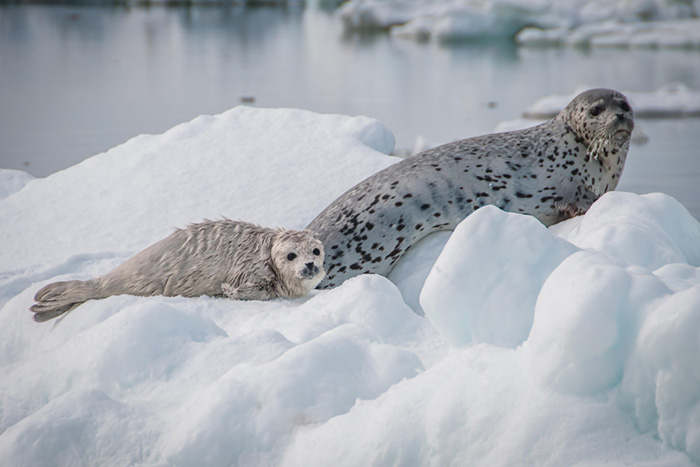
A new NOAA Fisheries study has found some of the first quantitative signs that three species of seals (ribbon, spotted, and harbor) are experiencing impacts of warming in the Bering Sea and Aleutian Islands.
A new NOAA Fisheries study has found some of the first quantitative signs that three species of seals (ribbon, spotted, and harbor) are experiencing impacts of warming in the Bering Sea and Aleutian Islands.

A new study finds that while climate models have successfully captured many global warming trends, such as rising temperatures and more intense downpours, they still fall short in key areas.

Congress voted on January 1, 2021 to reauthorize and strengthen the National Oceanographic Partnership Program , a 23-year old program created by Congress to facilitate ocean-related partnerships …
The National Sea Grant College Act was reauthorized and amended by Congress and signed by President Donald J. Trump on December 18, 2020. The reauthorization, titled the “ National Sea Grant College…
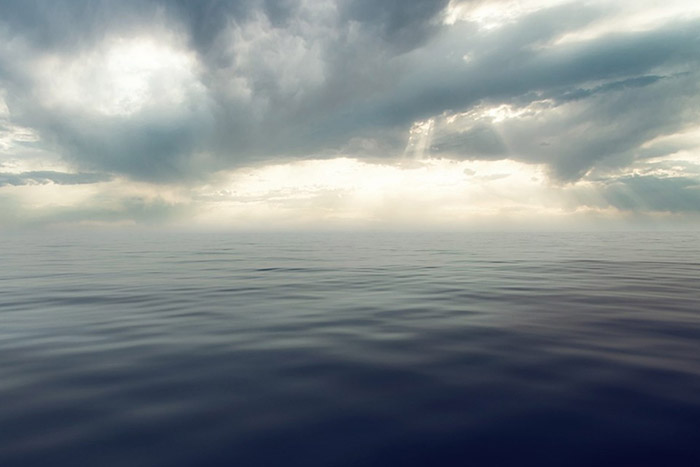
When the Madden-Julian Oscillation moves slowly, tropical cyclone activity increases in the Atlantic due to reduced wind shear over key regions.
In a recent paper published in Science , authors analyze new paleoclimate data in the form of coral samples from the Tropical Pacific. These include a consistent proxy record for variables such as …
NOAA’s effort to recapitalize its aging fleet of research ships took a major step forward today with the U.S. Navy’s award of a $178,082,877 contract to Thoma-Sea Marine Constructors LLC, Houma,…

Plants emit molecules while growing, reproducing, and defending themselves, and atmospheric chemical reactions turn these compounds into biogenic secondary organic aerosols (SOA). But how do human activities affect biogenic SOA?