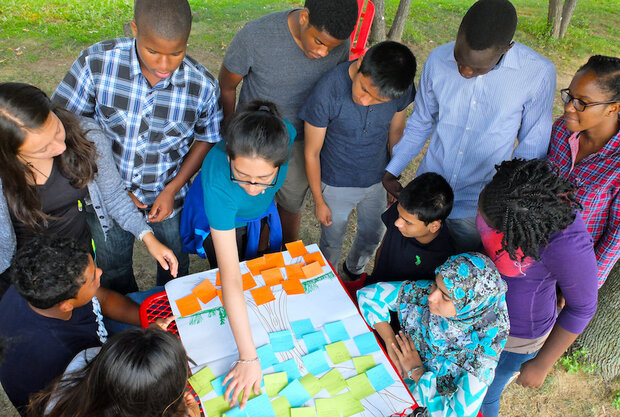
Figure 1: Alliance for Climate Education leader working with a group of students....
Teachers across the country are preparing to teach the science and engineering called for in the new standards designed to address major world challenges and opportunities. Students will face issues, such as generating sufficient clean energy, building climate resilience for businesses and communities, maintaining supplies of food and clean water, and solving the problems of global environmental change that confront society today and in their future. The amount of time teachers are spending on these issues are going up significantly.
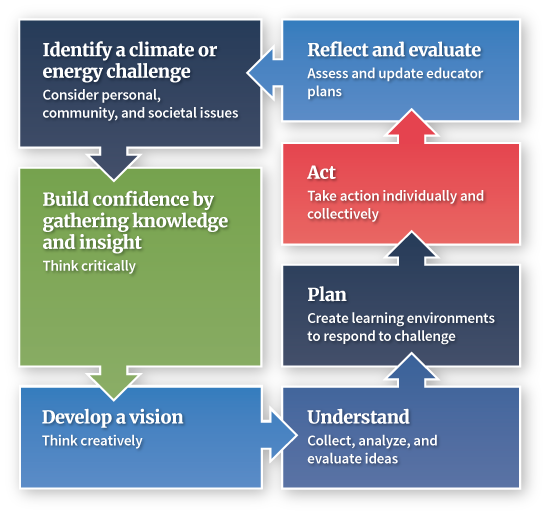
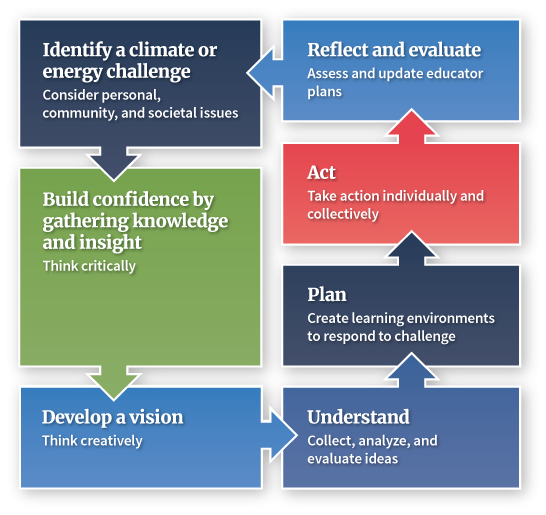
Beginning in 2018, NOAA Climate.gov and a community of educational and science partners developed and organized supporting resources and programs for those who want to teach climate and energy science, backed by some of the nation's most experienced professional educators, scientists, and engineers. The Climate Action Learning Process (CALP, below) provides a path teachers can follow to educate students about climate and energy science, develop the skills to take action, and then reevaluate teaching methods. A supporting toolbox (right) organizes and highlights resources from numerous teaching professionals and science partners all working toward supporting climate and energy education.
These science-based, interdisciplinary models of education and public engagement support learners of all levels and foster climate and energy literacy and action. Armed with newfound knowledge and skills, students will be able to develop their own action plans - in their own communities or on a global scale.
Climate Action Learning Process
Highlighted resources from numerous educational and science partners and programs that support the Climate Action Competence Learning Process. The resources in the toolbox are not comprehensive and will grow as new aligned and effective resources are identified.
Step 1: Identify a Climate or Energy Topic or Issue
- Climate Literacy: The Essential Principles of Climate Science (2025) - This guide updates and expands the 2009 version to reflect advances in our understanding of the climate challenge. As a result, this guide’s definition of climate literacy now incorporates other types of knowledge about the climate system, such as local and Indigenous Knowledges, social and cultural contexts, the social sciences, climate solutions, and climate justice concepts, in addition to physical science. This guide is written with educators, communicators, and decision-
makers in mind. It may be helpful in structuring curricula; assessing gains in people’s knowledge and understanding; stimulating dialogue among people with different interests, skills, and perspectives; and informing climate-related decisions and policies. - Climate Literacy: The Essential Principles of Climate Science (2009) - A guide that provides a framework and essential principles for formal and informal education about climate change. It presents important information for individuals and communities to understand Earth's climate, impacts of climate change, and approaches for adapting and mitigating change. Principles in the guide can serve as discussion starters or launching points for scientific inquiry. The guide can also serve educators who teach climate science as part of their science curricula.
- Energy Literacy: Essential Principles and Fundamental Concepts for Energy Education - An interdisciplinary approach to teaching and learning about energy. The framework identifies seven Essential Principles and a set of Fundamental Concepts to support each principle. The guide does not seek to identify all areas of energy understanding, but rather to focus on those that are essential for all citizens K-Gray. It presents energy concepts that, if understood and applied, will help individuals and communities make informed energy decisions.
- Ocean Literacy Framework - Ocean Literacy means understanding the ocean’s influence on you and your influence on the ocean. There are 7 principles of Ocean Literacy — ideas scientists and educators agree everyone should understand about the ocean. Join the Network to build a more ocean literate society!
- NAAEE Guidelines for Excellence: Best Practice in Environmental Education - The NAAEE National Project for Excellence in Environmental Education developed a series of guidelines that set the standards for high-quality environmental education. Each of these publications was developed by a diverse team of professionals, and each has gone through a substantive review by thousands of professionals prior to its publication.
- NGSS and CLEAN at a Glance for the Next Generation Science Standards tool - The interactive tables will NGSS Performance Expectations (PE) and Disciplinary Core Ideas (DCI) that address climate and energy topics. The tables include links to relevant CLEAN resources.
- NRC Framework for K-12 Science Education - Science, engineering, and technology permeate nearly every facet of modern life and hold the key to solving many of humanity's most pressing current and future challenges. The United States' position in the global economy is declining, in part because U.S. workers lack fundamental knowledge in these fields. To address the critical issues of U.S. competitiveness and to better prepare the workforce, A Framework for K-12 Science Education proposes a new approach to K-12 science education that will capture students' interest and provide them with the necessary foundational knowledge in the field.
- College, Career, and Civic Life (C3) Framework for Social Studies State Standards - The result of a three year state-led collaborative effort, the College, Career, and Civic Life (C3) Framework for Social Studies State Standards was developed to serve two audiences: for states to upgrade their state social studies standards and for practitioners — local school districts, schools, teachers and curriculum writers — to strengthen their social studies programs. Its objectives are to: a) enhance the rigor of the social studies disciplines; b) build critical thinking, problem solving, and participatory skills to become engaged citizens; and c) align academic programs to the Common Core State Standards for English Language Arts and Literacy in History/Social Studies.
Step 2: Build Confidence in Development of Knowledge and Insight (Critical Thinking)
Pedagogy
- Teacher-Friendly Guide to Climate Change - The Teacher-Friendly Guide™ to Climate Change is the newest addition to the Paleontological Research Institution’s Teacher-Friendly series. This book includes both the basics of climate change science and perspectives on teaching a subject that has become socially and politically polarized. The focus audience is high school Earth science and environmental science teachers, and it is written with an eye toward the kind of information and graphics that a secondary school teacher might need in the classroom.
- CLEAN Guidance in Teaching Climate and Energy - These pages designed to help educators understand and be equipped to teach the big ideas in climate and energy science.
- PBS Learning Media Forum on Digital Media for STEM Learning: Climate Education - This Forum on Digital Media explored how the stories and science behind these impacts are increasingly being integrated into classroom instruction and STEM education contexts, with a focus on digital media. Held at WGBH’s Brighton studio on Monday, November 9, 2015, this highly-interactive and fast-paced event examined emerging narratives in climate education, digital media tools and products that show unique potential for educational settings, and promising modes of engagement for students, teachers, and schools. All resources are available free to view in PBS Learning Media.
Advances in science
- USGCRP National Climate Assessment (2024) - The National Climate Assessment (NCA) assesses the science of climate change and variability and its impacts across the United States, now and throughout this century. This assessment was written to help inform decision-makers, utility and natural resource managers, public health officials, emergency planners, and other stakeholders by providing a thorough examination of the effects of climate change on the United States. It was thoroughly reviewed by external experts and the general public, as well as the Federal Government (that is, the NCA5 Federal Steering Committee and several rounds of technical and policy review by the 15 federal agencies of the USGCRP). An expert external peer review of the whole report was performed by an ad hoc committee of the National Academies of Sciences, Engineering, and Medicine (NASEM).
- Climate.us News & Features - A popular-style magazine for the science-interested public covering topics in climate science, adaptation, and mitigation. https://climate.us/news-features
- Climate.us Maps & Data - A gateway to reusable climate maps and datasets that document various climate conditions. The section aims to serve officials and professionals who need climate data to inform their decisions or compile a climate adaptation report. https://climate.us/maps-data
How society is successfully responding
- U.S. Climate Resilience Toolkit - The U.S. Climate Resilience Toolkit is a website designed to help people find and use tools, information, and subject matter expertise to build climate resilience. The Toolkit offers information from all across the U.S. federal government in one easy-to-use location. https://toolkit.climate.gov/
- C40 - A network of the world’s megacities committed to addressing climate change. C40 supports cities to collaborate effectively, share knowledge and drive meaningful, measurable and sustainable action on climate change. http://www.c40.org/
- 100 Resilient Cities - Pioneered by the Rockefeller Foundation (100RC) is dedicated to helping cities around the world become more resilient to the physical, social and economic challenges that are a growing part of the 21st century. http://100resilientcities.org/
- Georgetown Climate Center - The nonpartisan Georgetown Climate Center seeks to advance effective climate and energy policies in the United States and serves as a resource to state and local communities that are working to cut carbon pollution and prepare for climate change. http://www.georgetownclimate.org/
Step 3: Develop a Vision (Creative Thinking)
-
AMS Education Professional Development - Enhance your knowledge of Earth system science and earn tuition-free graduate credit through AMS Education’s K-12 teacher professional development programs. Over 21,000 teachers have boosted their STEM expertise and impacted millions of students across the nation through these courses.
- NSTA Professional Learning Center - NSTA Learning Center as your online platform when developing professional learning experiences for teachers of science.
- CLEAN Teleconference - CLEAN Network members meet in a teleconference to collaborate and share information about their literacy work, upcoming events, opportunities for collaboration or funding. Frequently guest speakers present on the topic of climate and energy literacy. *As of August 2026, the network is currently hibernating, but you can sign up and be notified when teleconferences start again.
- GLOBE Program - The Global Learning and Observations to Benefit the Environment (GLOBE) Program is an international science and education program that provides students and the public worldwide with the opportunity to participate in data collection and the scientific process, and contribute meaningfully to our understanding of the Earth system and global environment. https://www.globe.gov/
Step 4: Understanding (Gathering, analyzing, and evaluating ideas)
-
Understanding Global Change and Understanding Science - The Understanding Global Change web resource in development from the UC Museum of Paleontology at UC Berkeley will provide science educators with a conceptual framework, systems models, lessons, and assessment tools to guide the design of interdisciplinary global change curricula. Understanding Science provides resources to support the exploration of the nature and process of science.
-
World Climate: Climate Change Negotiations Game - The World Climate Simulation is a role playing exercise of the UN climate change negotiations for groups. It is unique in that it uses an interactive computer model to rapidly analyze the results of the mock-negotiations during the event. All the materials and tools for World Climate are available for free and many are available in multiple languages. We encourage you to organize a World Climate Simulation yourself.
- Project Drawdown - The project is one of the most comprehensive plan ever proposed to reverse global warming. Their organization did not make or devise the plan—they found the plan because it already exists. They gathered a qualified and diverse group of researchers from around the world to identify, research, and model the 100 most substantive, existing solutions to address climate change. What was uncovered is a path forward that can roll back global warming within thirty years. It shows that humanity has the means at hand. Nothing new needs to be invented. The solutions are in place and in action. Their work is to accelerate the knowledge and growth of what is possible.
Step 5: Planning (Create learning environments for responding to climate changes)
Educational Resources
- CLEAN Collection of Climate and Energy Science Resources - The CLEAN collection, is an online database of 700 free, science and peer-reviewed, and ready-to-use educational resources for teaching middle, high school and undergraduate students about climate and energy.
- Alliance of Climate Education, Our Climate Our Future - Our Climate Our Future is an award-winning climate education resource for teachers and students featuring ACE’s signature mix of animation, video and interaction, including trivia questions, climate change lesson plans and more.
- National Wildlife Federation’s (NWF) Climate Classroom is online climate science and solutions curriculum, learning community and education policy development program to help K-16 educators develop skills in and have the tools and public support they need to teach students about the most important environmental subject they will experience throughout their lifetimes. NWF provides teacher training and developed the following websites with media partners to help everyone, especially youth, meet the challenge of a new climate reality and ensure that all people can take an active role in shaping a more sustainable and climate resilient future.
-
Climate Classroom Kids - For younger students climate change can seem complicated and scary. That’s why age appropriateness is a vitally important ingredient of climate change education. How do you answer the questions children will inevitably raise about climate change? And how do you examine the topic in a manner that doesn’t frighten or overwhelm them? The best strategy is to provide young children with brief, accurate information at a level you know they can understand and relate to—and in hopeful ways. Climate 101 provides answers to real kids questions. The cross-curricular lesson plans are designed for grades 3-5, with extensions for younger and older students.
-
Climate Classroom for Years of Living Dangerously - Climate Smart lessons plans and resources correspond to the science and issues presented in the award-winning documentary series and offer a unique and timely interdisciplinary teaching opportunity. Their education initiative provides engaging and relevant video assets as part of the curriculum. Educators and students meet scientists, acquire knowledge and STEM skills necessary to meet academic challenges and graduate climate literate.
-
An Inconvenient Sequel Education - Their goal is to help students develop system thinking skills by leveraging the diverse perspectives and fact-based evidence shared in the film. Resources include a series of foundational climate science and civics lessons, case studies and action projects planning guide.
-
- EarthLabs - the EarthLabs project provides a national model for rigorous, engaging Earth and environmental lab science courses. These units illustrate a sequence for learning science concepts through data analysis activities, satellite imagery and computer visualizations, and hands-on experiments that illustrate processes of our Earth system.
- KidWind - The KidWind Project has been working with educators to integrate clean energy into classrooms for 20 years. They offer NGSS-aligned curricular materials on wind, solar, hydropower, and more.
Professional networks
- CLEAN Network - The CLEAN Network is a professionally diverse community of over 630 members committed to improving climate and energy literacy locally, regionally, nationally, and globally, to enable responsible decisions and actions.
- NAAEE eePRO Climate Change Education Group - The NAAEE eePRO group discussion platform supports special interest groups and connecting people to discuss key issues related to all things environmental education (EE) including climate change education.
- National Earth Science Teachers Association (NESTA) - NESTA facilitates and advances excellence in K-12 Earth and Space Science education, serving a diverse population of learners in formal and informal settings.
- National Association of Geoscience Teachers - NAGT members are committed to teaching excellence and the preparation of productive, responsible citizens who understand the complexity and vulnerability of the planet that sustains all of us.
- NCSE Science Education and Outreach - The Science Education and Outreach (SEO) program works with K-12 science teachers, science faculty, and science research institutions to provide professional development across the country. SEO employs a no-conflict approach that directly addresses common misconceptions students have about climate change, evolution, and the nature of science.
- National Network for Ocean and Climate Change Interpretation (NNOCCI) - NNOCCI is a network of individuals and organizations in formal and informal education, the social sciences, climate sciences, and public policy. We are currently working in nearly 500 institutions in 47 states and have expanded into Canada and multiple other countries throughout Europe & Africa. We share a commitment to using evidence-based communications methods and providing the social and emotional support needed to engage as climate communicators. By working together, we develop the knowledge, techniques, community, and confidence needed to empower our audiences to act on climate change. And by speaking about climate change consistently across the country and beyond, we are changing public discourse to be positive, civic-minded, and solutions-focused.
Step 6: Acting (Individually & Collectively)
- KidWind Challenge - The KidWind Challenge is a hands-on design competition where student teams showcase their small-scale wind turbines and solar homes. Each year thousands of students design and test their own wind turbines and solar homes, fostering curiosity, developing STEM skills, and preparing for future careers in clean energy. KidWind has grown into a global network with programming in over 38 U.S. states and partners internationally, supporting teachers with training, curriculum, and community, all with a small, dedicated staff.
- The Wild Center’s Youth Climate Summit model - Looking to host a summit of your own? No matter where you’re located in the world, the Wild Center’s Youth Climate Summit model is a replicable, scalable model that any organization can base their own summit off of. To get you started, they’ve compiled a helpful Youth Climate Summit toolkit and appendix for you to download and start planning your own climate summit.
Step 7: Reflecting and Evaluating (Assess and update Educator Plans)
Building the capacity of students and teachers have been shown to have the greatest cost-benefit value for adaptation to climate change (Lutz et al. 2014). But while education can be one of the most efficient mechanism for changing individuals and communities climate related actions and improving climate literacy, it is still emerging how to best deliver it (Mochizuki and Bryan 2015).
While many education programs around the world have done an excellent job building students’ knowledge around the causes of climate change, limited evidence exists that this knowledge is sufficient to change the actions responsible for climate change (Eilam and Trop 2012). Ironically, it is often the most educated that lead the most carbon intensive lifestyles, suggesting it is not more education that is needed, but different education. As this different and more effective educational practice is developed, educators and program developers can connect with others to share what works. The diverse professional networks above in step 5 are places where this new form of education is already being developed.
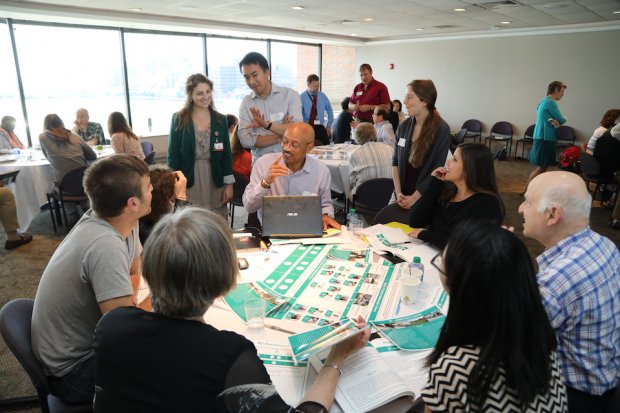
Figure 3: ASU/MOS
Building Sustainable Communities
Communities are stepping up to address climate change impacts, serving as the primary incubators of social innovation and generating new strategies for sustainable living. Teachers can build knowledge of climate science and energy infrastructure, and encourage individuals to gain the skills, attitudes, and motivations they need to build sustainable communities. Tomorrow’s workforce must be able and willing to solve urgent challenges, such as climate change.
Building A Community Committed To Improving Climate And Energy Know-How
The CLEAN Network is a professionally diverse community of over 640 members committed to improving climate and energy literacy locally, regionally, nationally, and globally, to enable responsible decisions and actions. The two main methods of engagement in the CLEAN Network are a email list and participation in the weekly teleconference highlighting important programs and initiatives. Other activities of the CLEAN Network include providing feedback on relevant national-scale documents, engagement through professional meetings, and outreach through postings on the CLEAN Facebook page and informational webinars. Join the CLEAN Network