
Thanks to the global oceans, Earth's surface temperature doesn't react instantly to the full impact of a climate disturbance. That delayed reaction has pros and cons.
Thanks to the global oceans, Earth's surface temperature doesn't react instantly to the full impact of a climate disturbance. That delayed reaction has pros and cons.
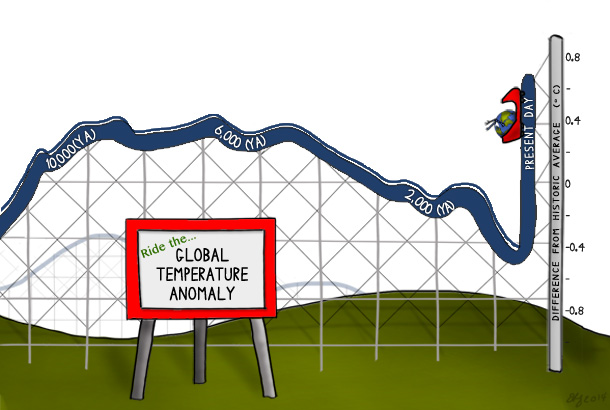
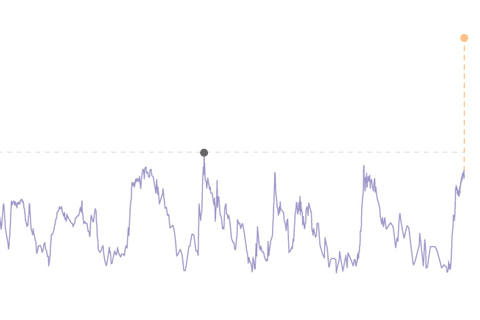
Natural variability can explain much of Earth's average temperature variation since the end of the last ice age, but over the past century, global average temperature has risen from near the coldest to the warmest levels in the past 11,300 years.
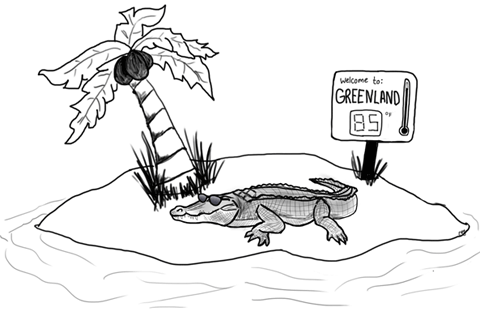
Earth’s hottest periods occurred before humans existed. Those ancient climates would have been like nothing our species has ever seen.
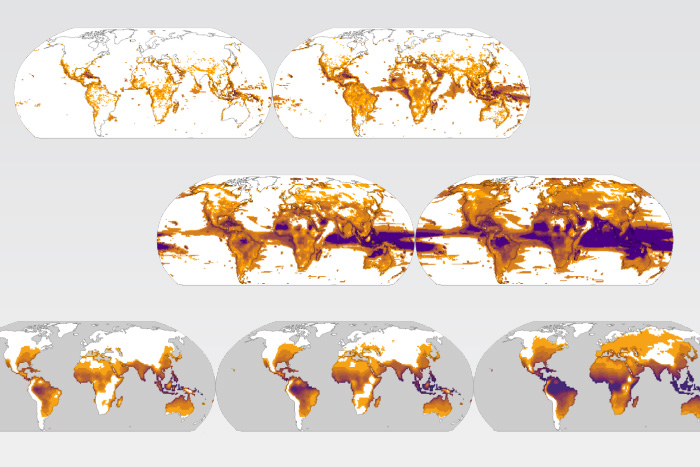
China has overtaken the U.S. as the largest annual emitter, but all countries have to reduce their emissions if we want to stop further global warming. Every fraction of a degree of warming we avoid lowers the risks to people and other life on Earth.
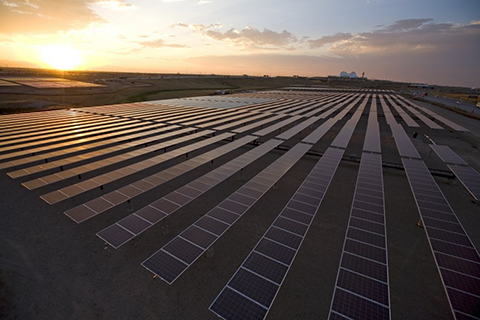
While we cannot stop global warming overnight, or even over the next several decades, we can slow the rate and limit the amount of global warming by reducing human emissions of heat-trapping gases and soot.
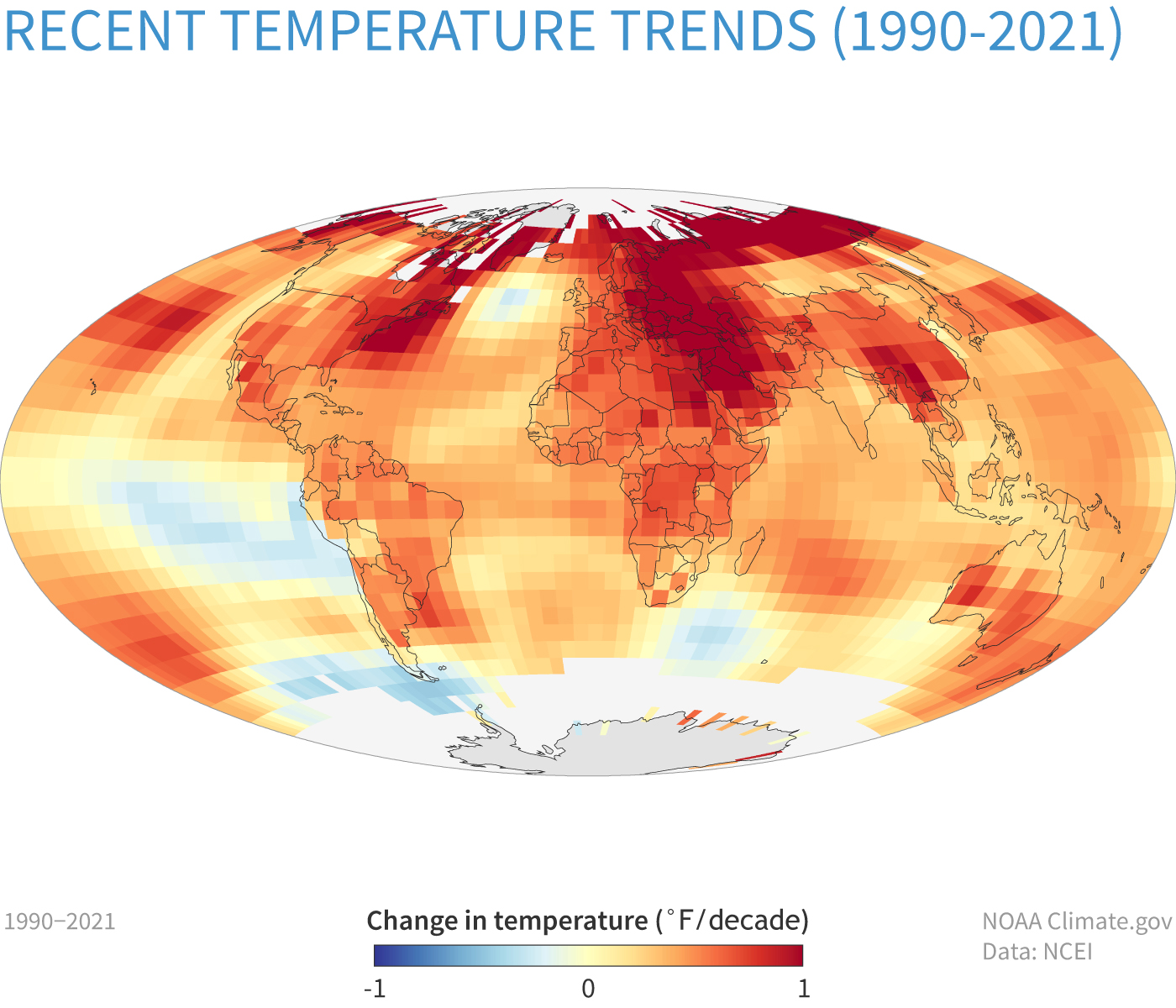
Differences in exposure to sunlight, cloud cover, atmospheric circulation patterns, and other factors influence whether and how much a location is warming or cooling.
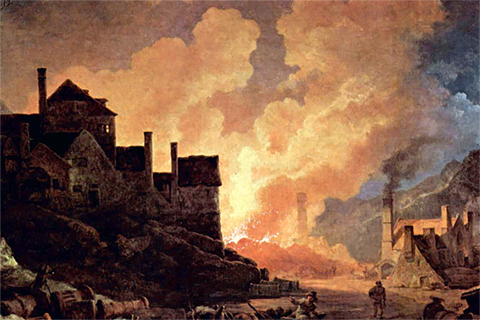
Fossil fuels are the only source of carbon dioxide large enough to raise atmospheric carbon dioxide amounts so high so quickly.
There is overwhelming scientific evidence that Earth is warming and a preponderance of scientific evidence that human activities are the main cause.

En realidad, desde diversos puntos de vista, es más difícil pronosticar el tiempo para dentro de dos semanas que pronosticar el clima con décadas de anticipación.

Our planet’s history includes episodes of cold so extreme that glaciers reached sea level in equatorial regions.