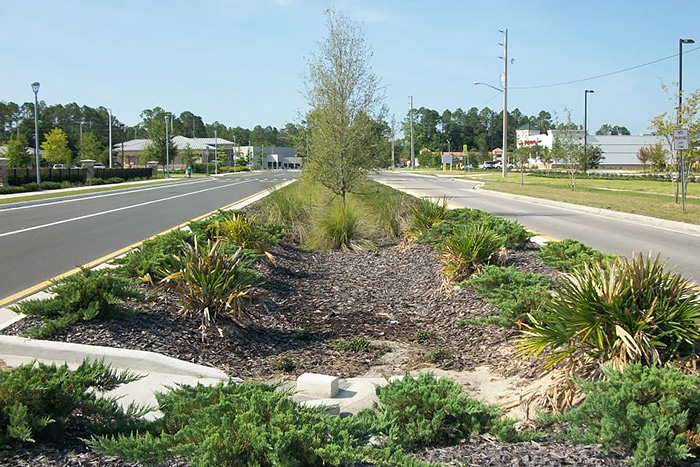
Green infrastructure mimics natural processes and can mitigate impacts of urban development and climate change, but uncertainties remain about its effectiveness. A new open-source tool may help decision makers.
Green infrastructure mimics natural processes and can mitigate impacts of urban development and climate change, but uncertainties remain about its effectiveness. A new open-source tool may help decision makers.

During the 2022 Atlantic hurricane season, scientists at NOAA’s Atlantic Oceanographic and Meteorological Laboratory (AOML) will again help NOAA prepare the public for severe weather. They will also conduct new research on the complexites of how tropical cyclones form, develop, and dissipate.
In recent decades, the Northern Hemisphere has featured a “Warm Arctic, Cold Continents” (WACC) pattern: warming and rapid sea ice loss of the Arctic, and frequent cold, harsh winters over Eurasia and central North America. A new study, funded in part by CPO’s Climate Variability and Predictability (CVP) program, investigates the drivers of year-to-year variability in the WACC.

A study published in the Journal of Climate provides new insights into the Madden-Julian Oscillation (MJO). Researchers documented continued progress in understanding why the MJO often weakens over …
In the Atlantic coast of North America, regional-scale relative sea level has changed mostly because of movements of Earth’s crusts and melting glaciers during the Holocene, a period of time ...
A study partially supported by CPO's Climate Variability and Predictability Program concluded that the abrupt deep convection of the 2008 winter in the Labrador Sea is associated with unusual ...
The Pacific Northwest Climate Impacts Research Consortium recently released the second issue of Northwest Climate , a magazine with stories about climate science and adaptation initiatives in the ...
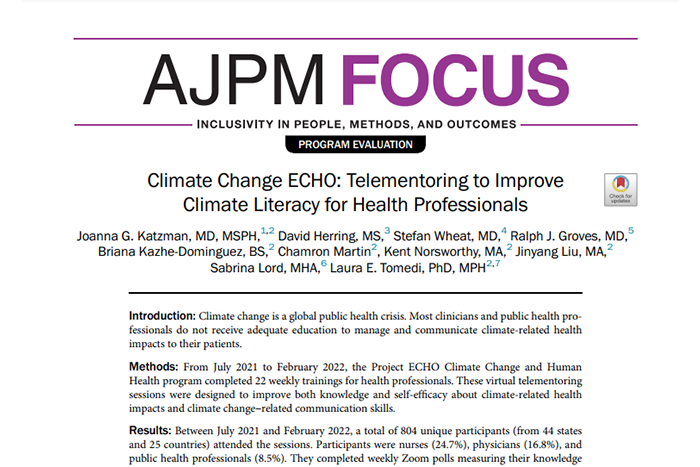
Though climate change is a global public health crisis, most doctors and public health professionals do not receive the education necessary to effectively communicate climate change-related health impacts to their patients. Between July 2021 and February 2022, a new program delivered 22 weekly telementoring sessions for healthcare professionals.
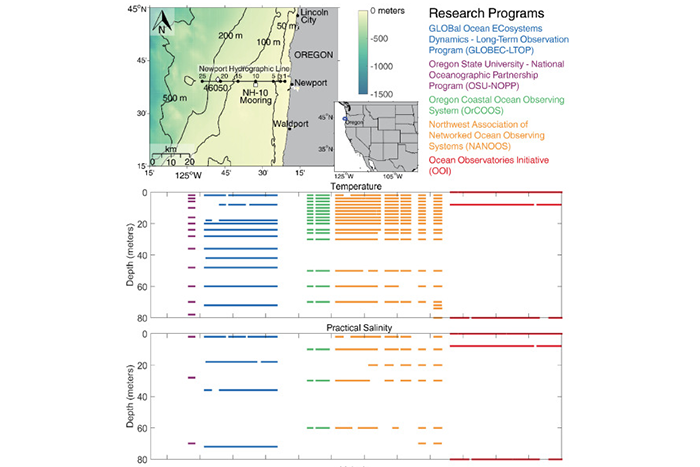
A new study incorporates observations from moorings installed along the Oregon coast in the 1990s and 2000s. The study incorporates the mooring measurements into a data set spanning more than two decades, and makes the data publicly available for the first time.