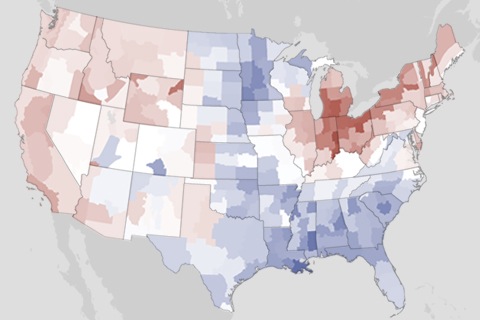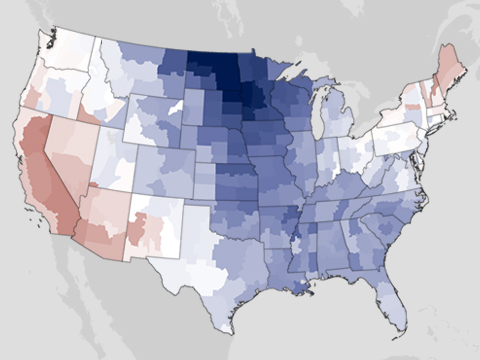
Spring 2013 has brought something fairly unusual in recent years: colder-than-average temperature for the nation as a whole. NOAA's Deke Arndt talks about how spring temperatures in three U.S. climate divisions compare to the local long-term trend.
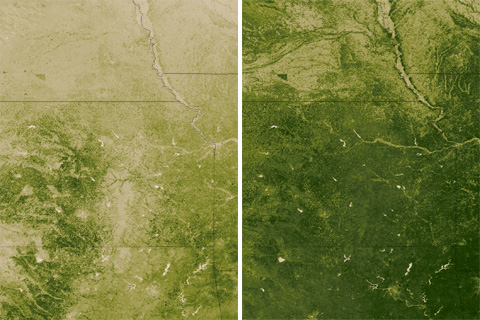
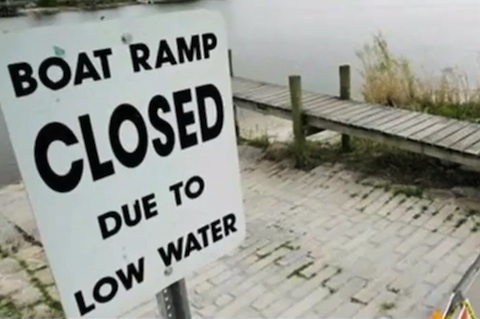
During late winter, Texas, Oklahoma, and Kansas received sorely needed rain which helped reduce short-term impacts, like wildfire and dry topsoil. But as Deke Arndt explains, it has taken months to develop deep and severe drought in the region, and a few wet weeks won't erase that situation. It can take months of ideal conditions to bring soil, rivers, and vegetation back to health.
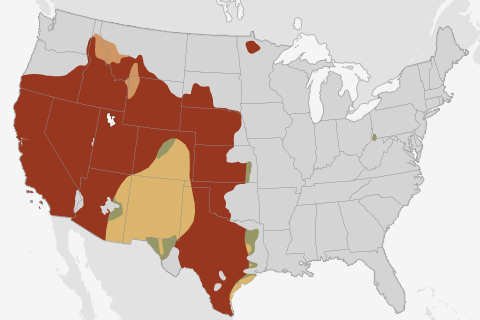
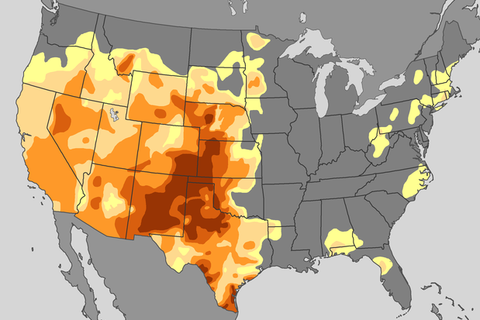
Drought status in the contiguous United States on May 14, 2013.
Although most drifting buoys start their journeys with a crude send-off—usually heaved into the ocean from the stern of a moving ship—NOAA oceanographer Rick Lumpkin describes today's drifter as "a high-tech message in a bottle." Insignificant on their own, but an army of drifters 1,000 strong patrols the world's oceans and records key data for climate monitoring and research.
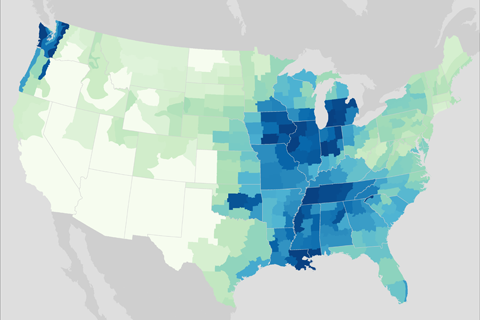
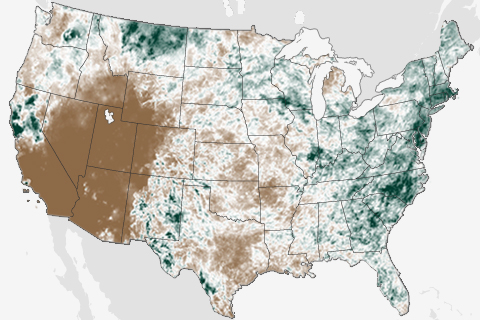
April showers and cool temperatures brought drought relief to many areas across the United States, but conditions worsened in the Southwest.
On any given day or any given month, somebody somewhere– maybe even where you live– experiences colder-than-average temperature, even though the globe as a whole is warmer than average.
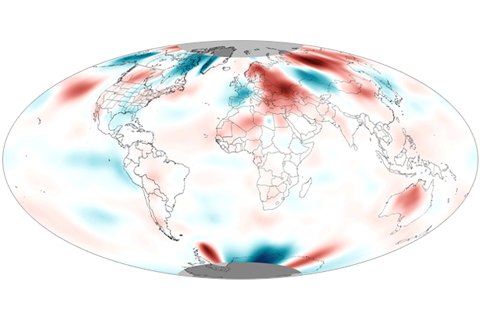
While Mother Nature was still giving the United States the cold shoulder during March, many other areas across the world experienced higher-than-average monthly temperatures according to the latest…
Much colder-than-average temperature during March and a strongly negative Arctic Oscillation Index reminded people in the United States how important this index is to our own climate conditions.
Looking at the temperature maps for March 2013, you might think that Old Man Winter over stayed his welcome or that Mother Nature was trying to make up for last March’s record-breaking heat. Much of…
NOAA's Climate Prediction Center released its Spring Outlook on March 21. The big story for the upcoming spring? Relief for many drought-stricken areas of the United States is not likely.