Government programs such as managed retreat are controversial. New findings suggest long-term success of these programs entail offering more help to the local governments implementing them.
Understanding volcanoes is essential to fully understanding the El Niño-Southern Oscillation (ENSO) and its effects on climate. A newly published study revisits the link between ENSO and volcanic activity, in light of newer data.
A new study finds that California wildfire emissions from the last five years are more than five times greater than the emissions from the previous four decades. The study also shows the importance of vegetation and fire severity in controlling wildfire distribution.
A new study suggests a series of Gulf of Mexico reefs are more resilient to warmer oceans as they are exposed to a wider range of temperatures brought on by a physical movement of seawater called “eddies.”
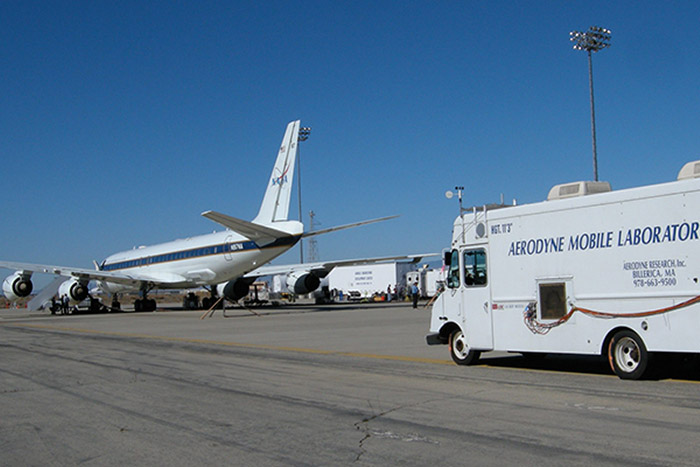
How much aerosols scatter light and reduce visibility can be linked to human health impacts. Measurements taken during the Fire Influence on Regional to Global Environments and Air Quality (FIREX-AQ) campaign provide a record of aerosol light scattering during the 2019 wildfire season in the western United States.
A new system has begun removing acid from seawater at the U.S. Department of Energy’s Pacific Northwest National Laboratory facility in Sequim, Washington, allowing seawater to take up and store carbon dioxide from the atmosphere.
Rare observations of surface currents in the Bay of Bengal will help scientists understand when an ocean current may veer in a direction opposite to what they expect.
News release from Scripps Institution of Oceanography: The Lagrangian Drifter Laboratory (LDL) at the Scripps Institution of Oceanography (SIO) is releasing a new type of drifter, the Directional ...
Western Water Assessment (WWA) has just released the Utah Hazard Planning Tool, which provides resources about the historical incidence, current risk, and future projections of natural hazards in the state.