News & Features
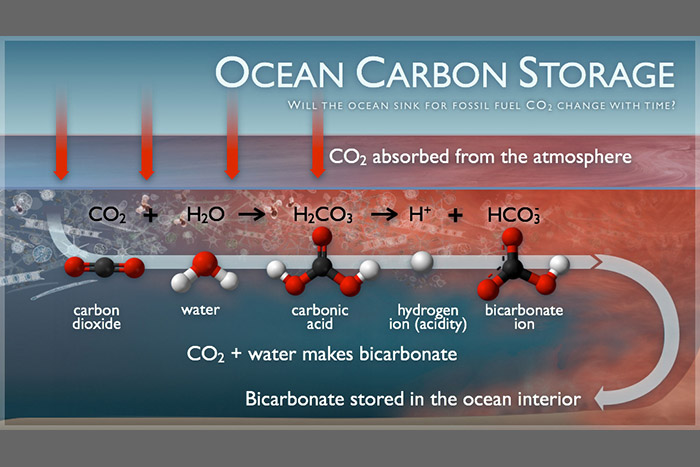
A new study captures a snapshot of two decades of global interior ocean measurements, and the study demonstrates that the ocean’s role as a carbon sink and its ability to store anthropogenic carbon may be weakening.

The authors found that an otherwise moderate drought in the western United States was made into the most severe drought of the last 500 years and that our warming climate is playing a key role.
The findings have important implications for changes we are likely to see in the 21st century .
NOAA scientists are forecasting this summer’s Gulf of Mexico hypoxic area or “dead zone” – an area of low to no oxygen that can kill fish and other marine life – to be approximately 6,700 square…
NOAA scientists are forecasting this summer’s Gulf of Mexico hypoxic area or “dead zone” – an area of low to no oxygen that can kill fish and other marine life – to be approximately 6,700 square…
NOAA Research-funded scientists have reported a sobering finding in Science regarding our Nation’s severe weather: the tornado outbreaks with the most tornadoes are spawning more tornadoes than ever…
This CPO-supported dataset has resulted in new ways in which the community can examine low frequency climate and it is now in a reliable public data repository for years to come.