
Grants are intended to support island communities with broad efforts to build climate resilience and advance sustainable development goals.
Grants are intended to support island communities with broad efforts to build climate resilience and advance sustainable development goals.
Incorporating regional climate impacts into large national hazard assessments provides critical context for building resilient infrastructure.
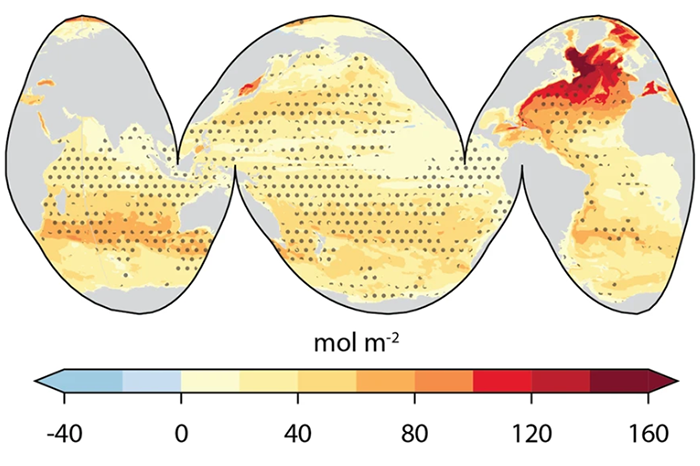
Ocean waters can acidify by absorbing anthorpogenic carbon emissions, and Arctic regions are particularly vulnerable to rapid pH changes. A new study shows that unsupervised machine learning can identify distinct clusters of surface acidification in the Arctic.
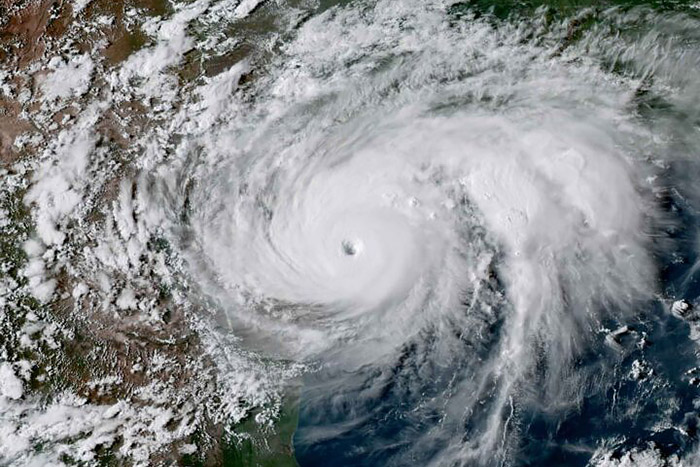
Accurate hurricane track and intensity forecasts are crucial for early preparation, but hurricane models have trade offs. High-resolution models improve hurricane intensity prediction than low-resolution models, but the high-resolution models are more prone to errors.
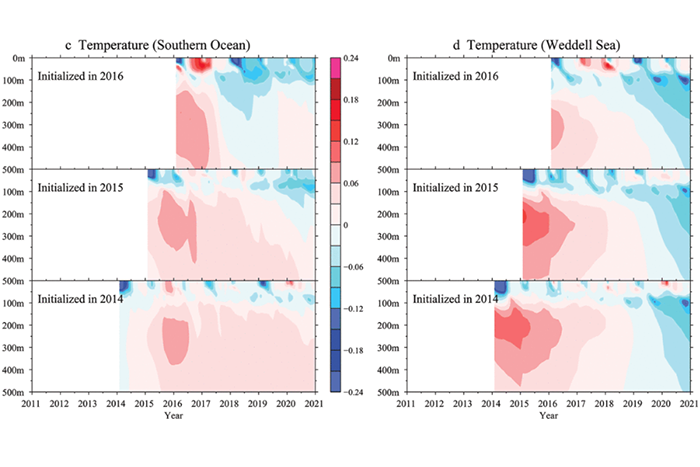
Antarctic sea ice has experienced a string of negative extent anomalies over the last several years. A new study finds the atmosphere might play a larger role that these negative anomalies than the subsurface Southern Ocean. Still, the ocean plays a critical role in the persistence of low sea ice extent.

Failed monsoon rains that reignited the southwestern U.S. drought. A spring heat wave in western Europe. Intense Siberian wildfires. Scientists say human-caused climate change made these extreme weather events more likely, according to new research published today in the Bulletin of the American Meteorological Society (BAMS).
According to the newest Global Carbon Budget report, global emissions continue to rise and must be significantly reduced to meet global climate targets and avoid severe and deleterious effects of climate change.
A multimedia report is now available for the 2015 El Niño Conference held November 17-18, 2015 in Palisades, NY. NOAA's Climate Program Office co-sponsored this conference, in partnership with the …