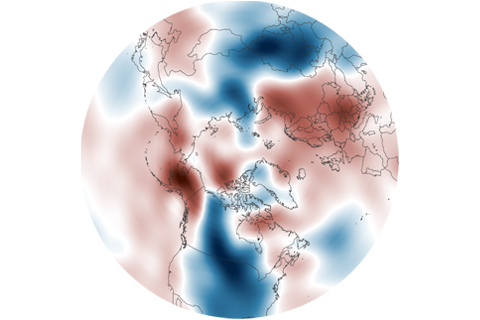
A few days of unusually cold weather in the U.S. and Canada aren't a sign that a century-or-more trend of rising global surface temperatures has reversed itself. In fact, the cold wasn't even all that widespread for the Northern Hemisphere.
A few days of unusually cold weather in the U.S. and Canada aren't a sign that a century-or-more trend of rising global surface temperatures has reversed itself. In fact, the cold wasn't even all that widespread for the Northern Hemisphere.
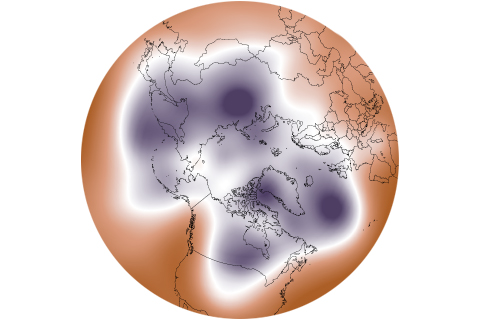
Meteorologists have known for years that the pattern of the polar vortex determines how much cold air escapes from the Arctic and makes its way to the U.S. during the winter. Climate scientists are wondering if a warmer Arctic could explain its odd behavior in recent years.
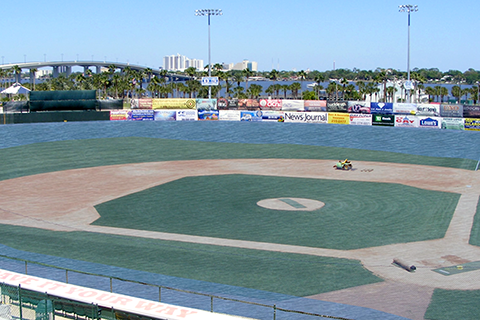
The CanVis tool from NOAA’s Coastal Services Center creates images of potential coastal changes, letting planners and citizens put changes in perspective before they happen.
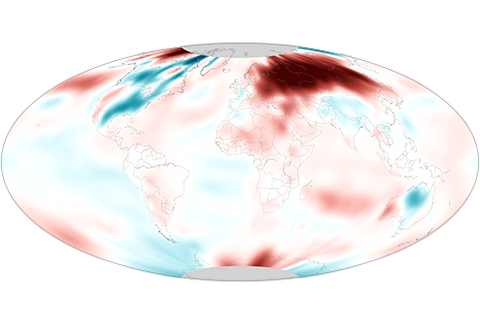
While much of the United States was cooler than average in November, the globe as a whole set a new record for warmth.
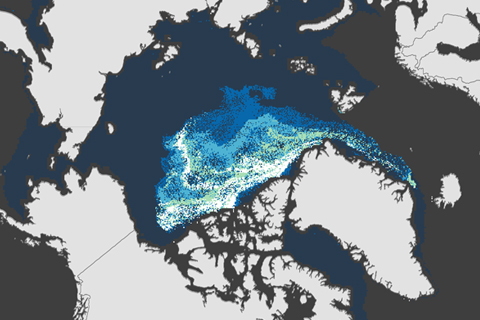
Thick, old ice used to dominate the winter ice pack in the Arctic. This animation of maps of sea ice age from 1987 through end of October 2013 shows how little old ice is left in the Arctic.
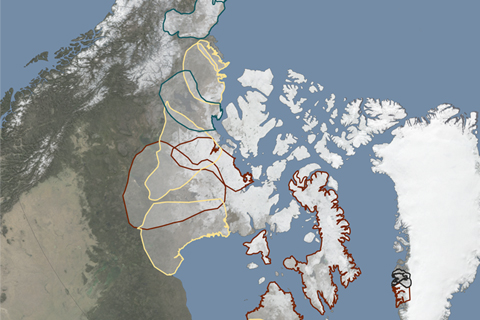
Only a few herds of reindeer and caribou are increasing or are stable at high numbers; most herds continue to decline or remain at low numbers after severe declines in recent decades. Whether these trends are a result of Arctic climate change or part of a natural pattern is still unknown.
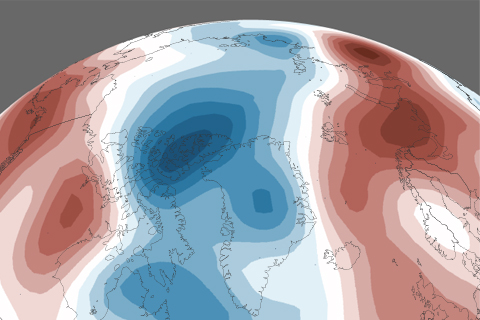
From reindeer to regional temperature patterns, from sea ice age to Greenland surface melt, the Arctic Report Card is a yearly assessment of the Arctic's physical and biological systems and how they are changing. This collection of visual highlights from the 2013 report is a story of the Arctic in pictures.
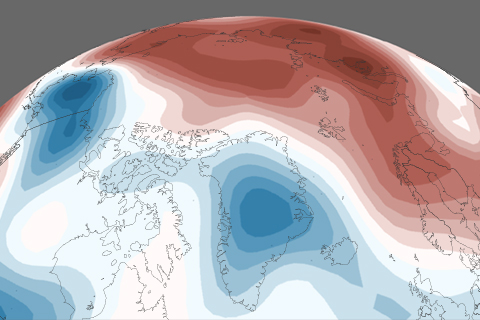
Since the mid-1960s, the Arctic has warmed about 3.6°F (2.0°C)—more than double the amount of warming in lower latitudes. In 2012 (the last complete calendar year available at the time scientists began working on the 2013 Arctic Report Card), the annual average temperature was the sixth warmest on record.
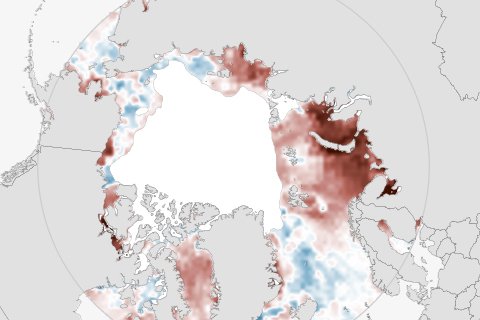
Most of the Arctic boundary waters were warmer than average in summer 2013, but a few cool pockets appeared in the western Arctic and the Greenland Sea. Warmer waters are drawing new species from lower latitudes into the Arctic.
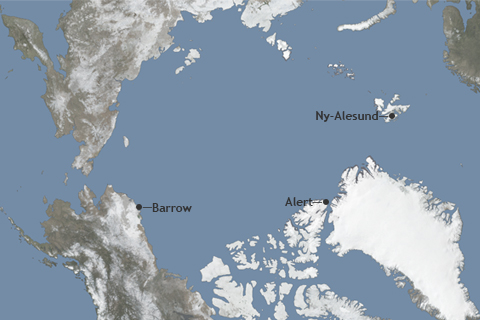
Since the early 1990s, annual atmospheric equivalent black carbon concentrations in the Arctic have decreased at the surface by as much as 55 percent—one of the few "good news" stories coming out of the region.