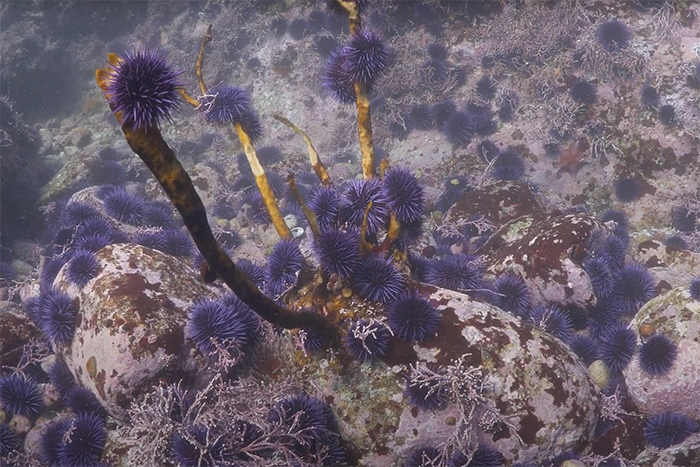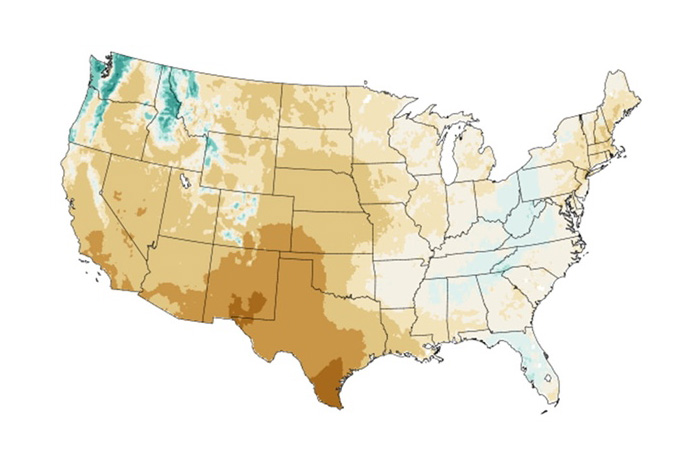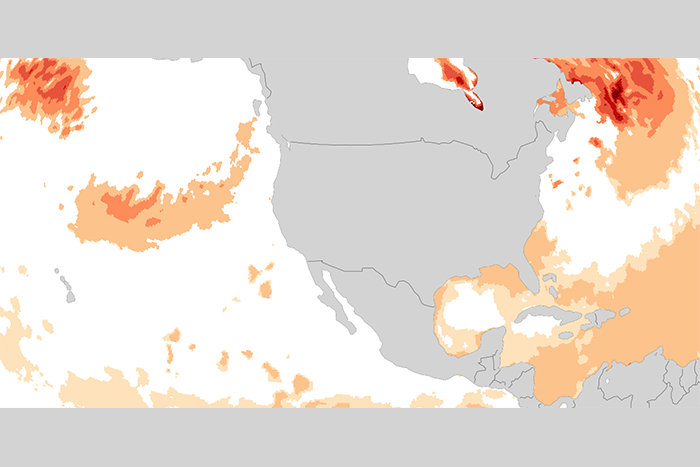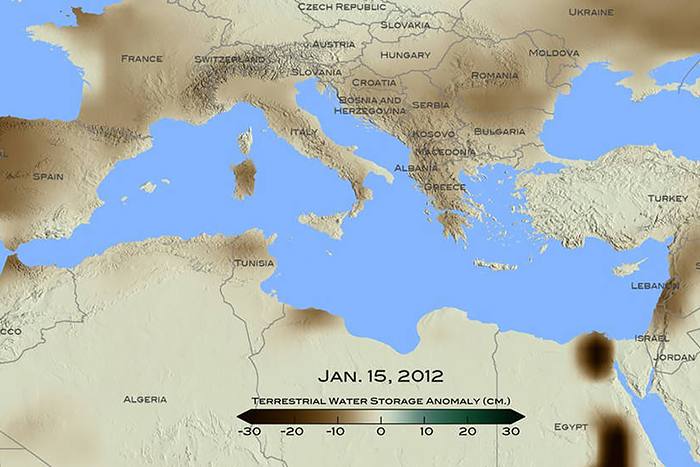
A CPO-funded study published in Geophysical Research Letters concluded that although tropical Pacific sea surface temperatures hit a record high during the 2015-2016 El Niño, impacts to marine ...
The use of sulfuryl fluoride as a pesticide has raised concerns due to its potent greenhouse gas properties. A new study reveals California as the largest emitter, particularly in coastal regions such as Los Angeles, Orange, and San Diego counties.
NOAA has worked with the American Planning Association to produce a new report proposing a framework for climate resilience planning in the San Diego region. Some of the threats covered in the report are unique to the region; some threats have already happened in other U.S. regions.
The first formal state climate assessment for Nevada, it covers heat, drought, snow loss, flood and wildfire risk changes associated with impacts to public health, water resources, habitats, ...
Want to contribute to the National Climate Assessment? The U.S. Global Change Research Program (USGCRP) is soliciting individuals to serve as Review Editors for the Fourth National Climate ...
Phytoplankton strongly influence ocean carbon storage, so scientists want to understand what affects these tiny organisms. A new study identifies solar radiation as the most important driver of phytoplankton biomass.
A potentially high-impact study sponsored by NOAA CPO’s Modeling, Analysis, Prediction, and Projections (MAPP) program titled “Influence of the El Niño/Southern Oscillation on tornado and hail ...
A new study uses computer modeling to explore how injecting reflective particles into the atmosphere might slow Antarctic ice melt. The study finds that location matters; a single injection in the Northern Hemisphere could increase Antarctic melt.
Prior to the Industrial Revolution, CO2 levels were consistently around 280 ppm for almost 6,000 years of human civilization. Carbon dioxide measured at NOAA’s Mauna Loa Atmospheric Baseline Observatory reached 421 parts per million in May 2022.