
Water reserved in mountain snowpack plays a major role in seasonal water cycles and currently supplies water to an estimated two billion people.
Water reserved in mountain snowpack plays a major role in seasonal water cycles and currently supplies water to an estimated two billion people.
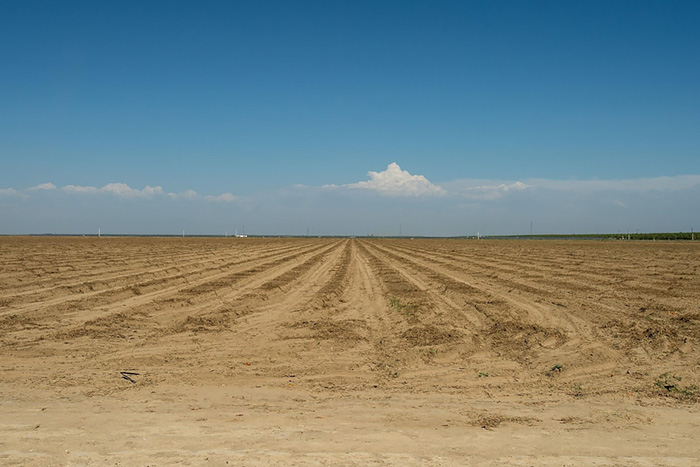
In a special collection of the American Meteorological Society, 13 papers produced by researchers from the third NOAA Climate Program Office’s Modeling, Analysis, Predictions, and Projections (MAPP) program Drought Task Force (DTF3) describe research advances leading to improved monitoring, prediction, and understanding of past droughts.
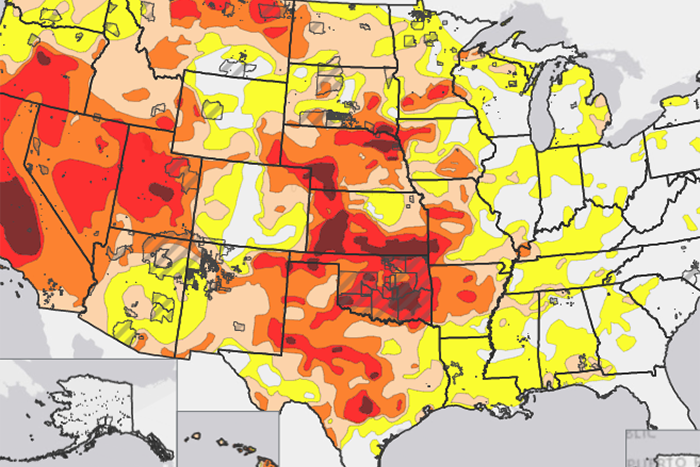
Drought.gov offers a new map customization feature for Tribal Nations. This feature allows users to display reservation boundaries on any map on Drought.gov.
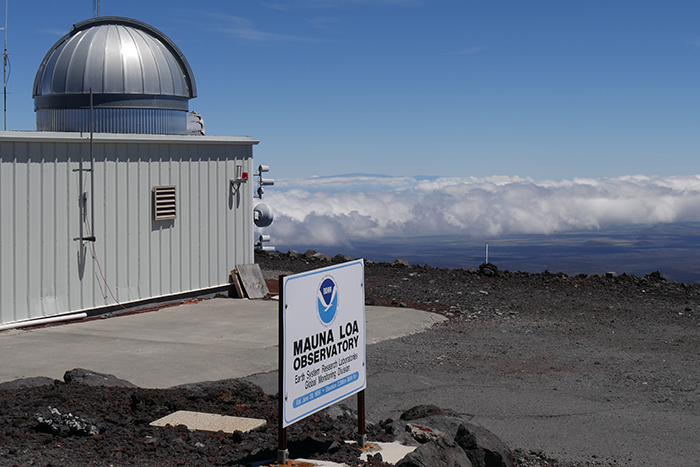
Carbon dioxide measured at NOAA’s Mauna Loa Atmospheric Baseline Observatory surged to a seasonal peak of just under 427 parts per million (426.90 ppm) in May 2024. That’s an increase of 2.9 ppm over May 2023 and the 5th-largest annual growth in NOAA’s 50-year record.
Research supported by NOAA CPO’s Climate Variability and Predictability (CVP) program has been accepted for publication in the Bulletin of the American Meteorological Society . The paper by Chen et …
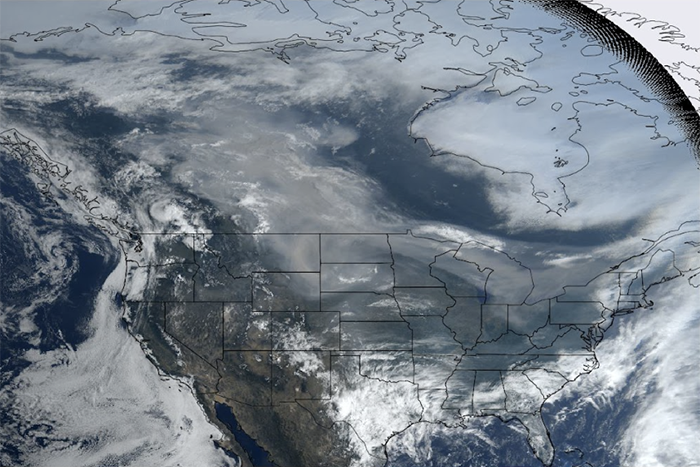
A new analysis found that ozone pollution readings in the Upper Midwest caused by massive Canadian wildfires in spring 2023 were the worst in decades.
As we celebrate 50 years of Earth Day, NOAA Education programs reflect on the impacts that educators and students have made on the planet. By exploring the past, present, and future, we see how…
For 50 years, scientists at NOAA have been conducting research that helps us understand our planet and address its biggest challenges. From tracking carbon dioxide levels in the atmosphere to ...
Guess who’s turning 50? Two big names are celebrating a big milestone this year.