
A recent modeling study supported by CPO's Climate Observations and Monitoring Program was published in Environmental Research Letters on May 19. The study, led by PI Jiping Liu, is titled: ...
A recent modeling study supported by CPO's Climate Observations and Monitoring Program was published in Environmental Research Letters on May 19. The study, led by PI Jiping Liu, is titled: ...
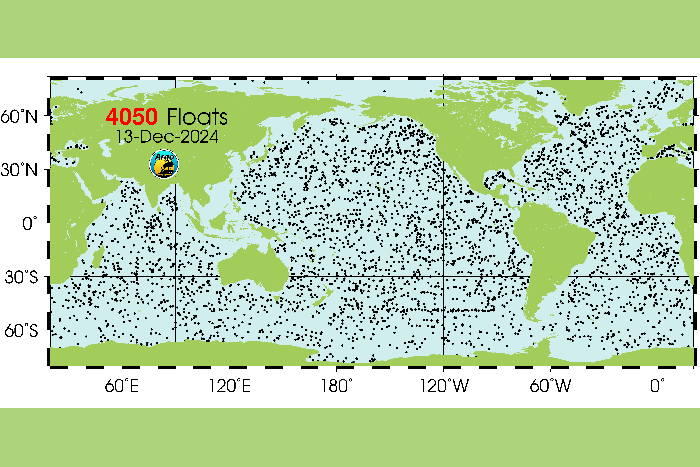
Learn all about Argo from the perspective of four scientists with NOAA’s labs and cooperative institutes across the country, and what makes this ocean observing instrument special.
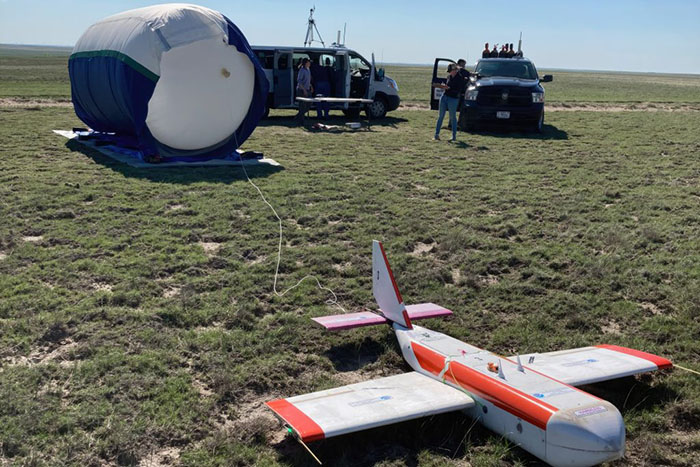
The Global Monitoring Laboratory’s quest for a reliable, cost-effective way to study Earth’s stratosphere passed a significant milestone on May 17, 2023: A remotely controlled glider, carried to an elevation of 90,000 feet by a weather balloon, returned to its launch location.
In this webinar, the National Weather Service and the RISA Program present stories about researchers, forecasters, and fire managers working together to improve public and wildland firefighter ...
In this webinar, the National Weather Service and the RISA Program present stories about researchers, forecasters, and fire managers working together to improve public and wildland firefighter ...
A growing body of climate change attribution science is being used in court to hold actors accountable for inaction in the face of economic and social harm.
From Southern Florida to Maryland, RISA teams (CISA and SCIPP), Sea Grant programs, and other organizations coordinated a rapid response effort to map coastal flooding during Hurricane Joaquin using…
In a new blog post, the project team provides insight to the value of close engagement with climate information user communities.
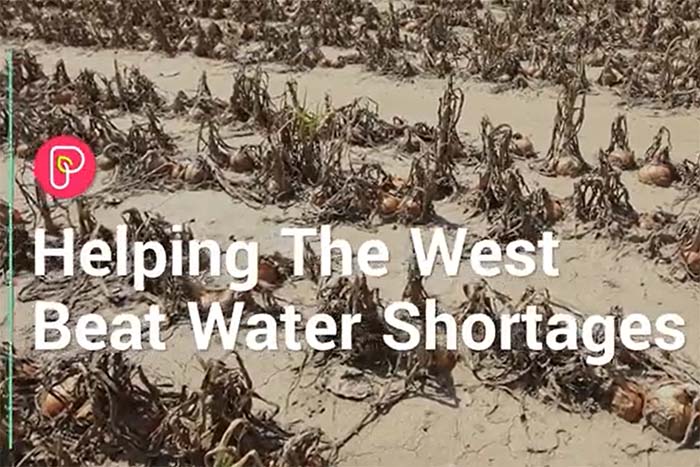
Pattrn, a group committed to data-driven, participatory fact mapping, highlighted work by the Western Water Assessment (WWA) Regional Integrated Sciences and Assessments (RISA) team in a new video.