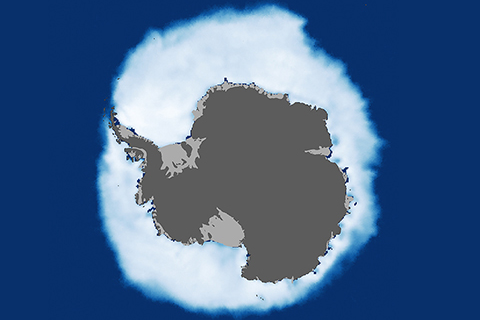
NASA ice expert Claire Parkinson confirms that global sea ice coverage has continued its overall downward trend since her original analysis was published in 2015.
NASA ice expert Claire Parkinson confirms that global sea ice coverage has continued its overall downward trend since her original analysis was published in 2015.
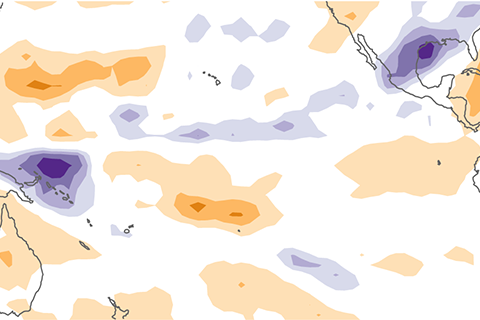
Why did atmospheric El Niño conditions fail to develop this past fall? Our blogger tries to unravel the mystery of the missing central Pacific rainfall.
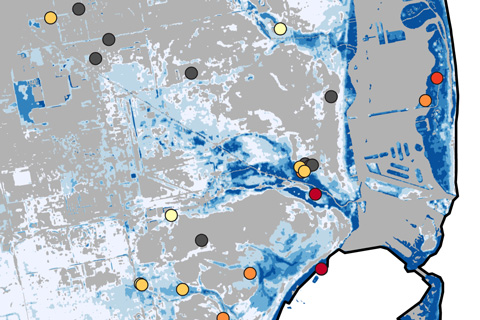
Hurricanes can harm people not just by causing injuries, but also by flooding hospitals that would otherwise deliver needed treatment.
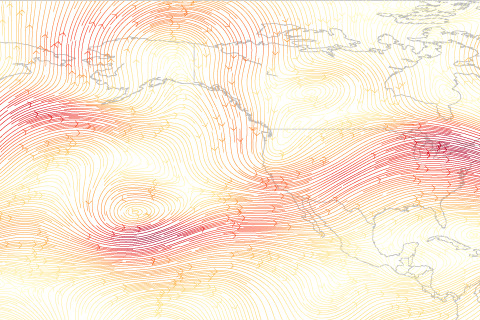
A wavy jet stream connected three extreme events across the eastern Pacific Ocean and the West Coast.
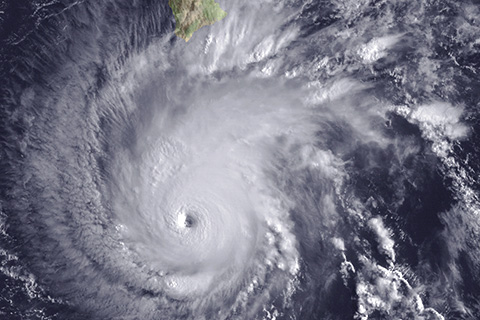
Many networks across the U.S. collect air temperature and precipitation observations we use to characterize these events. But only NCEI's U.S. Climate Reference Network (USCRN) was designed with lab-calibrated sensors--in triplicate--to ensure a high-quality, continuous record of U.S. climate.
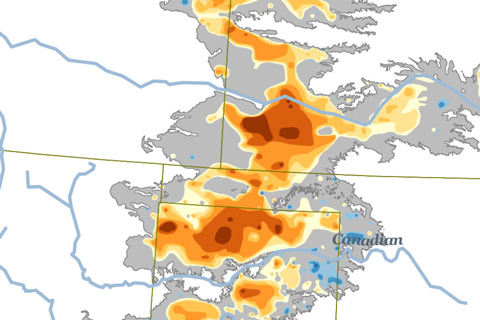
The Ogallala Aquifer has supported agricultural needs in multiple states for decades, but the aquifer is being drained faster than it is being replenished.
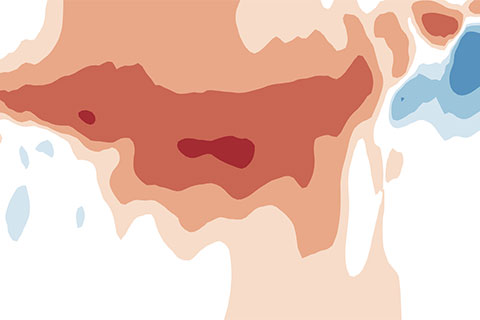
NOAA has issued an El Niño Advisory, reflecting the presence of El Niño conditions in the tropical Pacific.
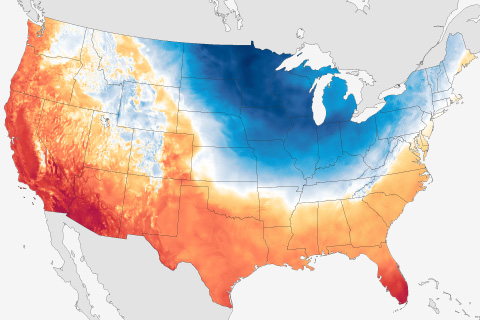
NCEI's Anthony Arguez uses a new dataset for tracking hot and cold extremes to provide a preliminary analysis of the Arctic blast that hit the Midwest and other parts of the eastern United States in late January 2019.
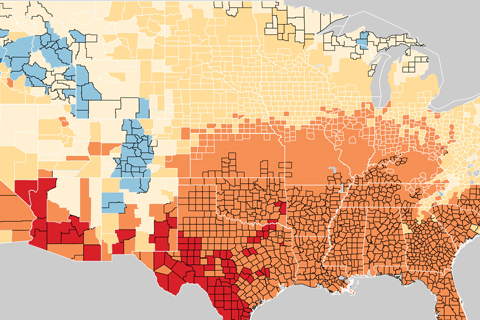
If the world continues to follow a path with high greenhouse gas emissions, U.S. energy expenditures are projected to increase across much of the Lower 48.
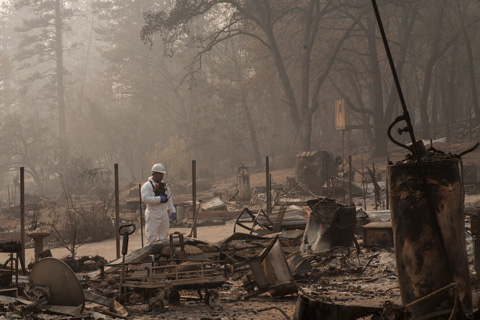
NOAA’s National Centers for Environmental Information (NCEI) tracks U.S. weather and climate events that have great economic and societal impacts. Since 1980, the U.S. has sustained 241 weather and climate disasters where the overall damage costs reached or exceeded $1 billion (including adjustments based on the Consumer Price Index, as of January 2019). The cumulative cost for these 241 events exceeds $1.6 trillion.