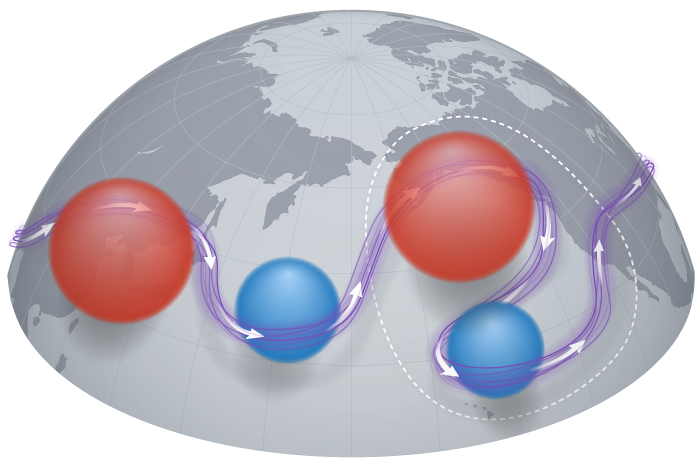
Two guest bloggers explain how Rossby waves create a globe-spanning superhighway that connects climate patterns even when they are far apart.
Two guest bloggers explain how Rossby waves create a globe-spanning superhighway that connects climate patterns even when they are far apart.
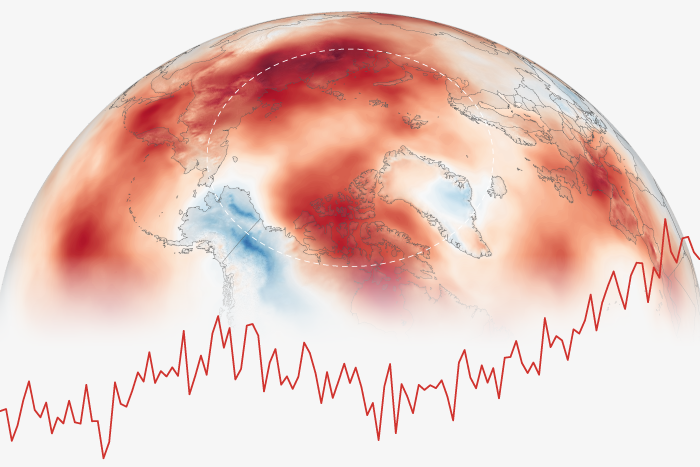
Highlights from the 2022 update to NOAA's Arctic Report Card in maps and charts.
Arctic temperatures over 2021-22 were the sixth-warmest on record, based on records dating back to 1900.
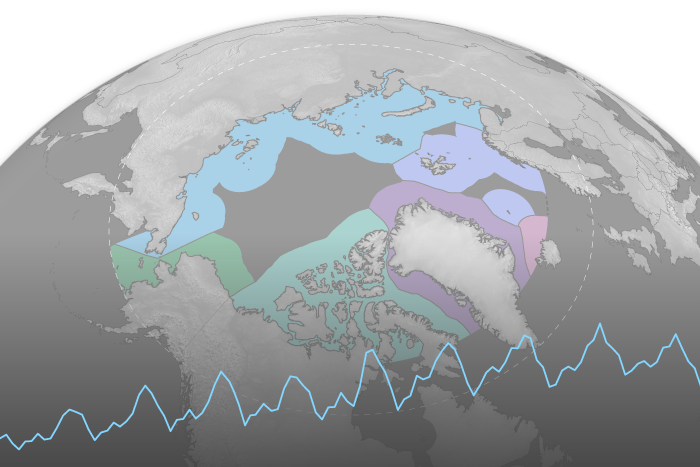
Ship traffic is increasing as sea ice dwindles—not just in near-shore, territorial waters of Arctic coastal countries, but increasingly, in the high seas of the Central Arctic Ocean.
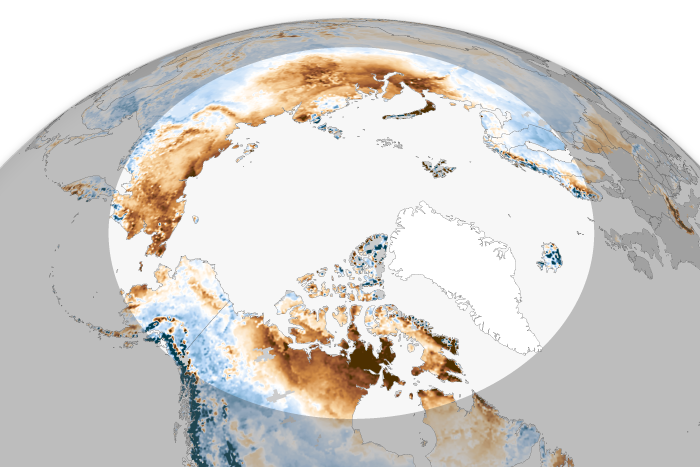
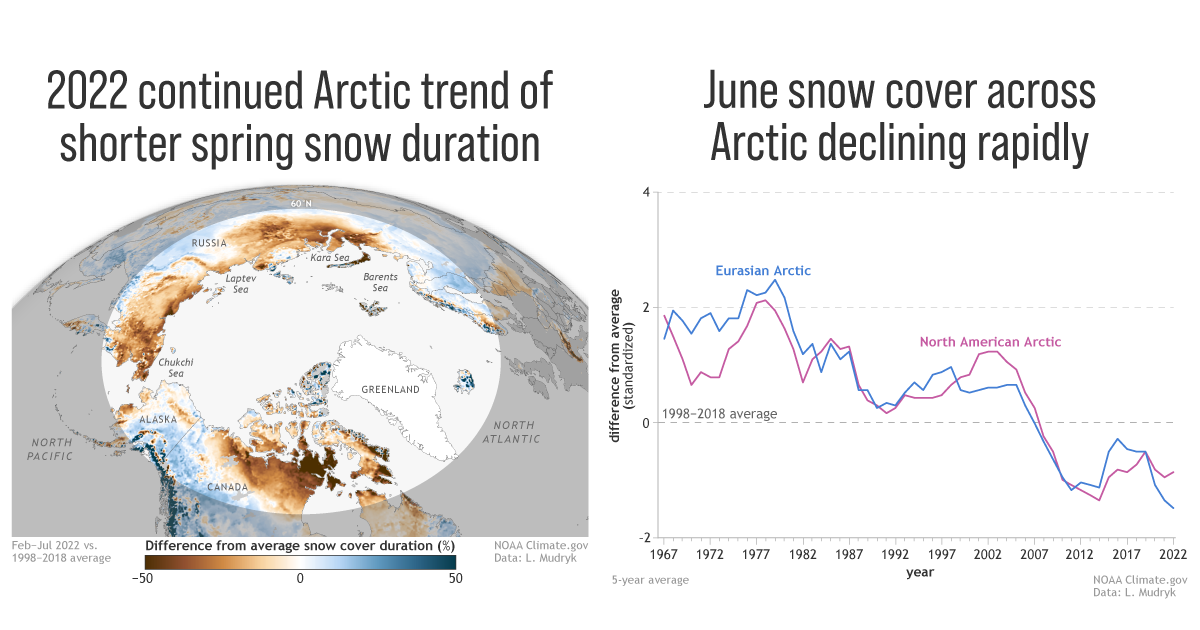
Snow-cover duration continued a longer-term pattern in 2021–22, of significantly faster springtime snowmelt.
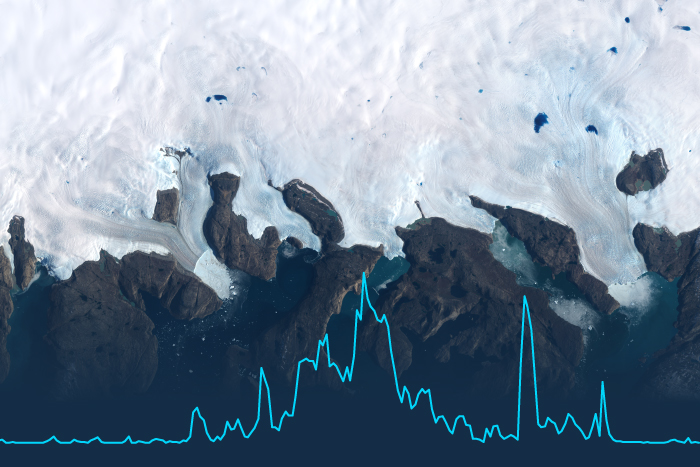
The 2022 melt season on the Greenland Ice Sheet started slowly, but ended late, with multiple melt spikes in September.
Consistent with model predictions, a warmer Arctic is increasingly a wetter one.
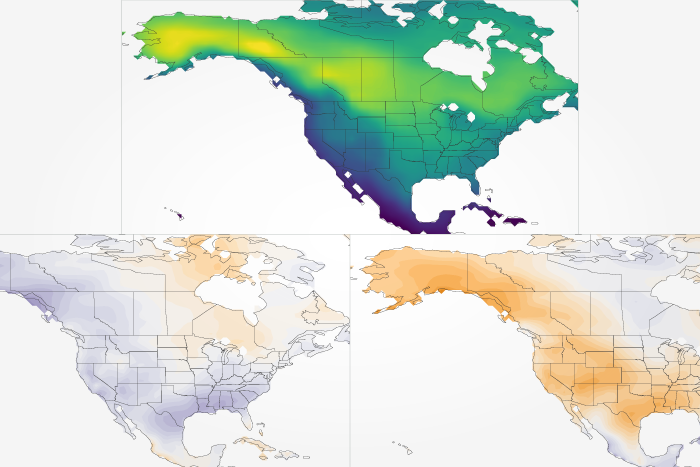
With the third La Niña winter in a row well underway, our blogger takes a look at how La Niña influences the range of winter daily temperatures.
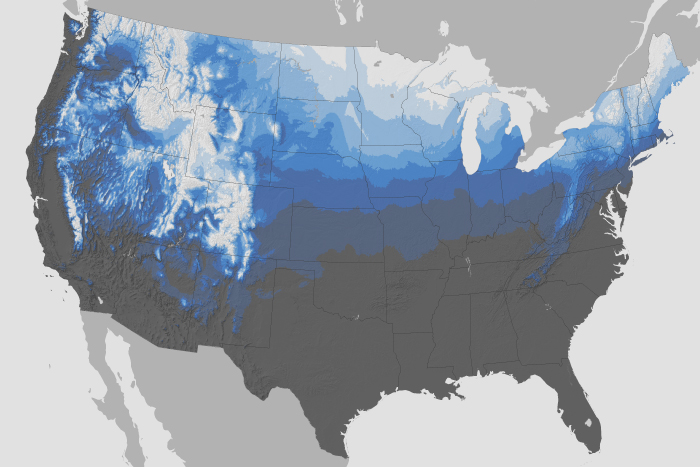
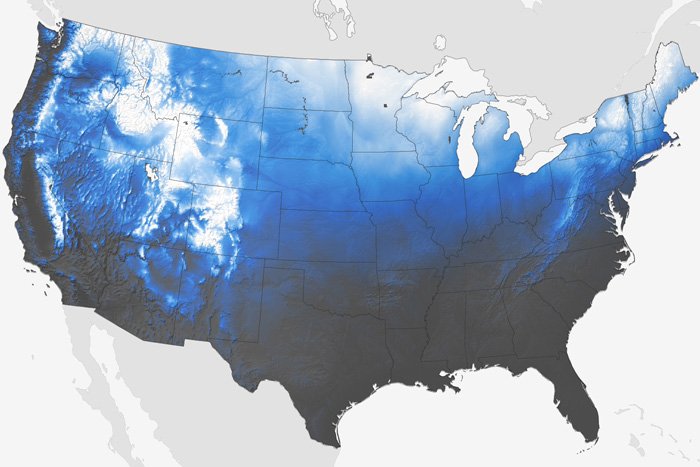
For those of you dreaming of a white Christmas, NOAA has a map showing the historic probability of your dream coming true.
For those of you dreaming of a white Christmas, NOAA has a map showing the historic probability of your dream coming true.