
NOAA Sea Grant-funded research and work with coastal and Great Lakes communities across the nation are being highlighted in a special issue of “Oceanography,” the official journal of The Oceanography Society.
NOAA Sea Grant-funded research and work with coastal and Great Lakes communities across the nation are being highlighted in a special issue of “Oceanography,” the official journal of The Oceanography Society.

“There is little doubt that we will see a decline in Arctic sea ice cover in this century in response to anthropogenic warming, and yet internal climate variations and other external forcings could …
Sea level rise can exacerbate flooding, shoreline erosion, and storm hazards, making coastal communities more vulnerable. Recently, the rate of sea level rise has increased due to melting glaciers …
A CPO-funded study was recently published in the Journal of Geophysical Research . The paper includes data showing sea level rise in the northern Indian Ocean rose twice as fast as the global ...
Key Findings The most robust evidence for human-induced sea level pressure (SLP) regional change is a zonal band of SLP increase over the southern hemisphere. Two observational data products–…
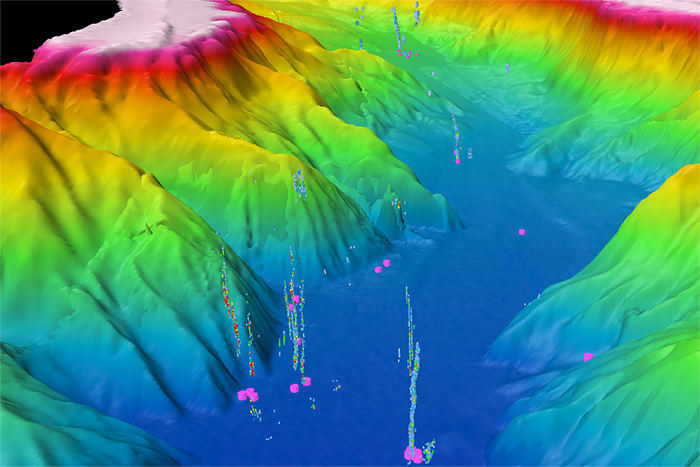
Although the West Coast continental shelf has long been known to host methane bubble streams, scientists used to think those streams were rare. A new study in Frontiers of Earth Science suggests there are more than 1,300 emission sites between California and Canada.
The Interagency U.S. Seafood Trade Task Force wants to hear from you.