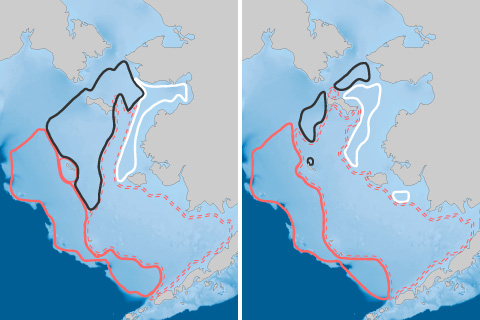
As Arctic waters warm, fish and marine mammals are migrating in search of their preferred habitats and food sources. Some species are gaining habitat, while others are being squeezed out by new…
As Arctic waters warm, fish and marine mammals are migrating in search of their preferred habitats and food sources. Some species are gaining habitat, while others are being squeezed out by new…
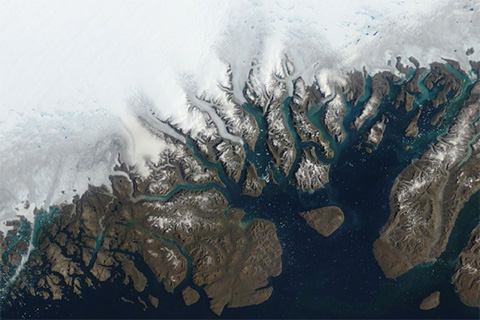
Under high pressure and sunny skies, roughly 95 percent of the surface experienced melting at some point in the summer, well above the 1981-2010 average of about 64 percent, equivalent to the previous record set in 2012.
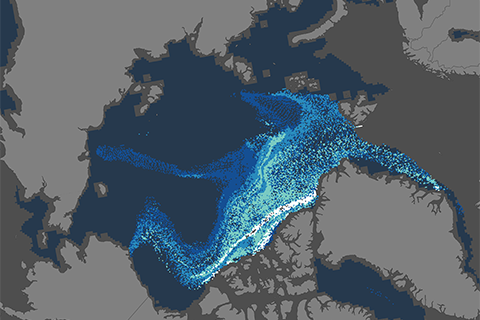
In March 1985, sea ice at least four years old made up 33 percent of the ice pack in the Arctic Ocean; in March 2019, ice that old made up 1.2 percent of the pack.
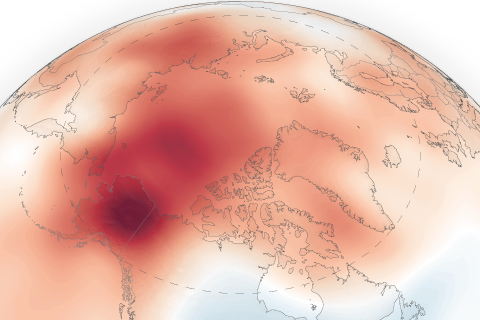
In 2019, air temperatures over the Arctic were the second-warmest on record, continuing a string of 6 years that have been warmer than all other periods in the historic record dating back to 1900.
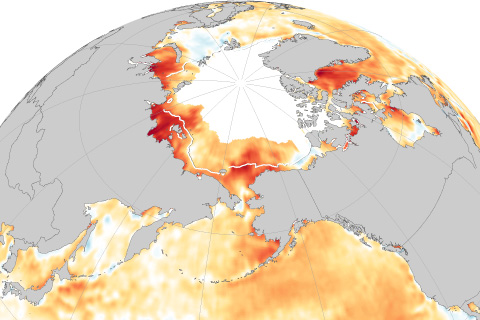
With few exceptions, unusual warmth dominated Arctic Ocean basins in 2019.
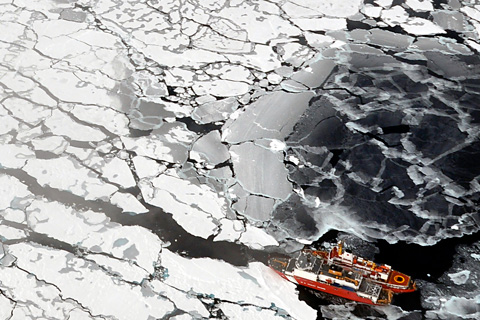
NOAA’s 14th Arctic Report Card recounts the numerous ways that climate change continues to disrupt the polar region, including massive melt of the Greenland ice sheet and major shifts in the distribution of commercially valuable marine species.

Edited by NOAA scientists, the new report reveals scientists' advancing ability to quantify human imprint in climate.
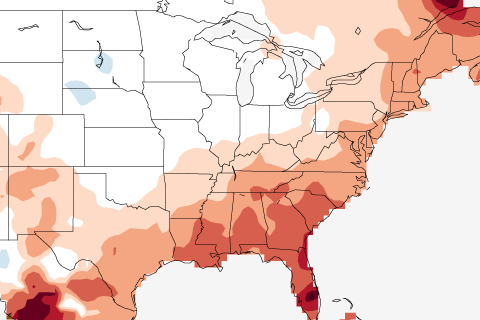
What goes into NOAA’s winter outlook when ENSO is in neutral? The Climate Prediction Center’s Mike Halpert discusses the details.
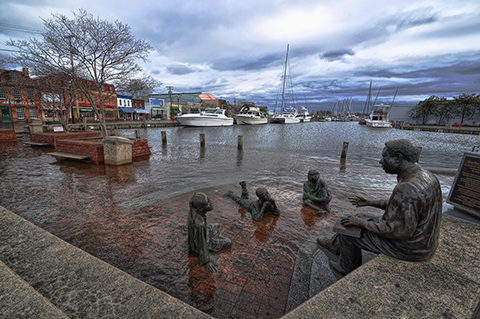
On Tuesday, November 19, NOAA sea level rise expert William Sweet answered questions in a Climate.gov tweet chat about sea level rise and U.S. high-tide flooding.
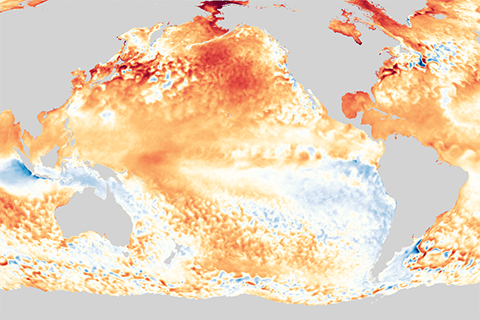
While ENSO-neutral conditions are expected to continue through the winter, some other climate patterns are out and about in the neighborhood.