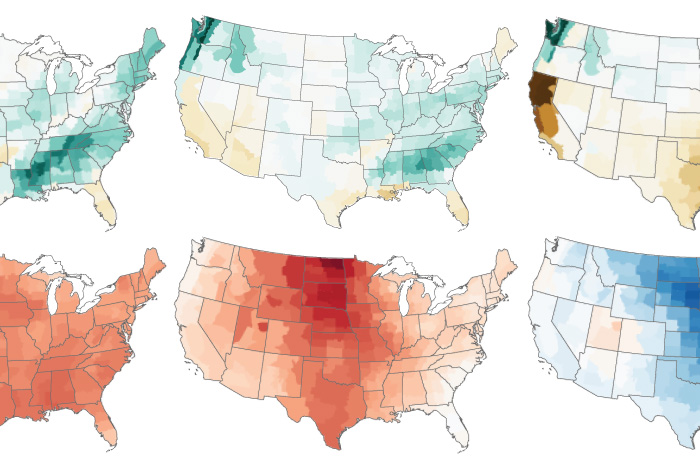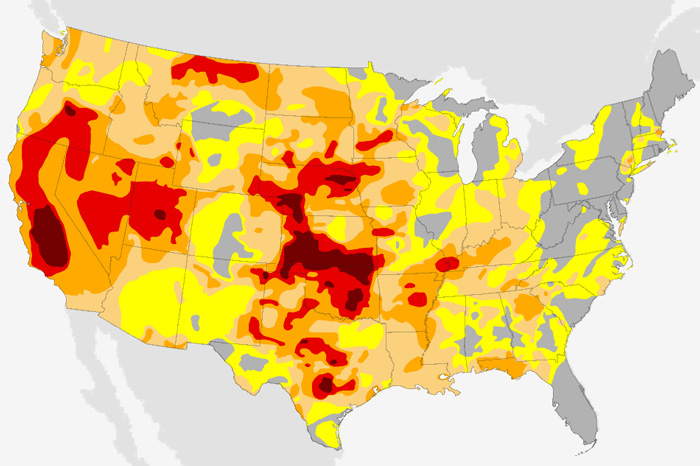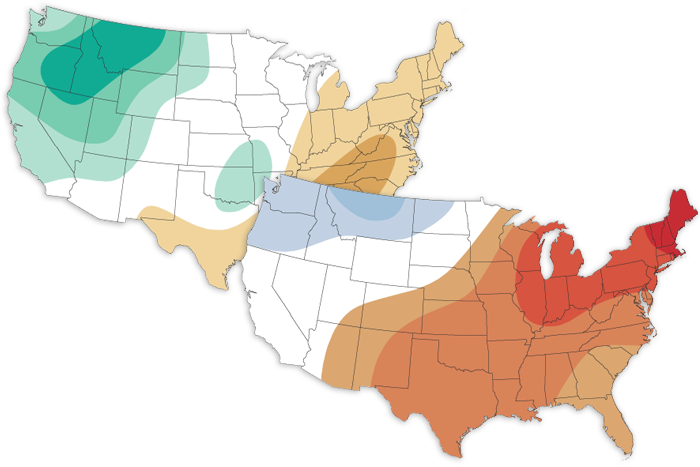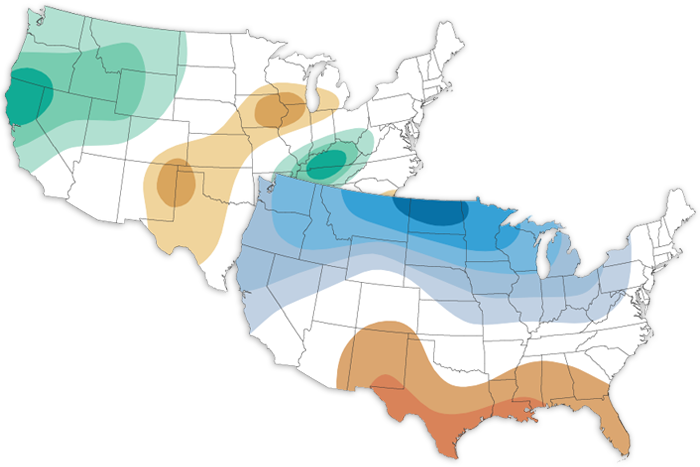
NOAA predicts drier-than-average conditions across the South, with wetter-than-average conditions for areas of the Ohio Valley, Great Lakes, northern Rockies and Pacific Northwest.
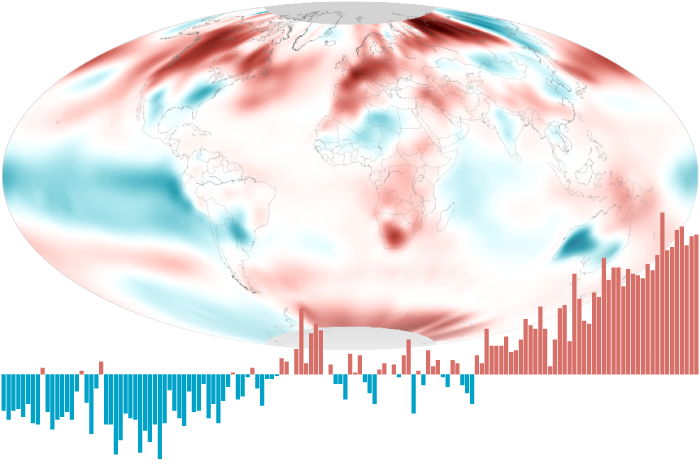
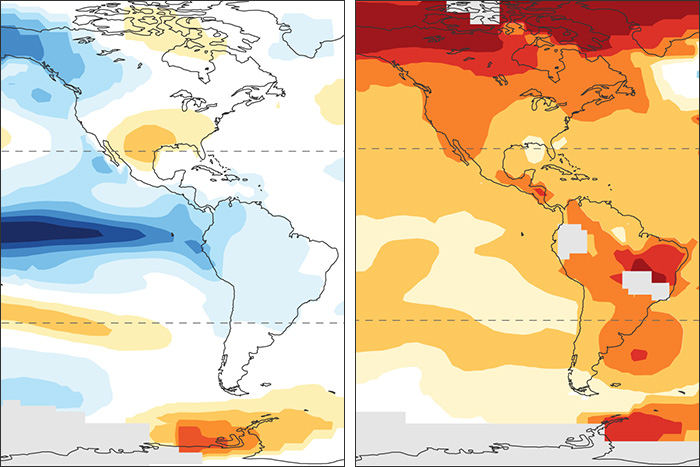
The month tied for fifth-warmest September on average for the globe. North America was record warm, while La Niña continued to chill the tropical Pacific.
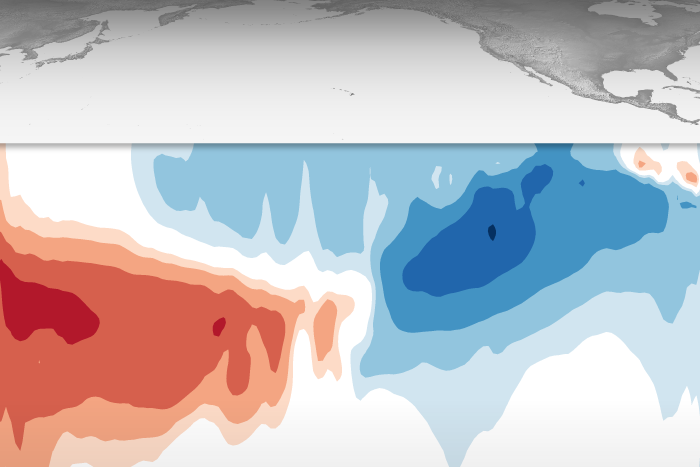
Call it what you like—triple-dip, three-peat, three-bean salad—we are facing the third La Niña winter in a row.
While we cannot stop global warming overnight, or even over the next several decades, we can slow the rate and limit the amount of global warming by reducing human emissions of heat-trapping gases and soot.
Fossil fuels are the only source of carbon dioxide large enough to raise atmospheric carbon dioxide amounts so high so quickly.
Differences in exposure to sunlight, cloud cover, atmospheric circulation patterns, and other factors influence whether and how much a location is warming or cooling.
Fifth-warmest September on record; heatwave brought record temperatures to the West.
There is overwhelming scientific evidence that Earth is warming and a preponderance of scientific evidence that human activities are the main cause.
It's October. So in addition to talk of ghouls and goblins, we must chat about the October 2022 climate outlook. The outlook favors a hotter-than-average month for the western and central United States, and a colder- and wetter-than-average month for the Mid-Atlantic.
Blue-carbon ecosystems have a small global footprint, but they can bury many times more carbon per acre than even a tropical rainforest.