Since 2004, researchers in NOAA’s Global Monitoring Division have released the Annual Greenhouse Gas Index: a single value that compares the total warming effect of each year's concentrations of heat-trapping gases to 1990 levels.
Since 2004, researchers in NOAA’s Global Monitoring Division have released the Annual Greenhouse Gas Index: a single value that compares the total warming effect of each year's concentrations of heat-trapping gases to 1990 levels.
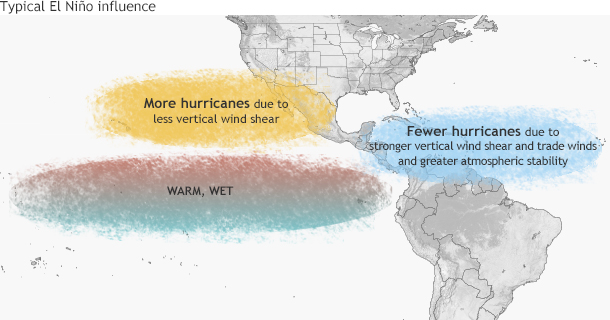
El Niño typically favors stronger hurricane activity in the central and eastern Pacific basins, and suppresses it in the Atlantic basin. Where does that leave the 2014 hurricane outlook?
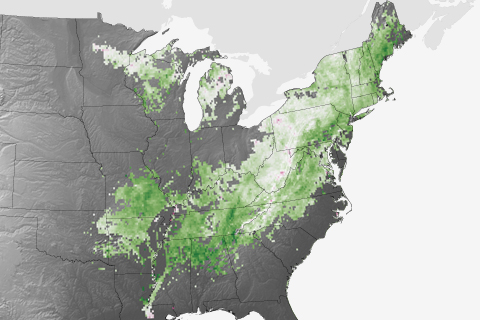
In response to recent decades' warming, forests in the eastern United States have been "inhaling" more carbon dioxide through photosynthesis than they've “exhaled” through respiration.
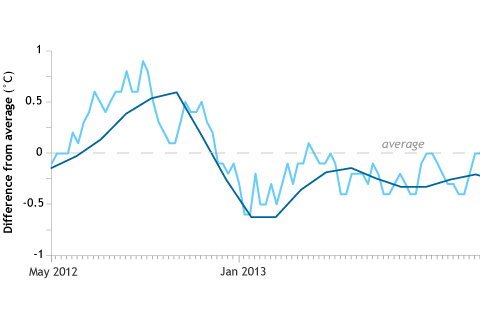
If the climate conditions that indicate ENSO are best measured as seasonal averages, will scientists wait for conditions to persist three months before declaring El Niño underway?

In April 2011, Texas was in the midst of what may have been its worst fire season in history. As the season began, NOAA outlooks and observations helped fire managers think strategically about where their resources could be most effective.
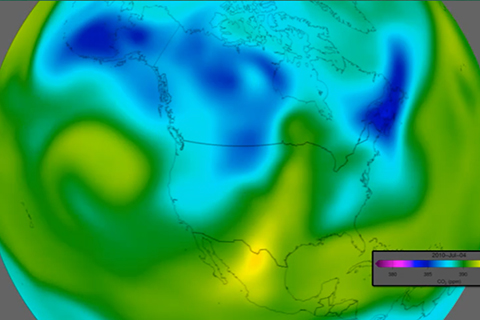
CarbonTracker is a tool for modelling sources and sinks of carbon dioxide. Users can download the code, carbon dioxide data, and the tool's carbon flux estimates to conduct their own analyses or to help improve the system.
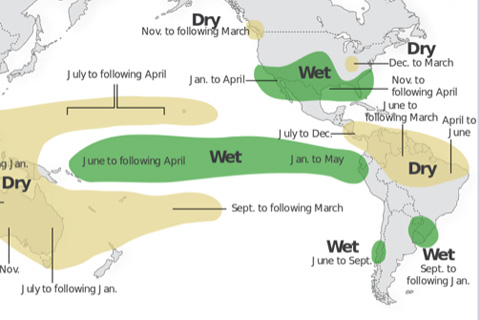
ENSO arises from changes across the tropical Pacific Ocean. So why does ENSO affect the climate over sizable portions of the globe, including some regions far removed from the tropical Pacific Ocean?
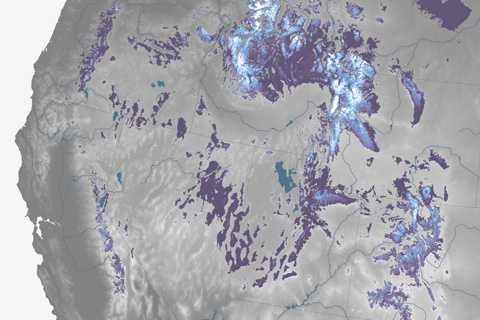
Variability in snowpack across the mountain ranges of the U.S. West at the start of the warm season can translate into big differences in fire risk and summer water stress.
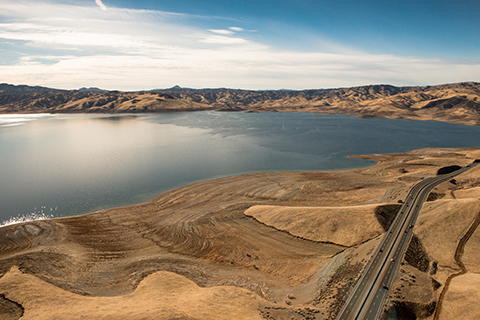
Jeanine Jones, Interstate Resources Manager for the California Department of Water Resources, talks about the state's ongoing drought conditions and planning for California's water future.
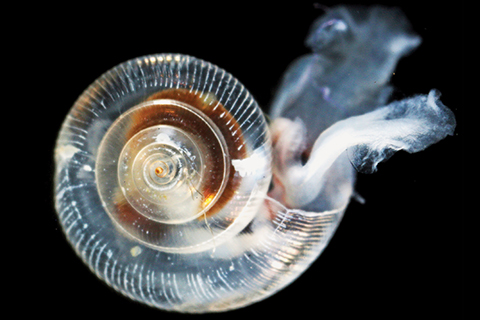
Ocean water acidified by increasing carbon dioxide is corroding calcium carbonate minerals—an essential ingredient for shell- and skeleton-building that creatures like this tiny snail rely upon.