
NOAA's Climate Program Office (CPO) supports competitive research through five major Programs: Climate Observations and Monitoring (COM); Atmospheric Chemistry, Carbon Cycle, and Climate (AC4); ...
NOAA's Climate Program Office (CPO) supports competitive research through five major Programs: Climate Observations and Monitoring (COM); Atmospheric Chemistry, Carbon Cycle, and Climate (AC4); ...
The National Centers for Environmental Information released the latest update of the International Comprehensive Ocean–Atmosphere Data Set (release 3.0). This new data set, which was partially ...

The 2021 Pacific Islands Climate Storybook, describing community experiences in addressing the impacts of a changing climate in Pacific Island countries, is now available. It was coauthored by investigators from NOAA’s Pacific Regional Integrated Sciences and Assessments (RISA).
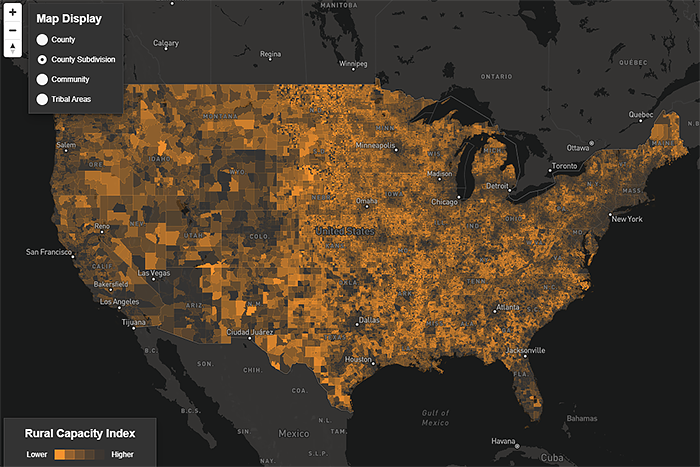
A new mapping tool may help bring government investment back into communities that have suffered from disinvestment, such as rural communities and communities of color.

Heat and humidity worsen urban air pollution. That is just one of many new findings emerging from a batch of recent studies on urban air quality.

Top-down, atmospheric measurement-based estimates of natural gas emissions across US cities are 2 to 10 times higher than estimates from current bottom-up emission inventories. Current policy aimed at curbing emissions at the pipeline level may not effectively mitigate future methane concerns.
As NOAA promotes green and natural infrastructure, it is helpful to understand the specific arrangements that provide co-benefits to communities.
A new report evaluated present-day infrastructure, design specifications, and procedures against expected climate change to better understand its future impact on Con Edison’s energy delivery …

August 4: A team of NOAA and University of Washington Cooperative Institute scientists flew over Alaskan waters to conduct renewed research on Arctic ocean heat flows. Scientists deployed 30 floats from NOAA aircraft that will provide key temperature data to better understand how the Arctic ocean is warming.