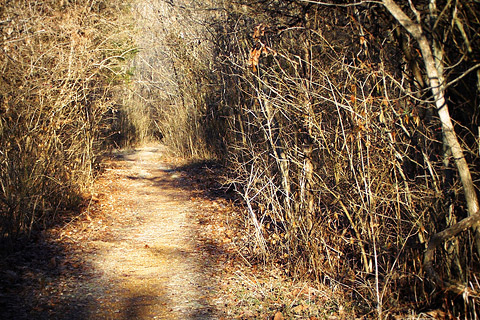
Community groups are working to establish a connected ring of conservation land around St. Louis, Missouri. They're also incorporating economic data with flood models to help them target areas that will also provide flood protection.
Community groups are working to establish a connected ring of conservation land around St. Louis, Missouri. They're also incorporating economic data with flood models to help them target areas that will also provide flood protection.
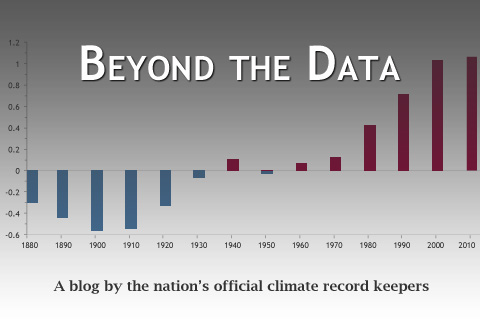
Deke Arndt, chief of the Monitoring Branch at the National Centers for Environmental Information, kicks off a new blog that will cover how climate records are collected and updated, how we know what we know about the climate, and how we can use climate information to make our communities more resilient.
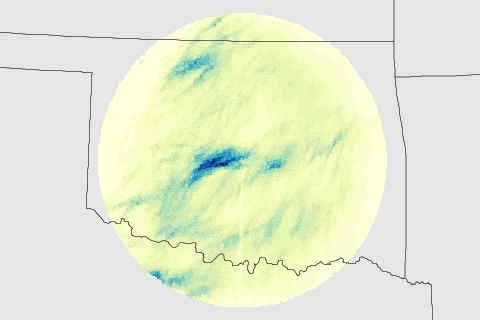
A record-setting day of rain in Oklahoma City caused widespread flooding in early May 2015. How rare was the event?
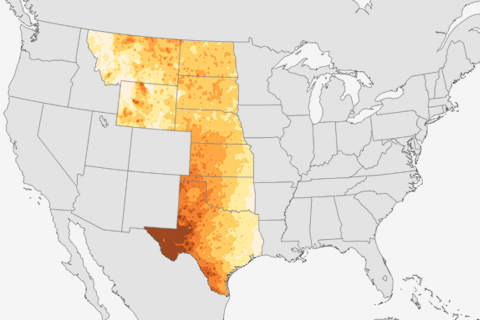
From soybeans and sunflowers in North Dakota to cotton and winter wheat in Texas, large stretches of croplands in the U.S. Great Plains rely exclusively on rain. Those croplands are likely to face longer dry spells by mid-century.
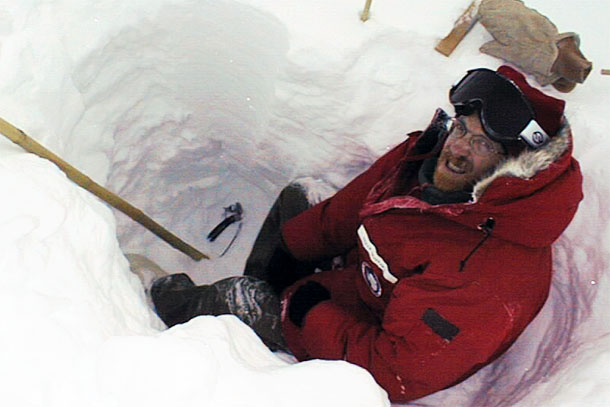
Some of the chemicals that replaced ozone-harming CFCs are long-lived greenhouse gases. At NOAA's lab in Boulder, Colorado, chemist Steve Montzka leads the effort to monitor the concentration of CFC-substitutes and their potential impact on global warming.
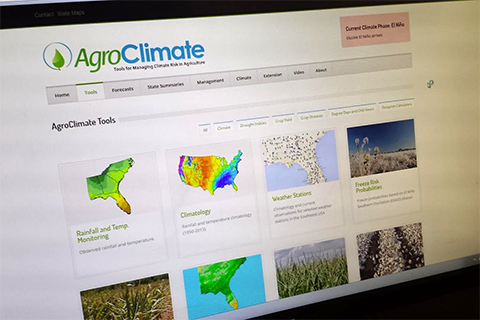
AgroClimate.org is an open-source suite of tools and resources tailored to farmers and ranchers in the southeastern United States.
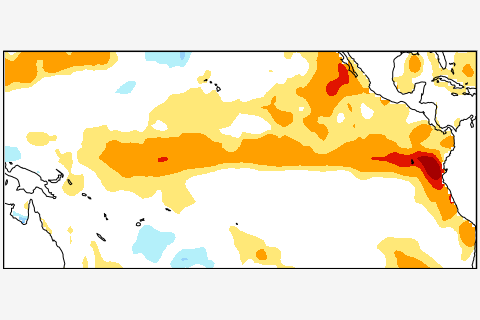
Forecasters estimate the chance that El Niño will continue through the end of 2015 at greater than 80%. What's behind this confident forecast?
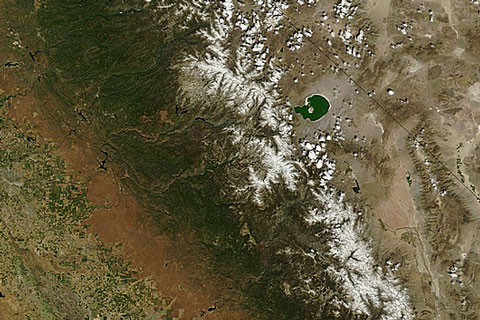
Few things are more important to California’s water supply than the water content of the mountain snowpack at the start of the state’s warm season. In the latest round of our Climate Challenge game, experts and participants predicted the water content of the Sierra Nevada snowpack on May 1, 2015. The answer was disturbingly low.
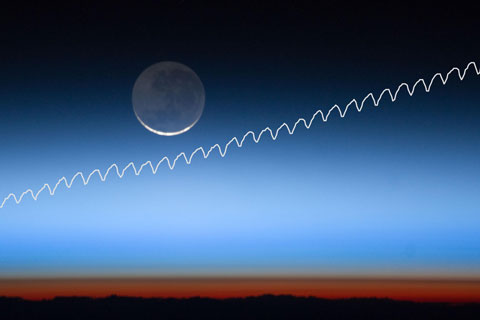
For 800,000 years before the twentieth century, carbon dioxide levels in Earth’s atmosphere never exceeded 300 parts per million. In March 2015, the monthly average went above 400 ppm for the first time.
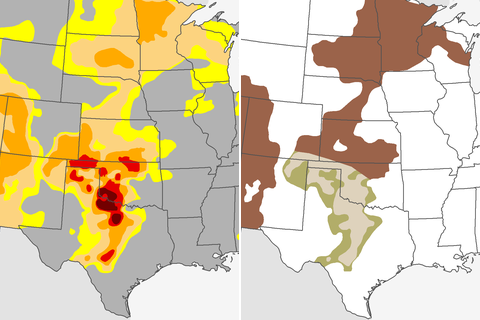
At the end of April 2015, almost 60 percent of Oklahoma was experiencing moderate to exceptional drought, and 30 percent of Texas was experiencing drought conditions. But according to the May drought outlook, conditions are likely to improve in the southern Plains this month.