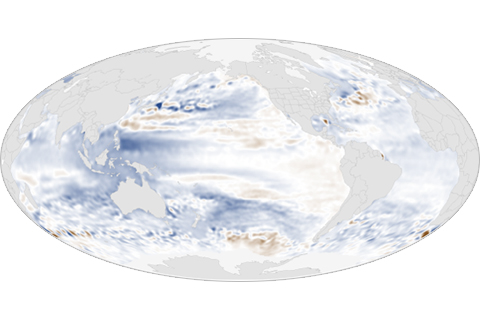
In 2013, global average sea level was 1.5 inches above the 1993-2010 average, which is the highest yearly average in the satellite record (1993-present). Overall, sea level continues to rise at a rate of one-eighth of an inch per year.
In 2013, global average sea level was 1.5 inches above the 1993-2010 average, which is the highest yearly average in the satellite record (1993-present). Overall, sea level continues to rise at a rate of one-eighth of an inch per year.
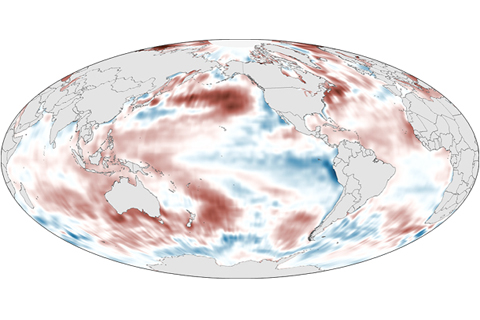
The globally averaged sea surface temperature in 2013 was among the 10 highest on record, with the North Pacific reaching an historic high temperature. ENSO-neutral conditions and a negative Pacific Decadal Oscillation pattern had the largest impacts on global sea surface temperature in 2013.
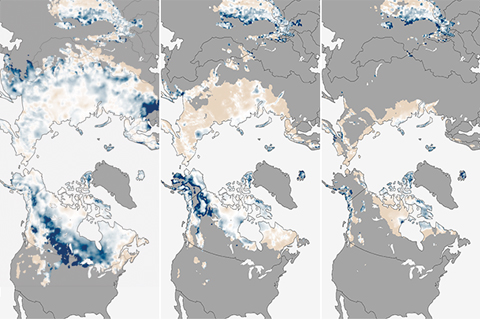
While the Northern Hemisphere’s snow cover on land ranked as the 13th most extensive on record in 2013, snow cover extent at the end of the cold season has dropped by 19.9 percent per decade since 1979 relative to the 1981-2010 average.
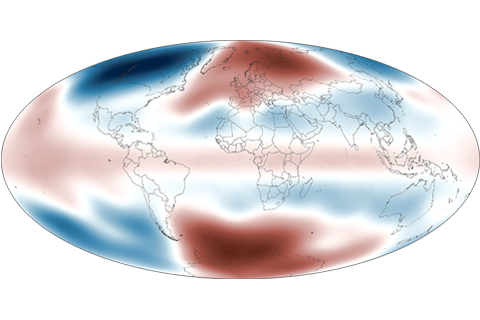
Observing temperature patterns in the lower stratosphere gives scientists clues about our planet's changing climate. Global average temperatures in the lower stratosphere for 2013 were slightly below the 1981–2010 average.
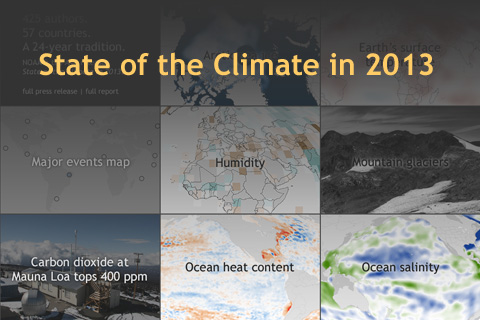
From the strongest typhoon ever observed to historically high atmospheric carbon dioxide levels, the State of the Climate in 2013 report provides a complete rundown on the state of Earth's climate and how it is changing.
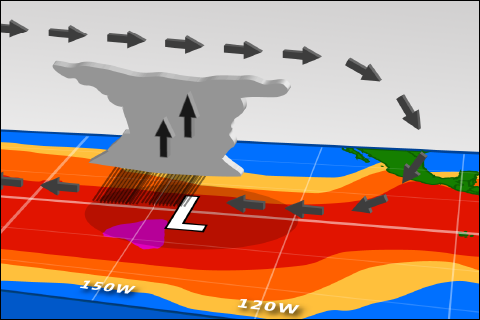
Sea surface temperatures are up. So why haven't forecasters declared El Niño conditions?
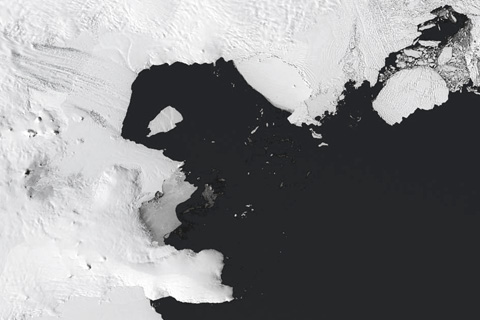
Why on Earth are climate scientists so interested in the West Antarctic ice sheet? This remote region of the seventh continent has been the subject of many recent research explorations--the results of which have been described in the news with words like “collapse,” “irreversible,” and “huge.”
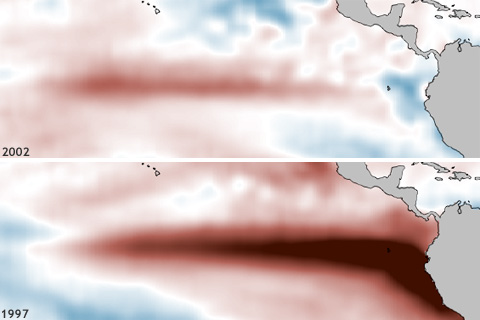
For the billions of people in Asia who depend on the Indian Monsoon for the majority of their yearly rainfall, the precise location where the Pacific warms during El Niño may be the difference between a relatively normal year and a devastating drought.
One of ENSO’s most important influences is to the Indian Monsoon—the large-scale circulation pattern that brings the Indian subcontinent the vast majority of its yearly rainfall. And while La Niñas tend to increase monsoon rainfall, the monsoon’s relationship with El Niño can be a little more complicated.

Jacqueline Kozak Thiel, Hawaii's State Sustainability Coordinator, talks about the state's unique sustainability challenges and how the island chain is planning for climate change.