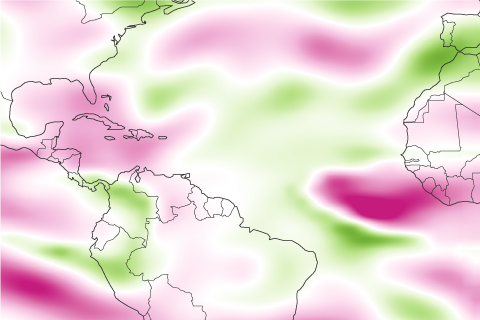
Last summer, climate conditions were primed to deliver an above-average—possibly very active—hurricane season in the Atlantic. And then...? The 2013 Atlantic Hurricane season produced the fewest number of hurricanes since 1982. What happened?
Last summer, climate conditions were primed to deliver an above-average—possibly very active—hurricane season in the Atlantic. And then...? The 2013 Atlantic Hurricane season produced the fewest number of hurricanes since 1982. What happened?
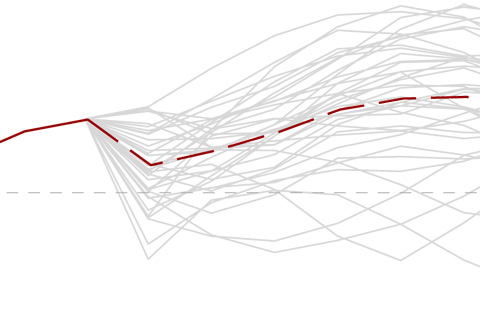
The Signal and the Noise is often mentioned in reference to ENSO forecasting and not just in reference to Nate Silver’s bestselling book. In fact, understanding what is signal and what is noise is critical to interpreting predictions from models and climate science in general.
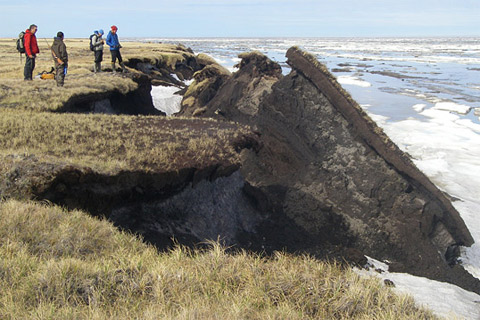
Ocean waves slowly eat away coastal cliffs the world over, but in parts of Alaska, these processes have accelerated due to changing climate. These photos document a cliff collapse near Drew Point in the late 2000s.
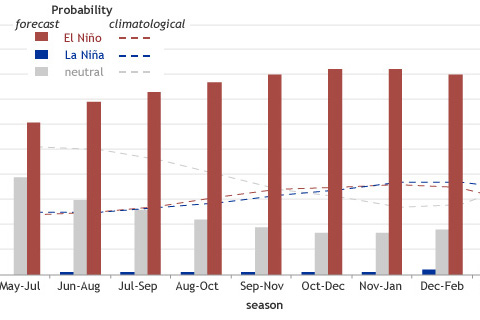
We’d like our forecasts—both weather and climate—to be simple and certain. Because of the fluid and chaotic nature of the ocean and atmosphere, however, forecasts are never about certainty: they’re about probability.
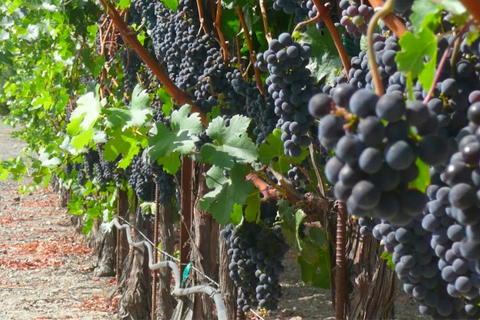
In the midst of a drought in 2008, biologists discovered dead Coho and steelhead trout in a tributary of the Russian River. When the dust settled, the focus turned to how winegrowers and other water users could reduce their impact. The event provided the parties involved—winegrowers, conservationists, and the water agency—an opportunity to find common ground in the realm of science.
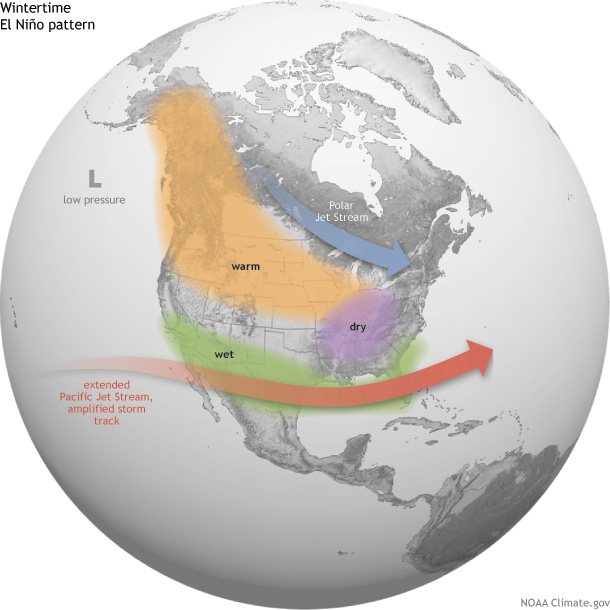
How does El Niño affect U.S. winter temperature and precipitation?
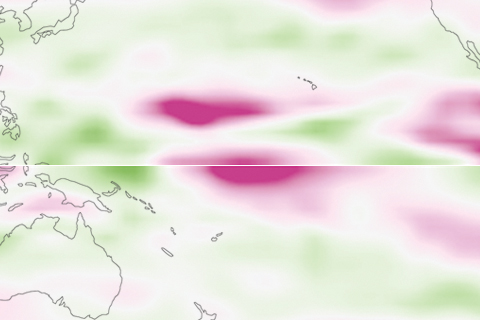
Add a new item to the list of things that have migrated in response to climate change: the latitude where hurricanes reach their maximum intensity. The shift was accompanied by increasing vertical wind shear near the equator.
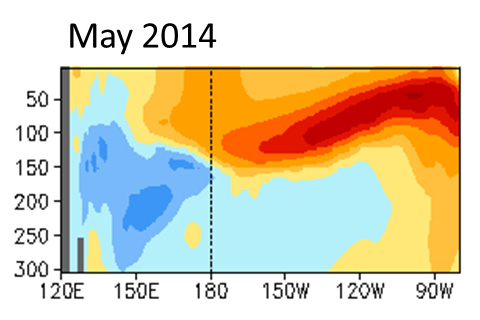
Chances that an El Niño will occur by summer are above 70%, hitting 80% by the fall. But subsurface temperature anomalies have tapered off some from earlier this spring, decreasing the odds the event will be as strong as the El Niño of 1997-98.
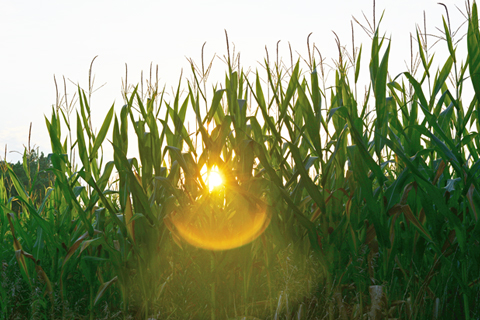
On August 25, 2011, Dr. Elwynn Taylor, Iowa State University's Extension Climatologist, tweeted to Iowa corn farmers: “Weather based statistics indicate a US corn yield of 149BPA, the prime factor this year is the Aridity Index.” Taylor uses NOAA climate information and seasonal outlooks to help thousands of the region's farmers manage risk. Nearly 5,000 followers look to his Twitter feed for guidance.
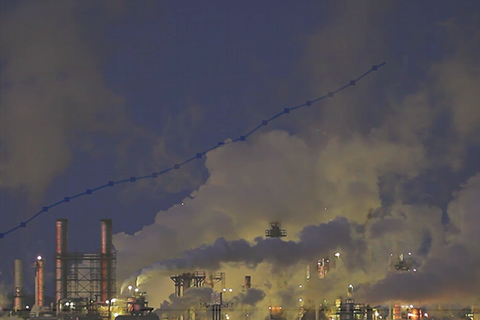
Since 2004, researchers in NOAA’s Global Monitoring Division have released the Annual Greenhouse Gas Index: a single value that compares the total warming effect of each year's concentrations of heat-trapping gases to 1990 levels.