
For NOAA’s 50th anniversary, we are highlighting oral history interviews from 24 employees -- some retired, some still working -- who have made a mark on the agency. Oral historian Molly Graham…
For NOAA’s 50th anniversary, we are highlighting oral history interviews from 24 employees -- some retired, some still working -- who have made a mark on the agency. Oral historian Molly Graham…
Meteorology students face plenty of career choices: should they go into broadcast, research, or operational forecasting? Each track offers a very different experience. And while students are exposed…
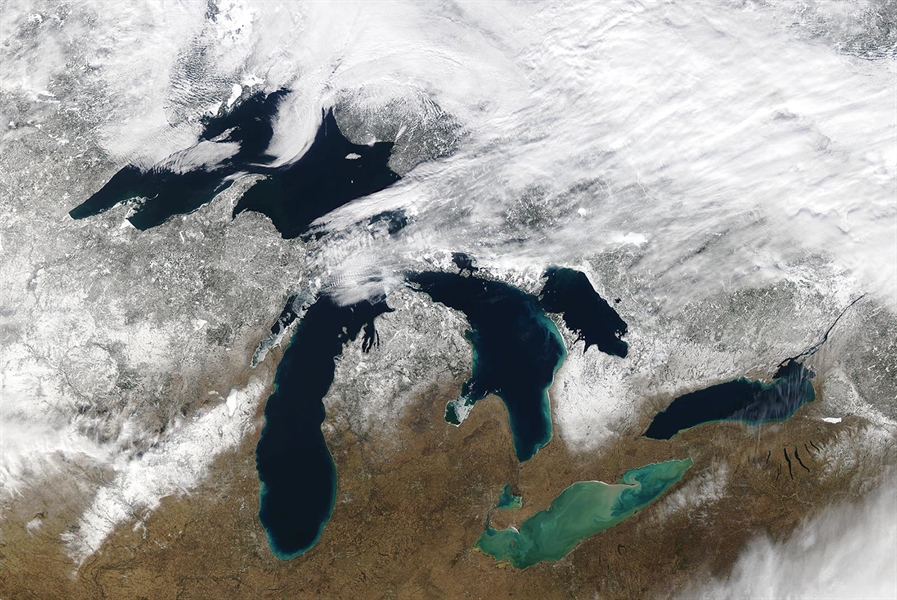
Ice coverage has reached a record low in the Great Lakes for this time of year. As of February 13, 2023, only 7 percent of these five freshwater lakes was covered in ice, significantly below the 35-40 percent ice cover expected.
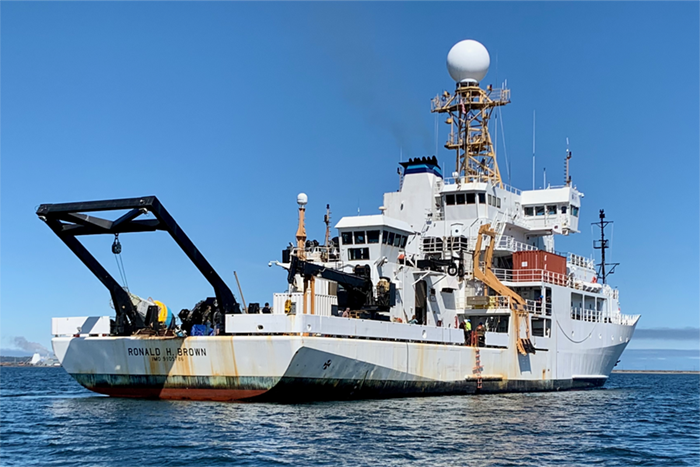
Low-oxygen waters off the coasts of Oregon and Washington have become common in the Pacific Northwest, but the 2021 onset of hypoxic water was the earliest observed in 35 years. The low-oxygen waters could become large dead zones in the near future
In the Pacific Northwest, Lummi Nation has kept their ancient knowledge and schelangen (shuh-LANG-un; “way of life”) alive by transmitting their cultural knowledge, worldview, and traditions to the…

Traditionally, scientists have used linear techniques to unravel the North Atlantic Oscillation’s complexities but machine learning may prove superior in capturing nonlinear relationships.
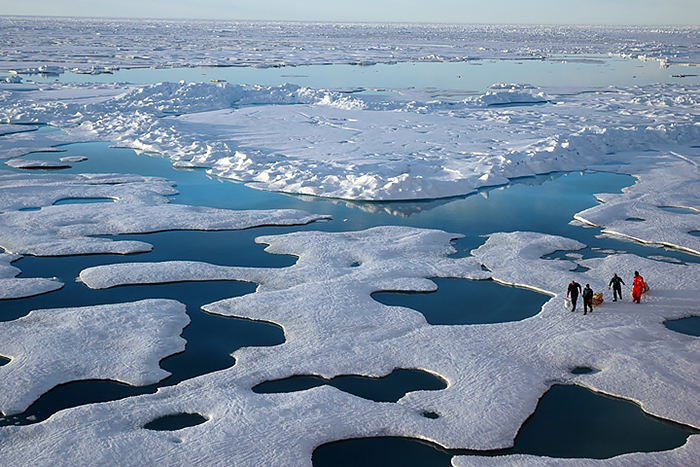
A new study supported by NOAA Climate Program Office’s Climate Variability and Predictability (CVP) program, led by CIRES and the University of Colorado Boulder, uses maps built with machine learning to identify large-scale atmospheric patterns that are linked with the start of seasonal sea ice melt in the Arctic.
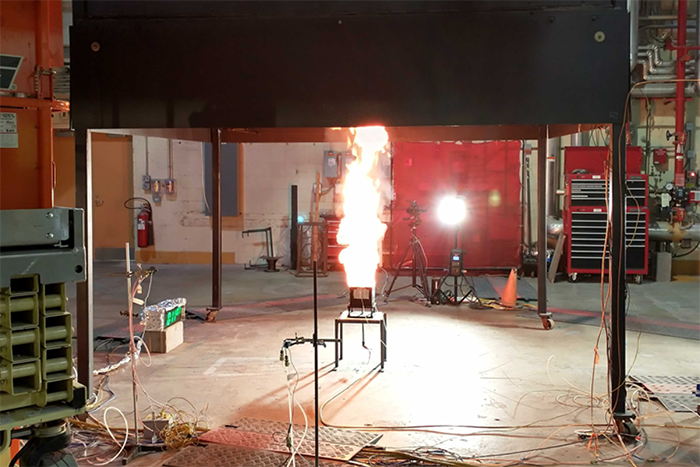
To understand how structural fires at the wildland urban interface contribute to air pollution, recent tests measured gas and particle emissions from burning structural materials under realistic fire conditions.