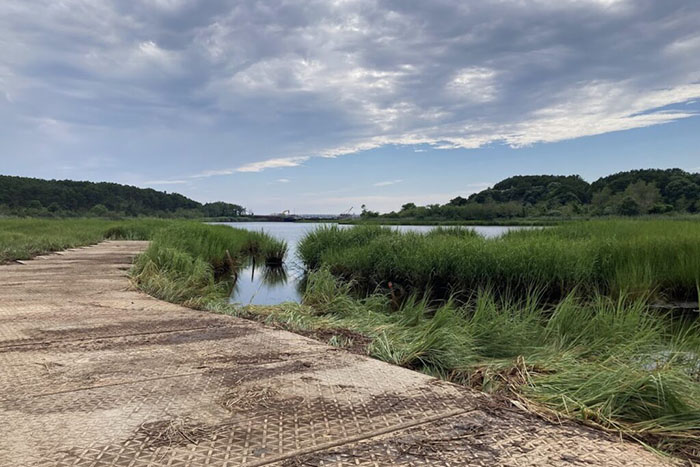
NOAA has announced a new agreement to support evaluation of whether the ocean can safely remove and store billions of tons of carbon dioxide.
NOAA has announced a new agreement to support evaluation of whether the ocean can safely remove and store billions of tons of carbon dioxide.
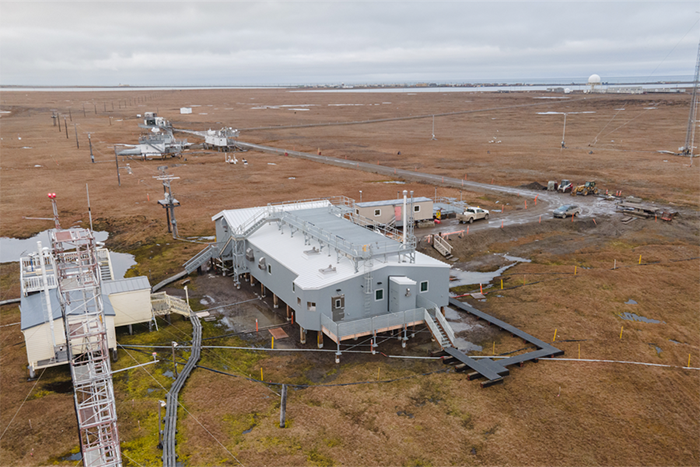
For almost half a century, some of the most important observations of the changing Arctic climate were captured and analyzed in a cramped 960-square-foot temporary structure at the northernmost tip of the United States. Researchers have now moved into a 3,000-square foot, state-of-the-art research facility.

The Acquisition and Grants Office (AGO) Small Business Office recognizes Ms. Vera D. Hall, owner of Innovative Performance Construction Company LLC as SBA’s Mississippi Small Business Person of the…
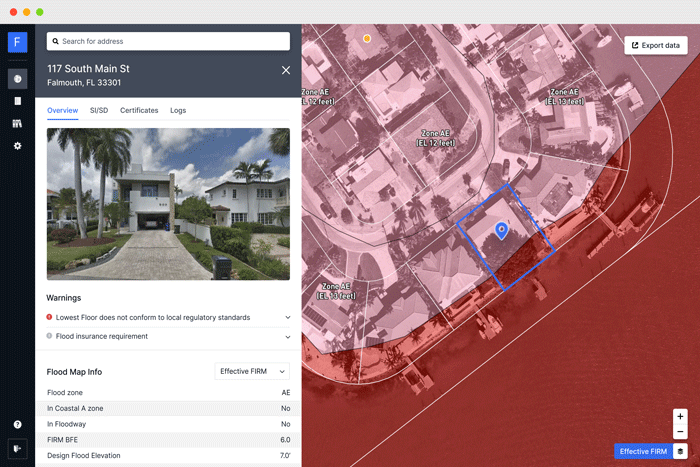
Data-driven tools will help communities accelerate equitable resilience.

With help from NOAA, a caucus of Chicago’s metropolitan mayors has released one of the first regional climate plans in the United States. It calls for reducing greenhouse gas emissions by at least 80 percent from 2005 levels by 2050, and highlights ways to equitably build climate resilience and a vibrant economy at the municipal level by 2050.
Eight new postdoctoral fellows are commencing cutting-edge research projects that will contribute innovative climate science to the research community as well as NOAA’s mission. These fellows are …

Eight new postdoctoral fellows are commencing cutting-edge research projects that will contribute innovative climate science to the research community and to NOAA’s mission. These fellows are the new 2022-2024 class of NOAA Climate and Global Change (C&GC) Postdoctoral Fellows, supported by NOAA Climate Program Office (CPO) and selected by the University Corporation for Atmospheric Research (UCAR).
The Climate Program Office (CPO), a part of NOAA’s Office of Oceanic and Atmospheric Research (OAR), has awarded 53 new projects conducted by NOAA laboratories and operational centers, universities,…
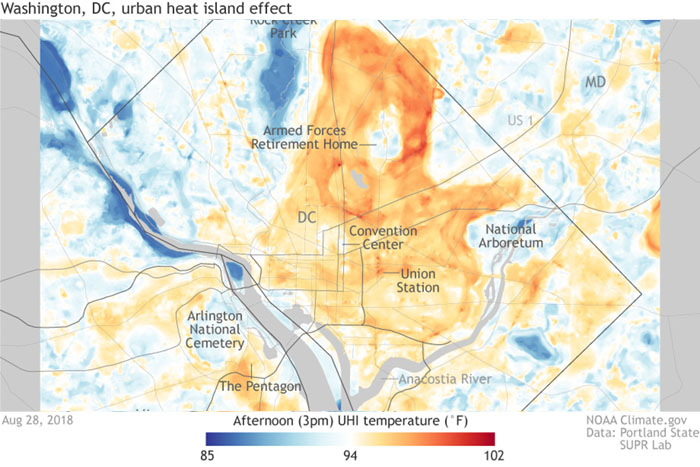
NOAA’s Climate Program Office (CPO) is pleased to announce $950,000 for four new projects that will support decision making in neighborhoods grappling with inequitably distributed impacts from the deadliest weather-related risk in the United States: extreme heat.