
A study recently published in the Journal of Climate emphasizes the importance of the North Atlantic Ocean for Atlantic Multidecadal Variability (AMV), which can lead to improved rainfall ...
A study recently published in the Journal of Climate emphasizes the importance of the North Atlantic Ocean for Atlantic Multidecadal Variability (AMV), which can lead to improved rainfall ...
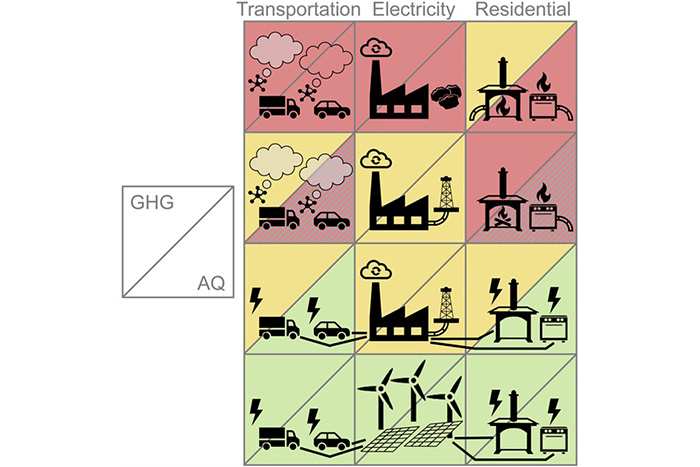
The same processes that emit carbon dioxide often emit pollutants that harm air quality: nitrogen oxides, sulfur oxides, carbon monoxide, and particulate matter. A new study finds that carbon-mitigation policies that don’t account for co-emitted pollutants may worsen air quality and raise mortality rates.
If Toto had been a group of climate modelers instead of a band, the song “Africa” might have informed listeners that East Africa has two rainy seasons--long rains from March to May and short rains …
A new article published in the Bulletin of the American Meteorological Society aims to improve the accessibility and usability of climate models to climate researchers, practitioners, and ...
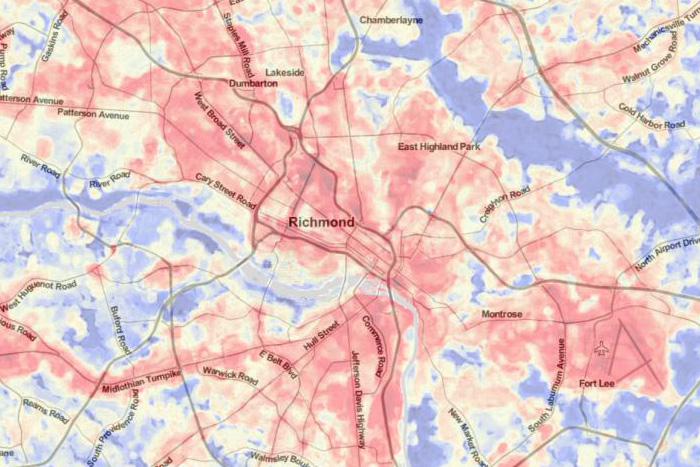
Extreme heat kills more Americans than any other weather event, but not everyone’s risk is the same. Within the same city, some neighborhoods can be up to 20°F hotter than others. In the summer of 2021, community-led campaigns will map the hottest parts of cities in 11 states: Albuquerque, New Mexico; Atlanta; New York City; Charleston, South Carolina; Kansas City, Missouri; Raleigh and Durham, North Carolina; San Diego; San Francisco; and parts of New Jersey, Indiana, Massachusetts, and Virginia.

The NOAA Climate Program Office (CPO) Adaptation Sciences (AdSci) program is excited to announce eight new awards totaling $2,395,476 that will build the nation’s climate resilience.
From land-use planning to energy and transportation, decision makers in many sectors across the country are increasingly seeking tools, services, and resources to build resilience to ...
The Climate Resilience Fund will provide up to 20 competitive $10,000 grants to organizations interested in using the U.S. Climate Resilience Toolkit’s Steps to Resilience. Applications are due July 22, 2022.
Using plain language and easy-to-use tools, the U.S. Climate Resilience Toolkit illustrates climate-related vulnerabilities that communities and businesses face, from national to local scales, and …