
An upcoming agency-wide General Modeling Meeting and Fair serves as an important milestone in bringing together the modeling community to build on NOAA's recent efforts to improve its models of our …
An upcoming agency-wide General Modeling Meeting and Fair serves as an important milestone in bringing together the modeling community to build on NOAA's recent efforts to improve its models of our …
Two islands in the Pacific – American Samoa and Palau – sit nearly 4,000 miles apart, but are united by the rich ocean waters that surround them. In September, NOAA’s Office of National Marine…
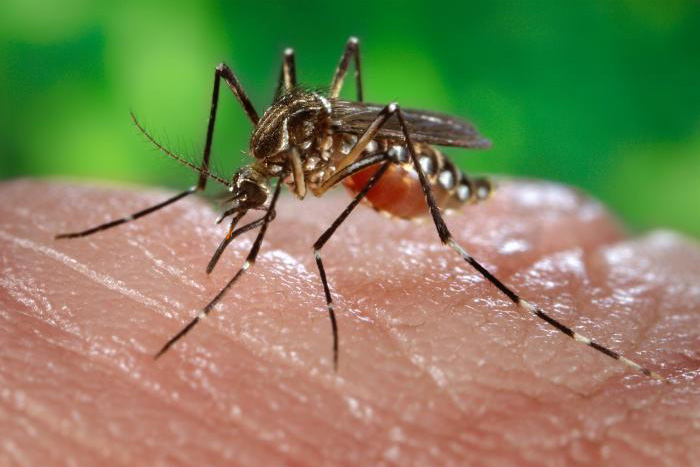
Higher temperatures and higher precipitation can create more habitat for mosquitoes and ticks, raising the risk of illnesses such as Lyme disease and West Nile virus. In response, the Centers for Disease Control and Prevention has developed “A National Public Health Framework for the Prevention and Control of Vector-Borne Diseases in Humans.”
NOAA has entered into a two-year Cooperative Research And Development Agreement to optimize a vast NOAA-managed archive of observational weather data for training artificial intelligence-based weather forecasting applications.
Wouldn’t it be nice to know now what the weather is going to be like for the vacation you have planned next month? Or, if you’re a farmer, whether you’re going to get enough rainfall during a ...
On Feb. 25, researchers from NOAA and three entities in California published a study in Science on the effects of the natural gas leak in Aliso Canyon, an area of Los Angeles, California. The study …
NOAA’s Office of Marine and Aviation Operations and Scripps Institution of Oceanography at the University of California San Diego are partnering to improve how unmanned systems (UxS) are used to…