
Record high sea levels and rainfall extremes have buffeted Hawaii and other U.S. Pacific islands this year.
Record high sea levels and rainfall extremes have buffeted Hawaii and other U.S. Pacific islands this year.

Although the winter maximum ice extent in March 2017 was the smallest on record, the summer minimum didn't follow suit. This summer's minimum ice extent was the eighth smallest on record, continuing the long-term trend of sea ice loss, but not setting a new record.
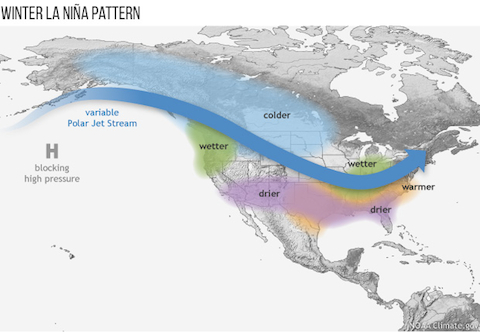
Last week, NOAA issued a La Niña watch, indicating conditions are favorable for the development of La Niña this winter. What does a La Niña winter typically mean for the U.S.?

Hurricane Harvey smashed into Texas a category 4 hurricane, the first since 2005 to make landfall in the US. But Harvey's impact was just beginning.

Unusual weather conditions in 2017—including a blizzard caused by the remnants of 2016's Hurricane Nicole and a short surface melt season—are behind preliminary estimates of a small gain in ice mass on the Greenland Ice Sheet this year.

Our blogger delves into the thinking behind this month’s La Niña Watch.

Was the August fire in Greenland burning in peat? Why should we care?

It’s been a tough few weeks weather and climate wise. Big events generate lots of questions, so this edition of Beyond the Data will address several I’ve heard recently, and several I asked myself.

Multiple wildfires burned across the western United States in early September 2017, sending smoke drifting across the country.

Malaria is among the world's deadliest diseases. Rising temperatures in Ethiopia are expanding malaria risk zones.