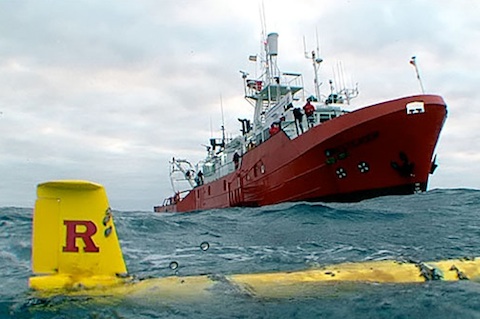
The “Scarlet Knight” becomes the first unmanned underwater glider to successfully cross the Atlantic. The technology promises to improve our understanding of the ocean and its role in climate and weather.
The “Scarlet Knight” becomes the first unmanned underwater glider to successfully cross the Atlantic. The technology promises to improve our understanding of the ocean and its role in climate and weather.
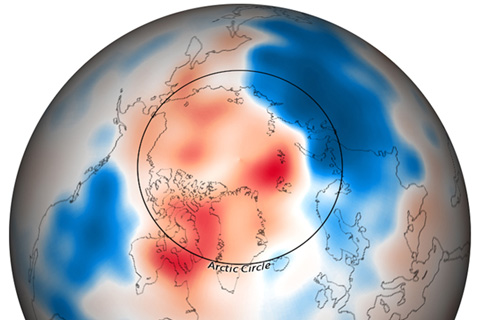
A wave of cold Arctic air gripped much of North America, Europe, and northern portions of Asia through the month of December 2009.
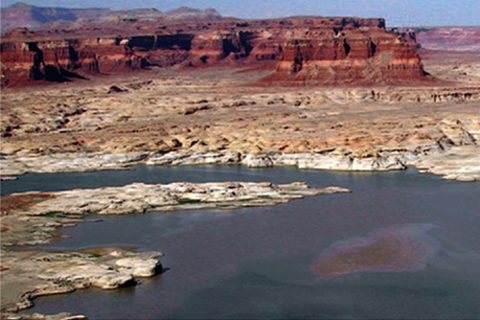
Two photographs, taken 18 months apart, show a significant decrease in Lake Powell during the most serious period of recent drought.
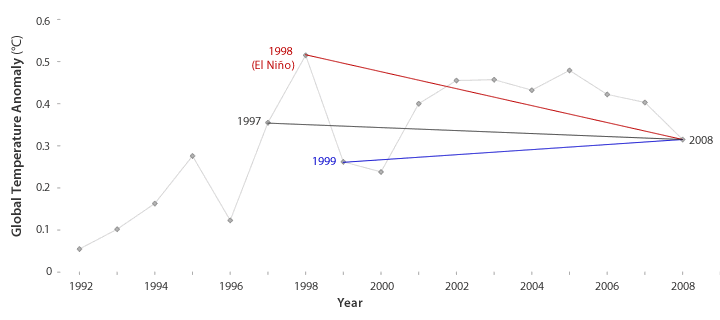
Has global warming stopped? That's what some people claim, based on global temperatures recorded since 1998. But, scientists say, not setting a new record high temperature each year doesn't mean the globe is cooling.
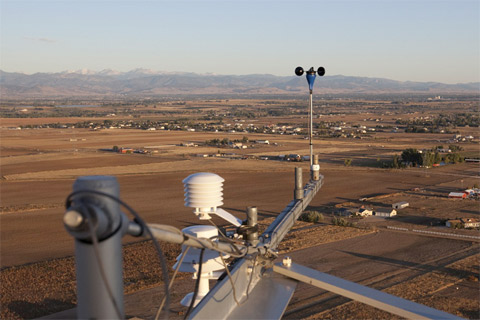
Instruments located high atop NOAA’s Boulder Atmospheric Observatory tower help scientists track carbon emissions and air quality in Colorado.
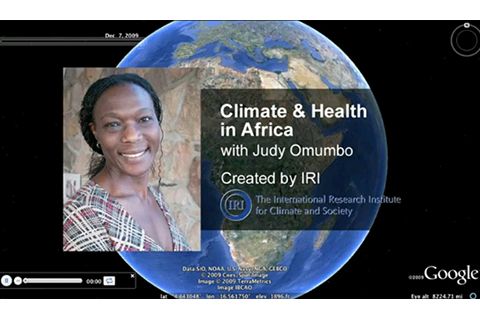
The International Research Institute for Climate and Society and Google are offering a guided tour of Africa to explain the connections between climate and deadly meningitis outbreaks.
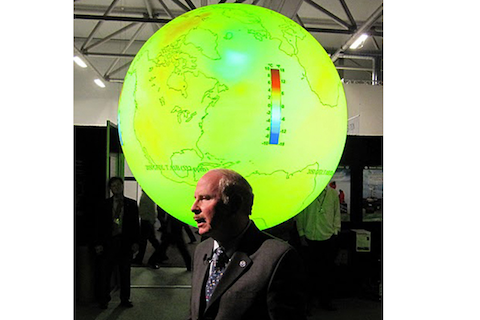
At the United Nations Climate Change Conference, Dr. Alexander E. “Sandy” MacDonald, of NOAA, used Science on a Sphere® to illustrate how climate change will transform the planet if humans do not reduce emissions of greenhouse gases.
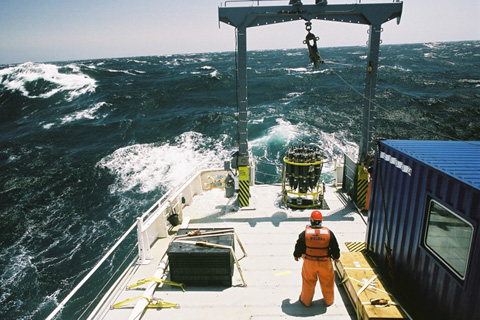
In the summer of 2007, as oyster growers and hatchery managers in Washington state were experiencing yet another failed oyster harvest, Dr. Richard Feely set off on a research cruise to find out if the seawater itself was the culprit…
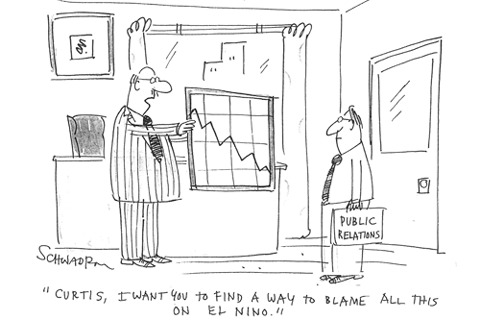
For years, people have been pointing to El Niño as the culprit behind floods, droughts, famines, economic failures, and record-breaking global heat. Can a single climate phenomenon really cause all these events? Is the world just a step away from disaster when El Niño conditions develop?
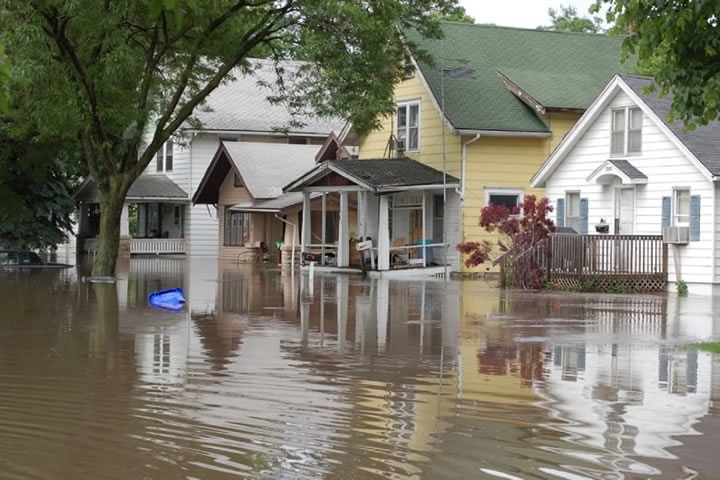
In NOAA's version of CSI, Marty Hoerling leads a group of climate and weather researchers who investigate killer climate patterns—heat waves, tornadoes, and floods—to figure out what may have triggered them.