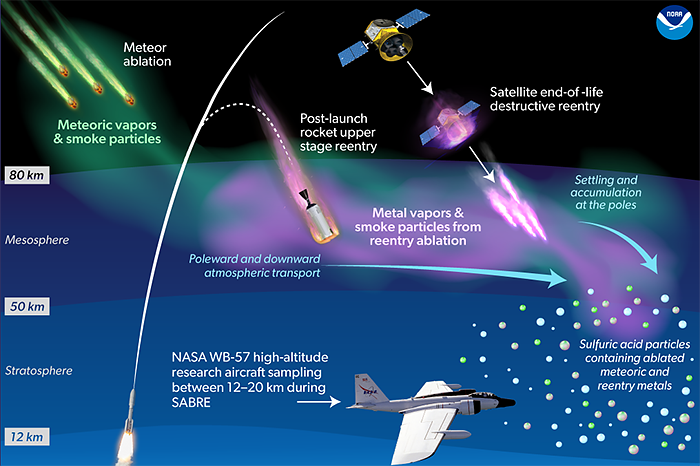
Besides meteoric “space dust,” the atmosphere more than seven miles above Earth’s surface is peppered with particles containing metals from satellites and spent rocket boosters vaporized by the intense heat of reentry.
Besides meteoric “space dust,” the atmosphere more than seven miles above Earth’s surface is peppered with particles containing metals from satellites and spent rocket boosters vaporized by the intense heat of reentry.
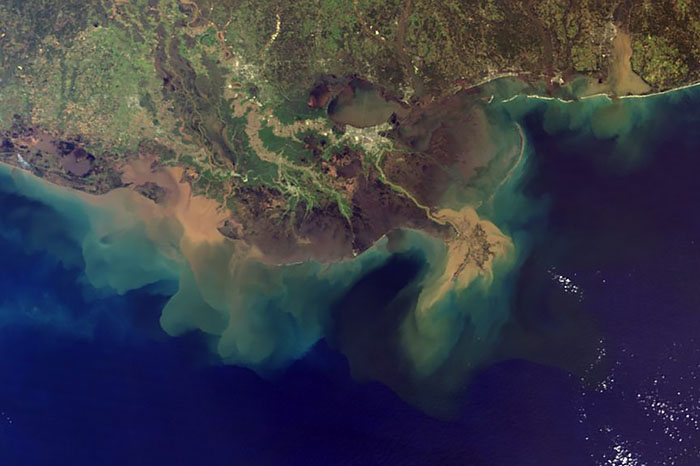
A new dataset provides river chemistry and discharge data for 140 U.S. rivers along the West, East, and Gulf of Mexico coasts, based on historical records from the U.S. Geological Survey (USGS) and the U.S. Army Corps of Engineers. This data will support regional ocean biogeochemical modeling and carbon chemistry studies.

A new report detailing the accomplishments of the NOAA Sea Ice Modeling Collaboration Workshop, held in April 2023, is now available from the Bulletin of the American Meteorological Society.

NOAA’s National Integrated Heat Health Information System and science partner, CAPA Strategiesoffsite link, are now accepting applications from organizations interested in participating in the 2022 Urban Heat Island mapping campaigns.
