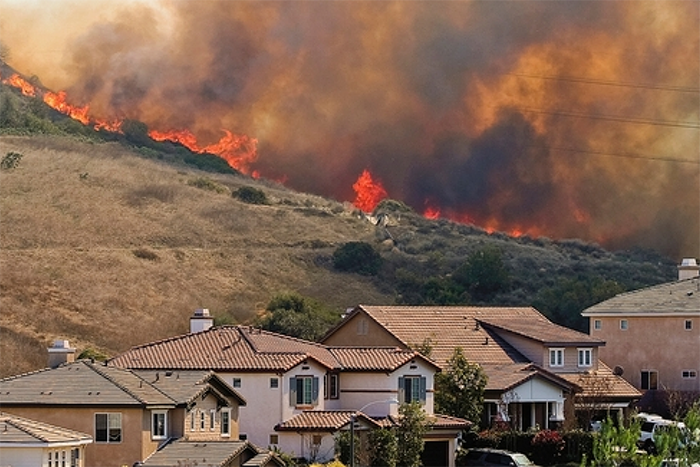
The combination of burned plastics, resins, and wood could affect interactions between smoke and sunlight, potentially influencing climate warming.
The combination of burned plastics, resins, and wood could affect interactions between smoke and sunlight, potentially influencing climate warming.

The National Oceanic and Atmospheric Administration today announced it has selected the University of Washington to host NOAA’s Cooperative Institute for Climate, Ocean, and Ecosystem Studies ...
Thanks to toasty temperatures for much of the country last month, March 2020 ranked 10th hottest on record for the contiguous United States.
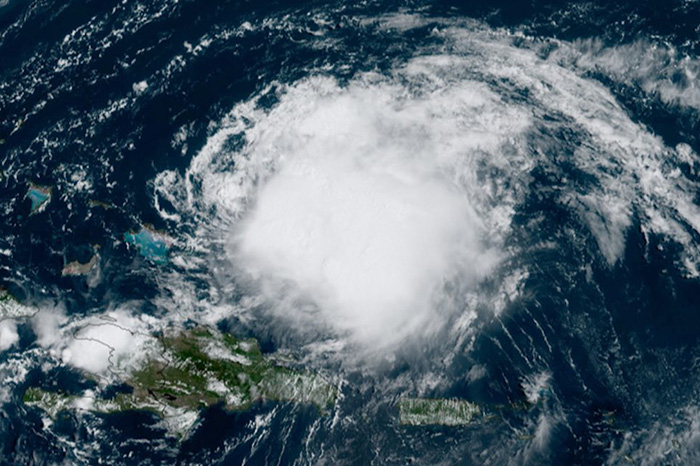
To predict developing storms, meteorologists employ models that rely on current observations and mathematical calculations to predict a storm’s behavior and track. These complex models use inputs from historic, numeric, oceanic, and atmospheric data.
On May 17, 2023, from 10:30 a.m. – noon ET, the NOAA Adaptation Sciences Program will host a webinar featuring a project focused on developing a Research for Action on Climate Change and Health in the Caribbean.
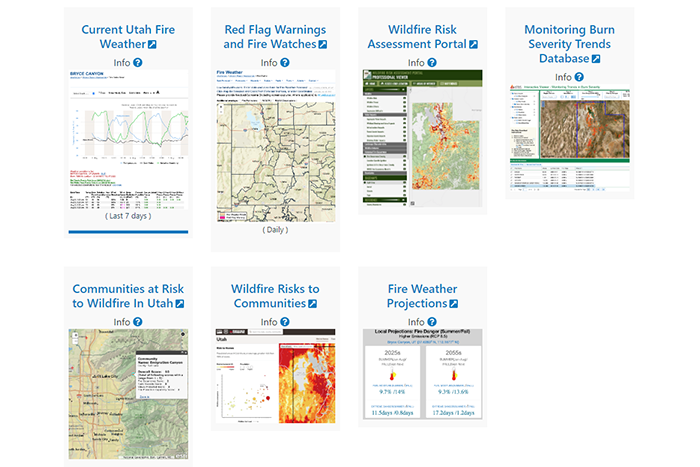
On Wednesday February, 8, 2023, at 11 a.m. MST, the webinar will highlight the online tool covering past incidents, current risks, and future projections of climate hazards in Utah.
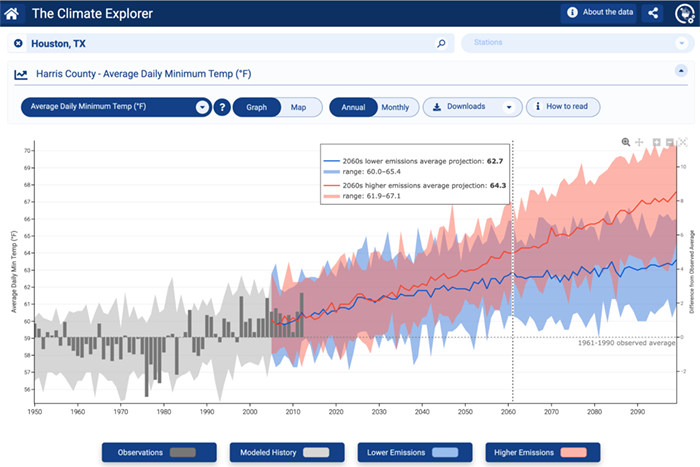
The latest version of the U.S. Climate Resilience Toolkit’s Climate Explorer now offers climate projections for every county in the entire United States. The recent addition of climate projection data for Hawai'i and U.S. island territories in the Pacific Ocean and Caribbean Sea complements the tool’s original contiguous U.S (CONUS) coverage and the addition of data for Alaska in 2020.
Demand for actionable scientific information on adaptation and resilience is outpacing supply. Three federal climate science-to-action networks collaborate closely to make relevant scientific information and adaptive management strategies available.
The three competitions would fund interdisciplinary research on planning and preparedness to extreme weather and climate.