
With long ranges and adaptive capabilites, saildrones provide researchers with a new tool in their toolbox for collecting data in remote and hard to reach parts of the ocean.
With long ranges and adaptive capabilites, saildrones provide researchers with a new tool in their toolbox for collecting data in remote and hard to reach parts of the ocean.

This animated gif tracks the emergence and decay of La Niña in the tropical Pacific from August 2017-April 2018.

La Niña is in the rear-view mirror. What’s ahead?

Old ice continues disappearing from the Arctic Ocean, continuing a decades-long pattern.

Models suggest 2016's extreme warmth may be the Arctic's new normal within a decade.

There were no reported tornados in Oklahoma during the first four months of the year, a new record.

The chances that May-July temperatures will be well above normal are better than 50% across much of the southwestern United States and New England.
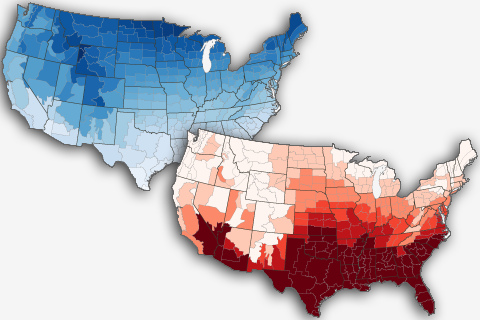
Average temperature maps can wash out days or weeks of hot and cold extremes that are important for things like energy planning and crop risk assessment. Jake Crouch explains how degree-day maps can bring back the details.
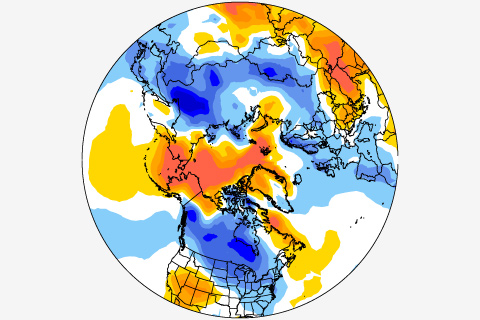
Winter returned with a vengeance to many regions in February and March. Our guest blogger, Dr. Amy Butler, explains why winds in the stratosphere may have been a key player.
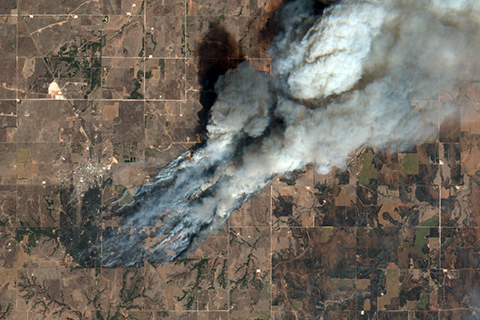
Extremely dry and windy conditions helped rapidly grow and spread wildfires across Oklahoma in April 2018.