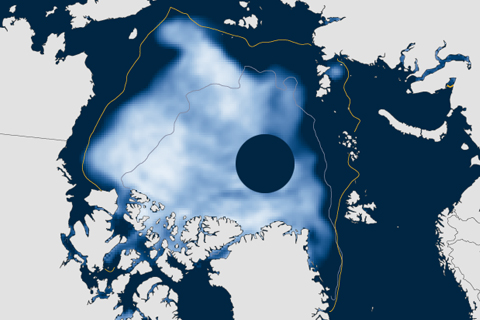
Arctic sea ice extent shrunk down to 2.0 million square miles (5.1 million square kilometers) in September 2013—18 percent below the 1981-2010 average, but larger than record low set in 2012.
Arctic sea ice extent shrunk down to 2.0 million square miles (5.1 million square kilometers) in September 2013—18 percent below the 1981-2010 average, but larger than record low set in 2012.
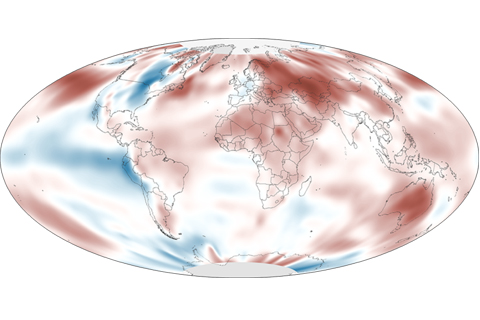
Globally-averaged surface temperature for 2013 was 0.36 - 0.38° Fahrenheit above the 1981–2010 average, placing it among the top 10 warmest years since record-keeping began.
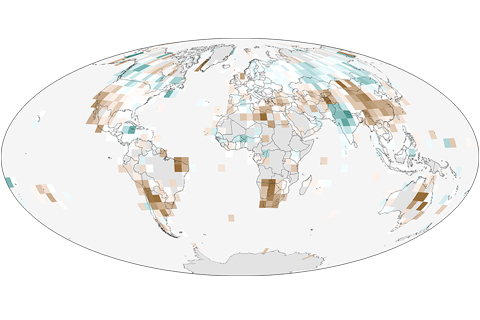
2013 continued a trend of water vapor in the surface atmosphere increasing over land and ocean relative to the 1970s, while the atmosphere over land becomes less saturated.
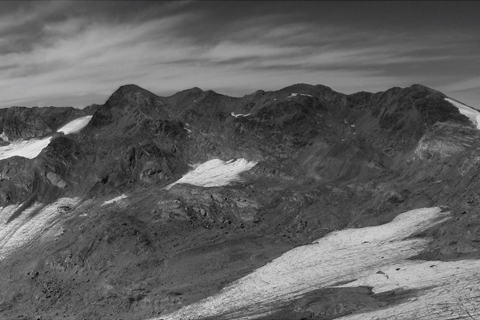
In 2012—for the 23rd consecutive year—mountain glaciers worldwide lost more mass through melting than they gained through new snow accumulation. The retreat of the majority of mountain glaciers worldwide is one of the clearest signs that climate is warming over the long term.
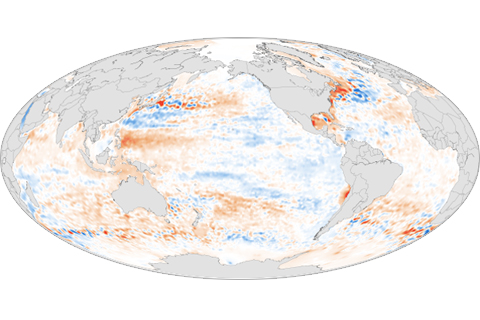
Upper ocean heat content has increased significantly over the past two decades. An estimated 70 percent of the excess heat has accumulated in the top 2,000 feet of the ocean, and the rest has flowed into deeper ocean layers.
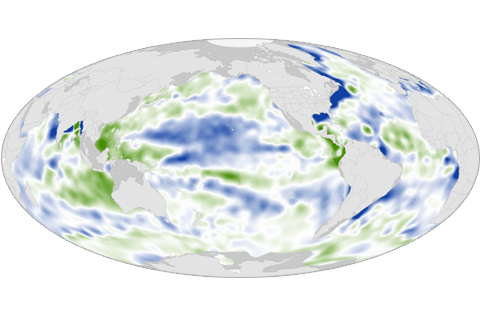
Large-scale patterns of sea surface salinity in 2013 mirrored the overall trend seen from 2004 to 2013: salty, dry areas are becoming increasingly salty, and fresher areas are becoming increasingly fresh.
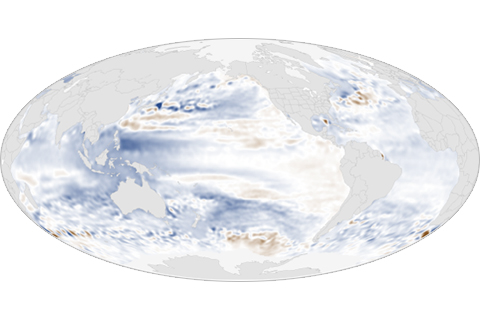
In 2013, global average sea level was 1.5 inches above the 1993-2010 average, which is the highest yearly average in the satellite record (1993-present). Overall, sea level continues to rise at a rate of one-eighth of an inch per year.
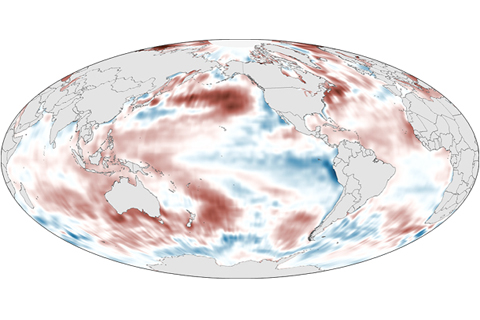
The globally averaged sea surface temperature in 2013 was among the 10 highest on record, with the North Pacific reaching an historic high temperature. ENSO-neutral conditions and a negative Pacific Decadal Oscillation pattern had the largest impacts on global sea surface temperature in 2013.
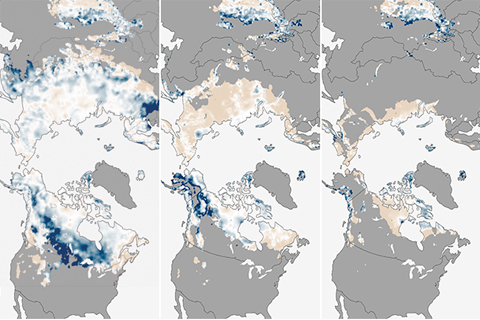
While the Northern Hemisphere’s snow cover on land ranked as the 13th most extensive on record in 2013, snow cover extent at the end of the cold season has dropped by 19.9 percent per decade since 1979 relative to the 1981-2010 average.
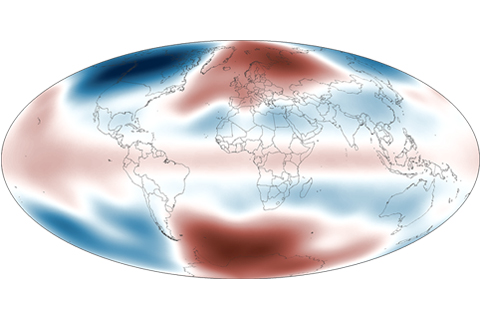
Observing temperature patterns in the lower stratosphere gives scientists clues about our planet's changing climate. Global average temperatures in the lower stratosphere for 2013 were slightly below the 1981–2010 average.