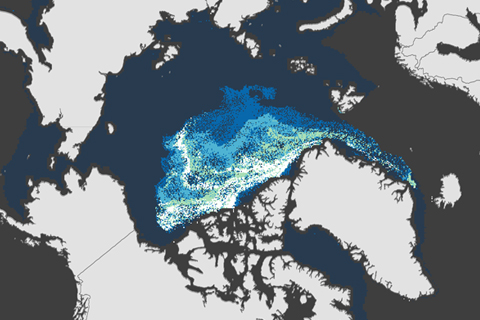
Thick, old ice used to dominate the winter ice pack in the Arctic. This animation of maps of sea ice age from 1987 through end of October 2013 shows how little old ice is left in the Arctic.
Thick, old ice used to dominate the winter ice pack in the Arctic. This animation of maps of sea ice age from 1987 through end of October 2013 shows how little old ice is left in the Arctic.
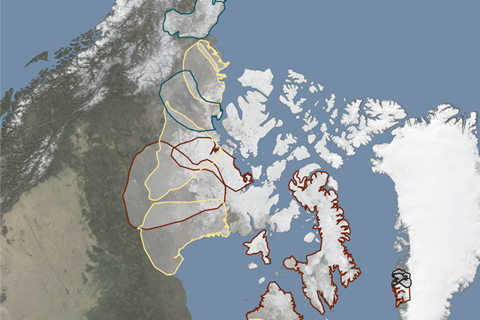
Only a few herds of reindeer and caribou are increasing or are stable at high numbers; most herds continue to decline or remain at low numbers after severe declines in recent decades. Whether these trends are a result of Arctic climate change or part of a natural pattern is still unknown.
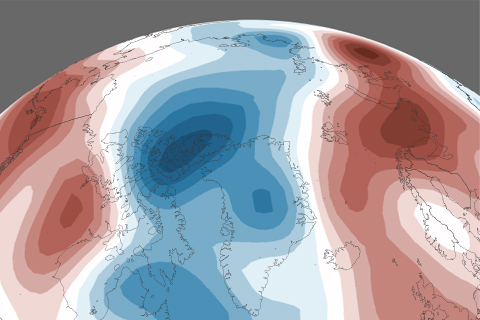
From reindeer to regional temperature patterns, from sea ice age to Greenland surface melt, the Arctic Report Card is a yearly assessment of the Arctic's physical and biological systems and how they are changing. This collection of visual highlights from the 2013 report is a story of the Arctic in pictures.
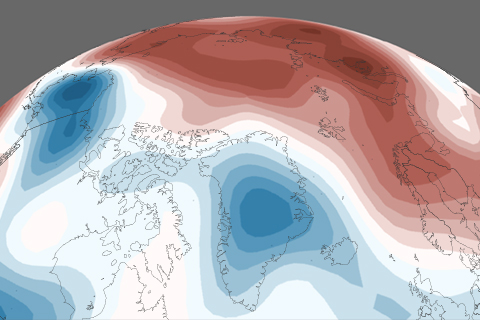
Since the mid-1960s, the Arctic has warmed about 3.6°F (2.0°C)—more than double the amount of warming in lower latitudes. In 2012 (the last complete calendar year available at the time scientists began working on the 2013 Arctic Report Card), the annual average temperature was the sixth warmest on record.
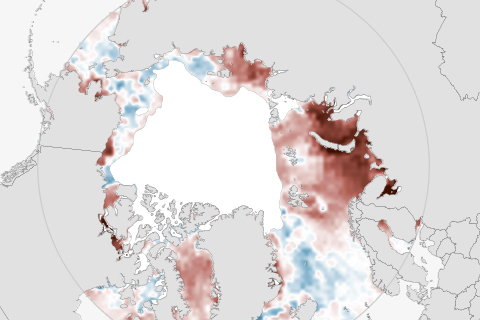
Most of the Arctic boundary waters were warmer than average in summer 2013, but a few cool pockets appeared in the western Arctic and the Greenland Sea. Warmer waters are drawing new species from lower latitudes into the Arctic.
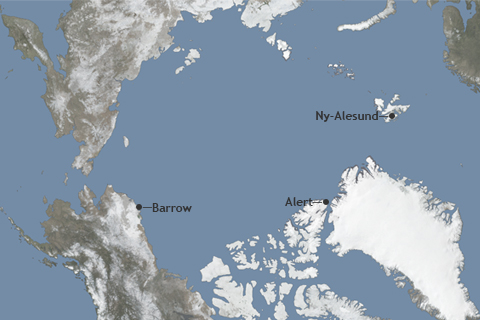
Since the early 1990s, annual atmospheric equivalent black carbon concentrations in the Arctic have decreased at the surface by as much as 55 percent—one of the few "good news" stories coming out of the region.

Since observations began in 1982, Arctic-wide tundra vegetation productivity has increased. In North America, the rate of greening has accelerated since 2005.
In March 1988, thick, multi-year ice comprised 26 percent of the Arctic's ice pack. In 2005, that number dropped to 19 percent. In 2013, it dropped to 7 percent.

Averaged over September 2013, sea ice extent was 2.07 million square miles—larger than last year's record low, but still more than 17 percent below average and the sixth smallest September extent on record.

In May 2013, there was record-setting loss of Eurasian spring snow cover, and spring snow cover was below normal again in June—the fourth lowest on record. This is the sixth year in a row that Eurasia has set a new record low in either May or June snow extent.