
Temperatures were above average over much of the globe, but much below average over the United States, Greenland and far eastern Russia. Arctic sea ice extent was below average, ranking second lowest on record.
Temperatures were above average over much of the globe, but much below average over the United States, Greenland and far eastern Russia. Arctic sea ice extent was below average, ranking second lowest on record.

Discussions of the anthropogenic contribution to climate change often focus on greenhouse gas emissions from fossil fuel combustion, but these emissions are not the only anthropogenic forcing. ...

Lockdowns intended to curb the spread of COVID-19 reduced human-made aerosol emissions in 2020, but the impact on Earth’s energy balance has been less clear. A new study finds that, over the East Asian Marginal Seas (between the coasts of China, Korea, and Japan) in March 2020, aerosol reductions contributed to a drastic drop in clear-sky reflection. Roughly a third of the drop can be attributed to reduced aerosols, and the rest can be attributed to weather variability and long-term emission trends.
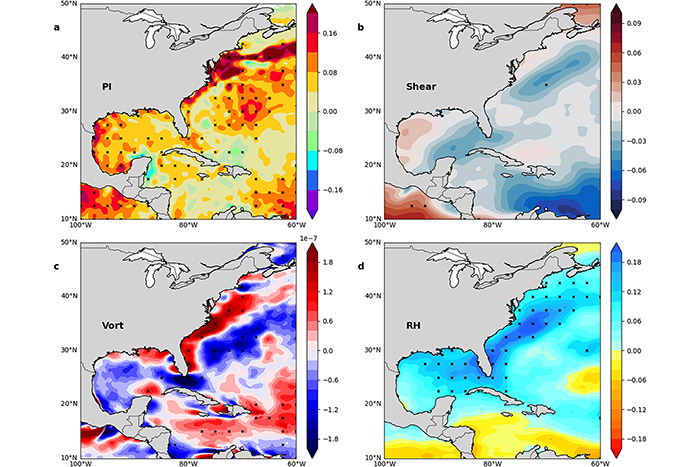
New NOAA research published in the journal Geophysical Research Letters, found that hurricane intensification rates near the US Atlantic coast have increased significantly over the last 40 years and will likely continue to increase in the future.
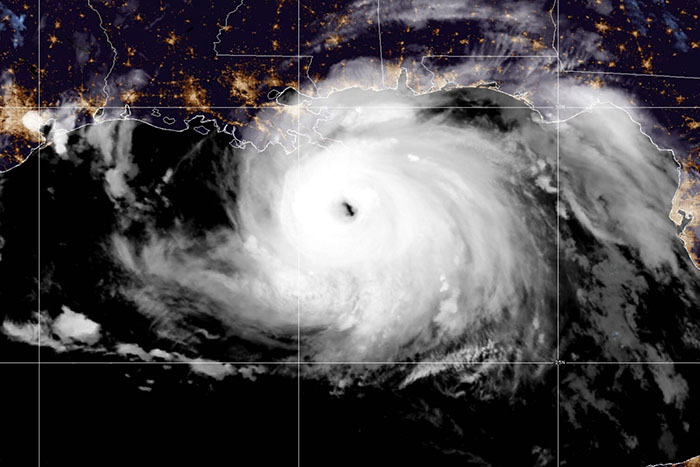
New research indicates that year-to-year hurricane variability has already increased, and projects a further 36 percent increase by the middle of the 21st century.

Cold, dense water from the Southern Ocean transfers heat and carbon to the Northern Hemisphere via the Atlantic Meridional Overturning Circulation. But a new study finds that the northward transport of cold water at 16°N weakened by about 12 percent during 2000-2020.
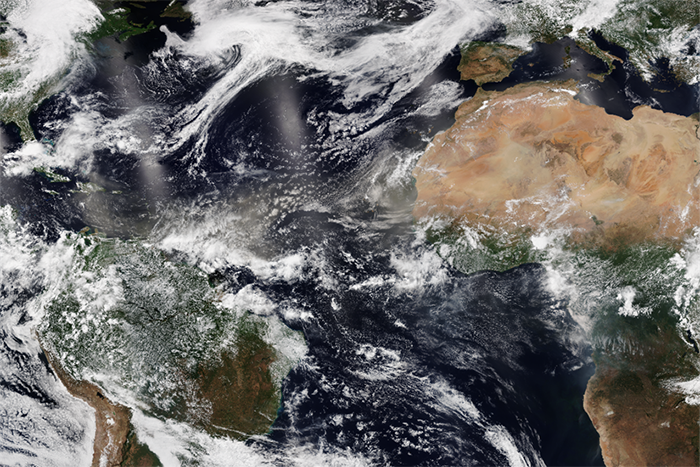
Atlantic nations have agreed to cooperate on tackling environmental and climatic challenges affecting the Atlantic Ocean. The United States plans to host the signing of an international cooperation pact on July 13, 2022.

New research shows that ocean dynamics like the North Atlantic Oscillation (NAO) tripole pattern and the Atlantic Multidecadal Variability (AMV) pattern play a critical role in enhancing sea-surface temperature variability.

Global carbon emissions are projected to bounce back to 36.4 billion metric tons this year after an unprecedented drop caused by the response to the coronavirus pandemic, according to an annual report by the Global Carbon Project.
Analysis of the last millennium reanalysis climate reconstruction shows a clear connection between Southwest drought and La Niña sea-surface temperature patterns. However, this pattern only ...