
Ten communities have received a total of $200,000 for developing manuals for extreme heat response planning, and $500,000 in funding will go to Duke University’s Heat Policy Innovation Hub for heat policy research and outreach.
Ten communities have received a total of $200,000 for developing manuals for extreme heat response planning, and $500,000 in funding will go to Duke University’s Heat Policy Innovation Hub for heat policy research and outreach.

NOAA has awarded a lease to Massa Industries, LLC for office space in Middletown, Rhode Island, that will temporarily house a new marine operations support facility for Rhode Island-based NOAA ships…

NOAA’s Climate Program Office has just announced a total annual award of $15.2 million to support 63 new, innovative, and impactful projects to improve our nation’s resilience at a critical time in the fight against the climate crisis.
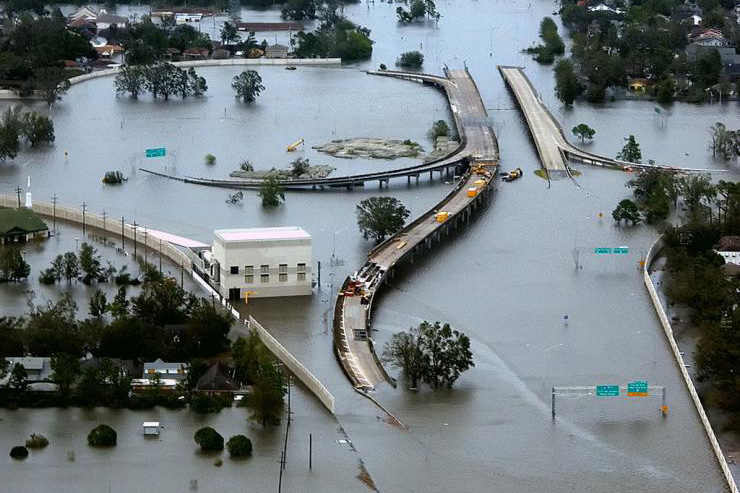
NOAA’s Climate Program Office (CPO) has announced a total award amount of $171 million, the highest five-year investment in the program’s history, to support innovative and impactful projects to improve our nation’s climate resilience.

The recent workshop was part of an ongoing partnership focused on building climate resilience and adaptation in islands throughout the Pacific, Caribbean and Indian Oceans.
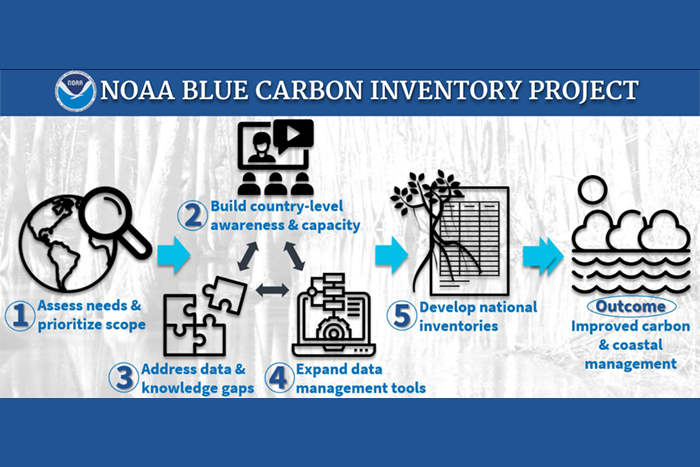
The NOAA Blue Carbon Inventory (BCI) Project—an initiative led by the NOAA Climate Program Office (CPO) in partnership with the U.S. Department of State and the NOAA Marine Protected Areas (MPA) Center—is among the first Ocean Decade actions endorsed and announced this week by the United Nations Intergovernmental Oceanographic Commission of UNESCO (IOC).

“Blue carbon” is carbon dioxide that the world’s ocean ecosystems remove from the atmosphere, through algae, mangroves, and other means. CPO has developed a briefing sheet for the newly launched NOAA Blue Carbon Inventory (BCI) Project you can review to learn more.

NOAA and Boeing are teaming up to evaluate the best placement for a NOAA greenhouse gas sampling system on a commercial jet. This is a first step toward an expansion of NOAA’s global atmospheric sampling network to include commercial airliners in the U.S. and International airlines in these critical data-gathering efforts.

Although reducing greenhouse gas emissions is the most important strategy for addressing climate change, the IPCC also recommends climate interventions like carbon dioxide removal to meet climate targets and begin to stabilize Earth’s climate system.

NOAA has announced a new agreement to support evaluation of whether the ocean can safely remove and store billions of tons of carbon dioxide.