Colorado River’s Lake Powell at historic lows in summer 2026
Details
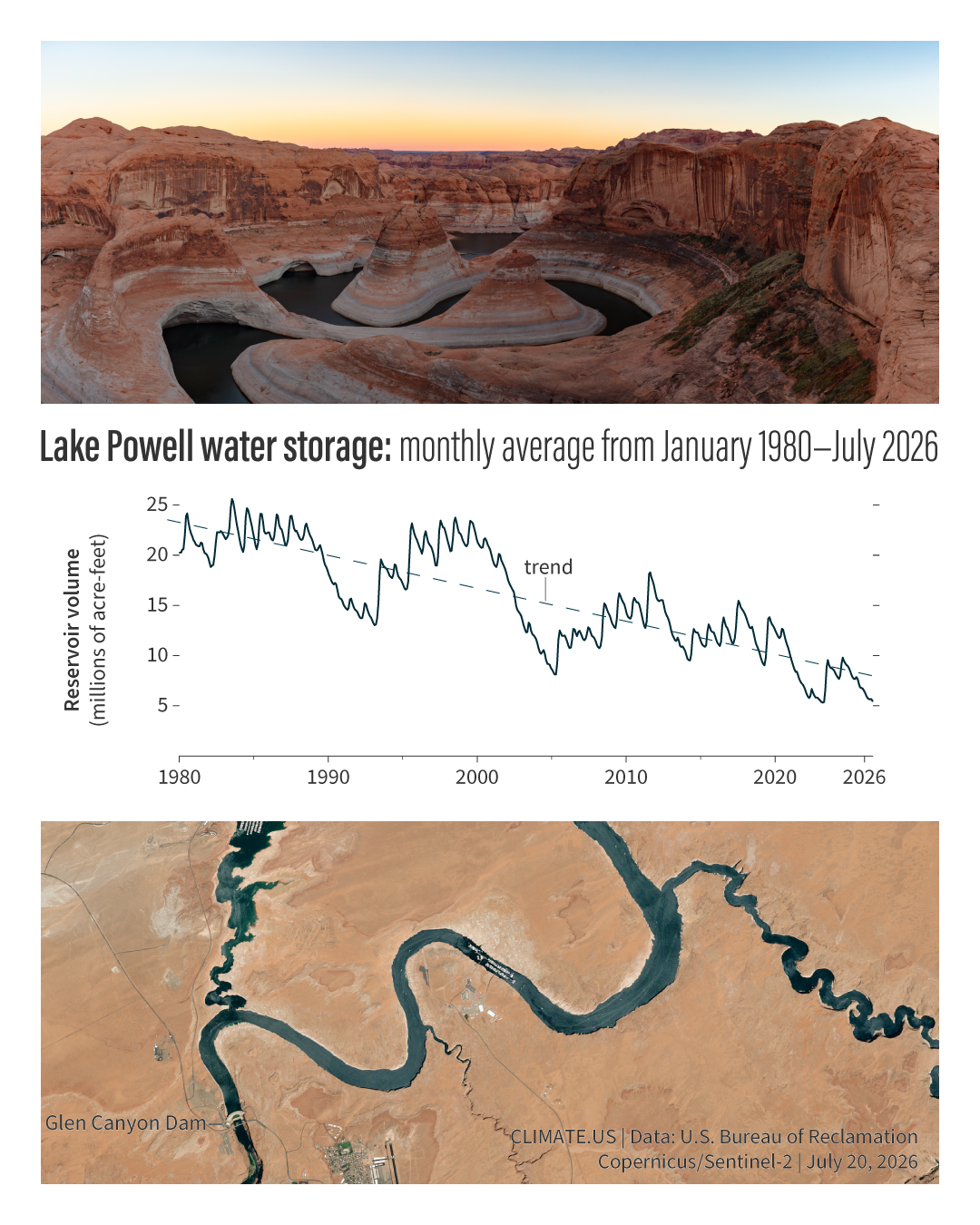
On July 19, Lake Powell was just 22% full—the lowest it's been on that date since the lake was first filled to capacity in the early 1980s. Overall, the Colorado River system was at 33% of capacity. Two things are driving these low levels: a megadrought that's gripped the Western U.S. for the past two and a half decades, and a record-low snowpack from the 2025–26 winter that left rivers with far less snowmelt to work with this spring.
You can see from this graph of Lake Powell water levels that while there is a natural peak most summers followed by a low in the spring, there has been an overall downward trend since around 2000.
Southwest monsoon thunderstorms brought some recent moisture to parts of the Four Corners region and eastern Nevada. But that's not likely to impact Colorado River reservoir levels. Even though heavy monsoon rains can account for up to 75% of annual precipitation in parts of Arizona and New Mexico, Lake Powell is filled mainly by Rocky Mountain snowmelt far upstream.
Monsoon storms tend to evaporate quickly or soak into parched desert soil, rather than reach the main river. The main benefit is indirect: water demand goes down when it's raining, which slows the reservoir drawdown a little. But the long-term drought along the Colorado River continues regardless.
The Colorado River system supplies household water to more than 35 million people across the Southwest.
References:
- Lake Powell Glen Canyon Dam and Powerplant Observed Daily Instantaneous Lake/Reservoir Storage (af), U.S. Bureau of Reclamation. U.S. Bureau of Reclamation
- Colorado River Basin, U.S. Bureau of Reclamation
- 2026 Monsoon Drought Status Update for the Southwest U.S., NOAA Drought.gov
- Drought Summary, July 21, 2026, U.S. Drought Monitor