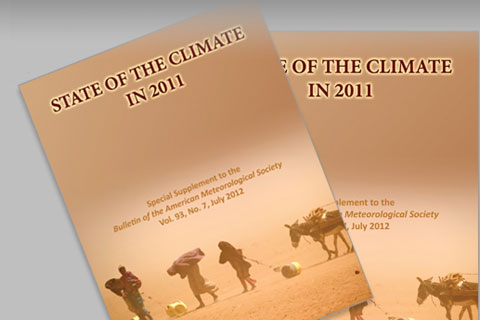
2011 State of the Climate Report editor Jessica Blunden talks about the process of creating and editing the report.
2011 State of the Climate Report editor Jessica Blunden talks about the process of creating and editing the report.
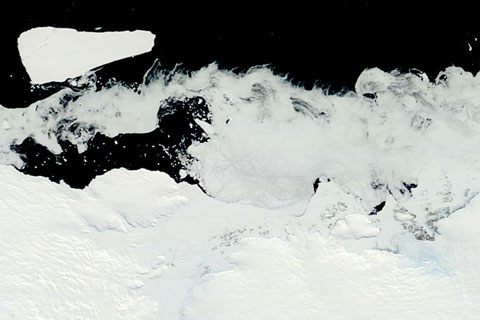
In the Arctic, an ocean is surrounded by continents, while Antarctica is continent surrounded by oceans. These differences in the arrangement of land and water contribute to differences in each polar region’s climate, oceanic and atmospheric circulation patterns, and seasonal and long-term sea ice patterns.
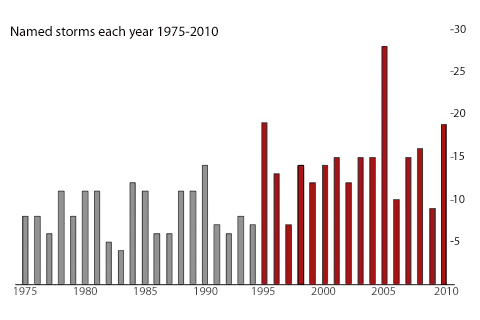
Above-average sea surface temperatures, a natural cycle of increased hurricane activity, and a fading La Nina have influenced the 2011 Atlantic hurricane outlook.
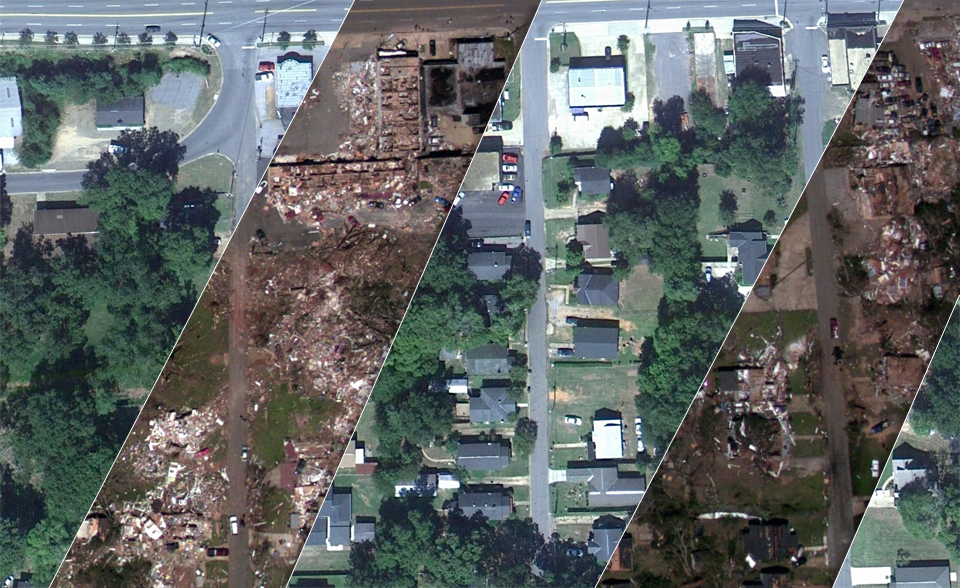
The tornado outbreak across the southern United States in late April 2011 was deadly, devastating, and record breaking. NOAA's "CSI" team is investigating the possible connections between global warming, natural climate patterns, and tornadoes.
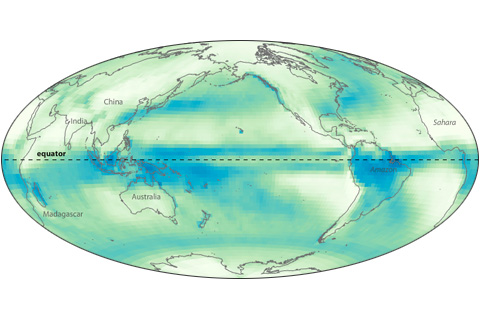
Near the Earth’s equator, solar heating is intense year round. Converging trade winds and abundant water vapor all combine to produce a persistent belt of daily showers known as the Intertropical Convergence Zone.

As far back as August 2010, NOAA's seasonal climate models predicted that rainfall would be heavier than normal across Indonesia and Southeast Asia in early 2011. The cause? La Niña.
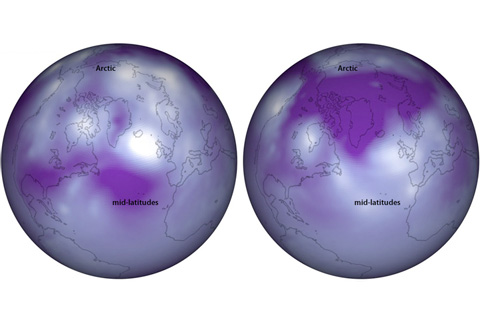
Large-scale shifting of the weight of the atmosphere between mid- and high latitudes creates climate patterns known as the Arctic and North Atlantic Oscillations. These patterns have a big influence on winter weather in the Eastern U.S.
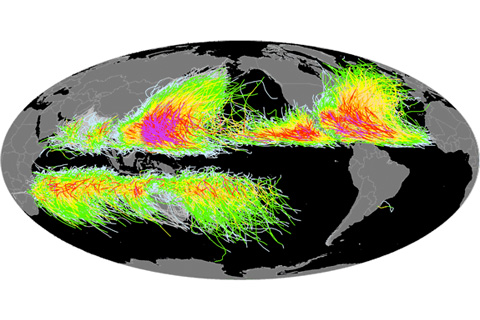
Researchers at NOAA’s National Climatic Data Center collaborate with tropical cyclone centers and scientific agencies around the world to assemble and maintain the International Best Track Archive for Climate Stewardship (IBTrACS), an inventory of tropical cyclones.
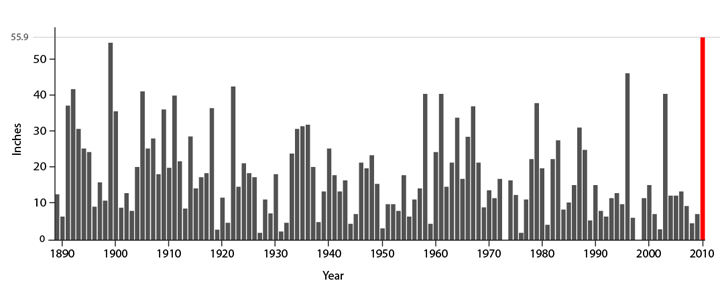
NOAA's Climate Scene Investigators analyzed why the mid-Atlantic region had record-setting snowstorms this winter. The team looked for but found no human "fingerprints" on the severe weather. Instead, they fingered two naturally occurring climate patterns as co-conspirators in the case.
We can have record-setting blizzards and global warming at the same time. NOAA scientists explain climate variability, how it influenced our weather this winter, and how it differs from climate change.