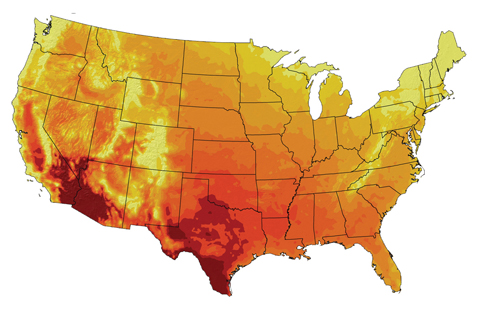
Climate models project that 100-degree days will become more numerous and widespread by the end of the century if greenhouse gas emissions continue to rise.
Climate models project that 100-degree days will become more numerous and widespread by the end of the century if greenhouse gas emissions continue to rise.
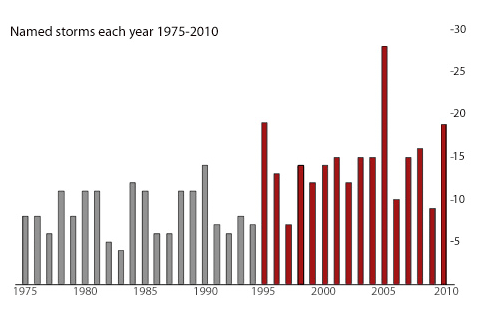
Above-average sea surface temperatures, a natural cycle of increased hurricane activity, and a fading La Nina have influenced the 2011 Atlantic hurricane outlook.
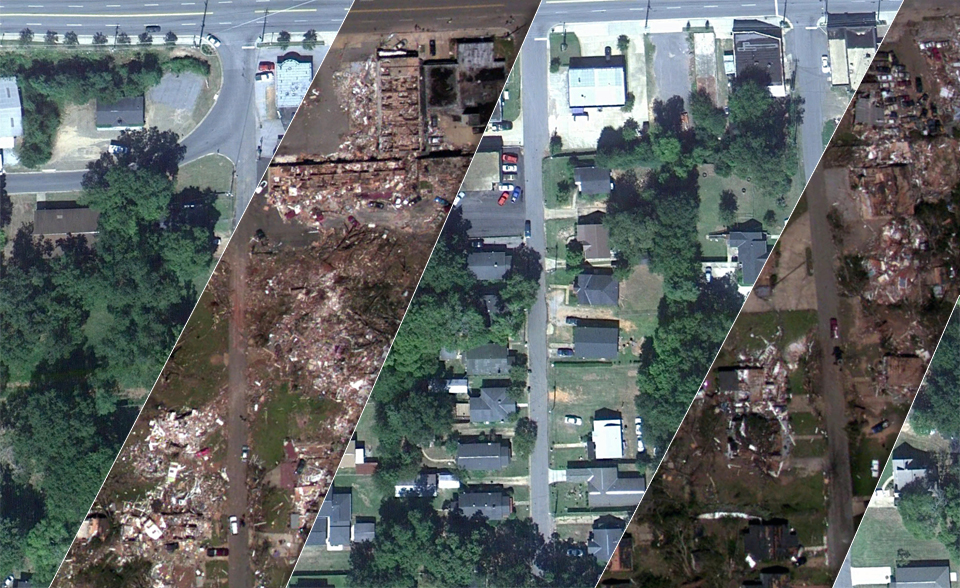
The tornado outbreak across the southern United States in late April 2011 was deadly, devastating, and record breaking. NOAA's "CSI" team is investigating the possible connections between global warming, natural climate patterns, and tornadoes.
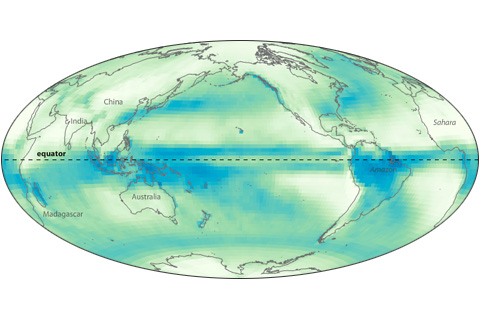
Near the Earth’s equator, solar heating is intense year round. Converging trade winds and abundant water vapor all combine to produce a persistent belt of daily showers known as the Intertropical Convergence Zone.

As far back as August 2010, NOAA's seasonal climate models predicted that rainfall would be heavier than normal across Indonesia and Southeast Asia in early 2011. The cause? La Niña.
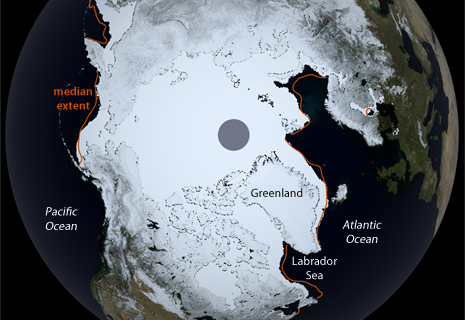
Arctic sea ice extent for the month of March was the second lowest in the satellite record. Ice cover at winter maximum continues to be dominated by young, thin ice.
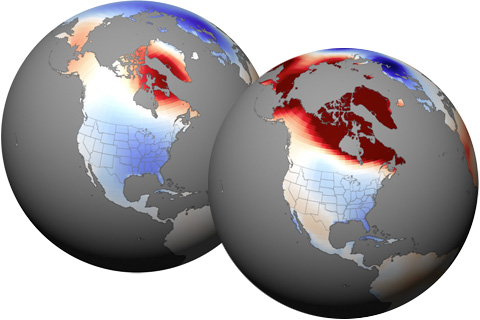
Natural climate phenomena—the North Atlantic Oscillation & La Niña—can explain much of this winter's temperature patterns across North America.
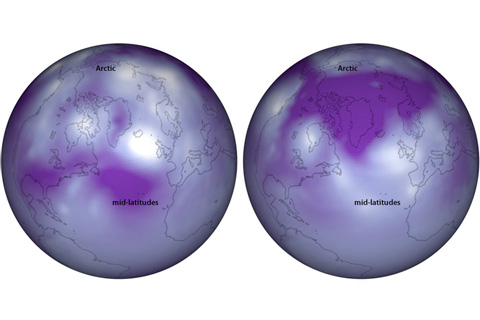
Large-scale shifting of the weight of the atmosphere between mid- and high latitudes creates climate patterns known as the Arctic and North Atlantic Oscillations. These patterns have a big influence on winter weather in the Eastern U.S.
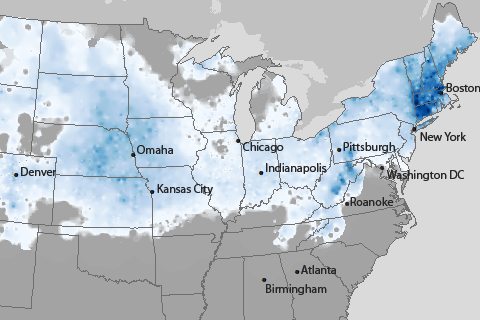
How did this year’s storms compare to the worst in recent history?
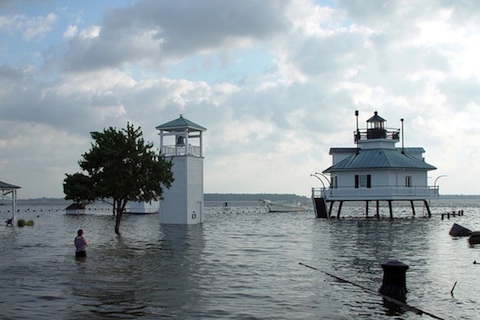
The arrival of Hurricane Isabel in 2003 flooded the retirement home of a Chesapeake Bay couple. With sea level around the Chesapeake Bay rising faster than the global average, how are coastal residents planning for change?