
A new study finds that how much of Earth’s surface energy is used to evaporate water is a crucial driver of local weather variations during summer months. The researchers identify two feedback regimes related to evaporation and cloudiness.
A new study finds that how much of Earth’s surface energy is used to evaporate water is a crucial driver of local weather variations during summer months. The researchers identify two feedback regimes related to evaporation and cloudiness.

Humid heat often worsens health risks of extreme heat by compromising human cooling mechanisms (sweating).

Small businesses are critical in community disaster recovery. They provide essential goods and services and employment, and act as gathering locations during disasters.

The convergence of climate change, past wildland fire policy, and an expanding wildland–urban interface have increased pressure on wildland fire managers to use science-based information to improve management outcomes.

The Regional Integrated Sciences and Assessments (RISA) program is proud to announce the release of Climate in Context: Science and Society Partnering for Adaptation, an edited volume being ...
Drought affects every state in the U.S. Its impacts cut across economies and the environment and can last for years. Since 1980 more than 20 drought events have cost the nation at least $1 billion …
A study funded in part by CPO’s Sectoral Applications Research Program developed an improved reconstruction of the Columbia River streamflow using tree-ring records sensitive to climate forcings. ...
The findings improve scientists’ understanding of circulation changes that occur when hurricanes strengthen.

Since the start of the Industrial Revolution in 1750, the ocean has absorbed 20–30 percent of the new carbon dioxide emissions. That has mitigated rising atmospheric temperatures but increased ocean acidification. A new data set spanning 1750–2100 predicts future ocean chemistry.
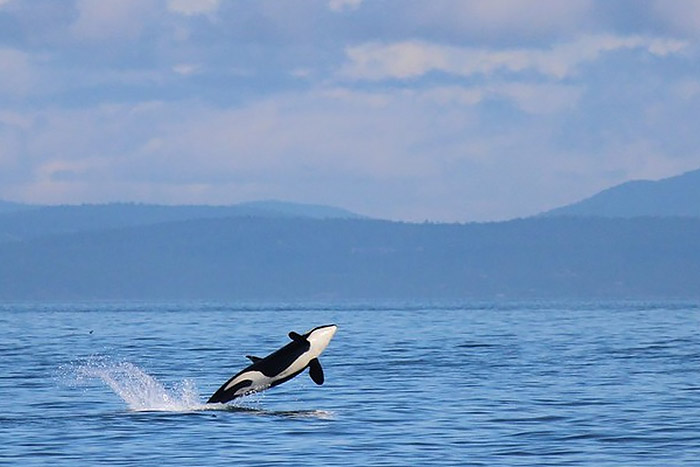
A newly published dataset provides insights into the oceanographic conditions within the Olympic Coast National Marine Sanctuary (OCNMS) over nearly two decades, shedding light on marine heat waves, seasonal upwelling, hypoxia, and ocean acidification.