News & Features

New research on clouds will contribute to a new generation of models aimed at predicting weather and climate.

Coincident drought and flooding events can compound to be even more damaging than a drought or flood alone.
Snow is used by approximately ⅙ of Earth’s population for drinking, agriculture, and hydropower, among other uses. Despite its importance, “ snow droughts ,” or deficits in snowmelt, which can ...
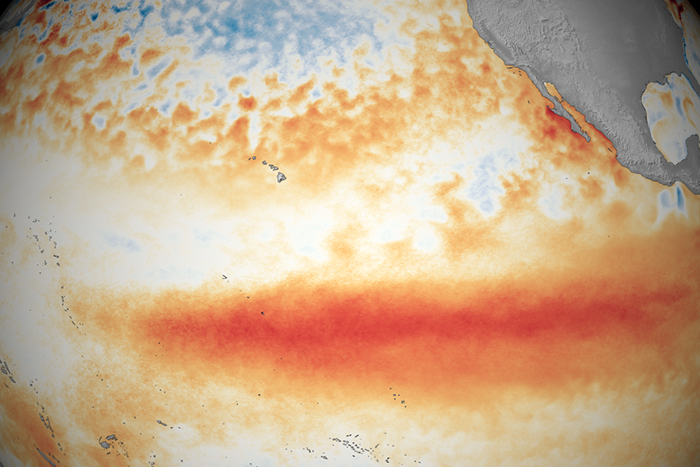
Climate model overconfidence when predicting El Niño from March through May might result from models leaning too heavily on tropical Pacific signals.
A new study in the Nature Partner Journal Climate and Atmospheric Science describes a breakthrough in accurately predicting atmospheric river behavior several weeks ahead.
Atmospheric river Atmospheric river off California, February 2014. Credit: Still from an animation by NOAA Climate.gov Those long, intense plumes of moisture in the sky known as ...
Today, NOAA unveiled its new 10-year research roadmap to help the nation’s scientists, resource managers, and coastal communities address acidification of the open ocean, coasts, and Great Lakes. …
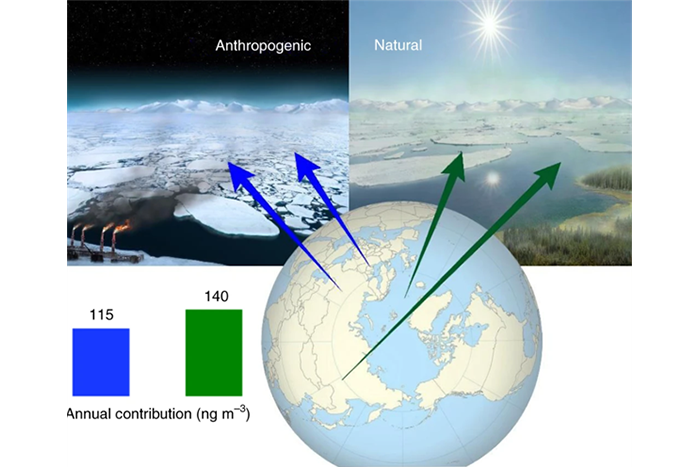
Organic aerosols (OAs) comprise a significant fraction of the Arctic aerosol mass, helping modulate the radiative balance of the Arctic atmosphere. A new study sheds light on composition and sources of OAs. While OAs in the Arctic are primarily influenced by anthropogenic emissions, mostly from Eurasia in winter, natural emissions largely take over in summer.
Better understanding of how ozone, an air pollutant and greenhouse gas, is removed is essential for improved modeling and prediction of air pollution, ecosystem health, and climate.