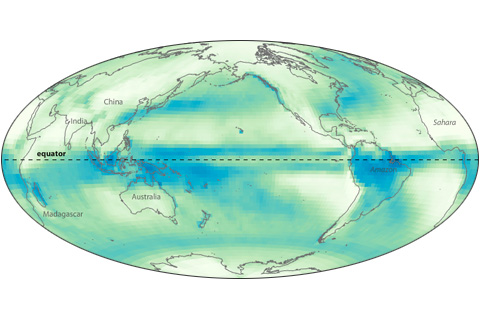
Near the Earth’s equator, solar heating is intense year round. Converging trade winds and abundant water vapor all combine to produce a persistent belt of daily showers known as the Intertropical Convergence Zone.
Near the Earth’s equator, solar heating is intense year round. Converging trade winds and abundant water vapor all combine to produce a persistent belt of daily showers known as the Intertropical Convergence Zone.
As far back as August 2010, NOAA's seasonal climate models predicted that rainfall would be heavier than normal across Indonesia and Southeast Asia in early 2011. The cause? La Niña.
April 14, 2011
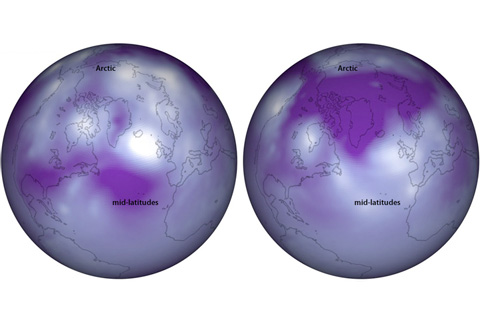
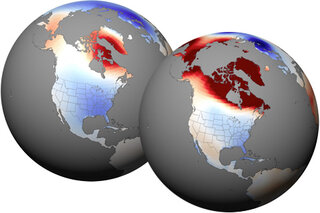
Large-scale shifting of the weight of the atmosphere between mid- and high latitudes creates climate patterns known as the Arctic and North Atlantic Oscillations. These patterns have a big influence on winter weather in the Eastern U.S.
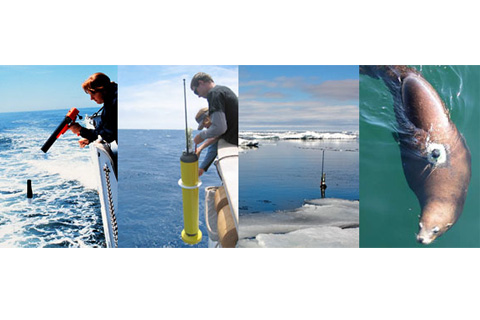
Around 90 percent of the warming that has happened on Earth over the past 50 years has occurred in the ocean. That excess heat is driving sea level rise, reducing sea ice, fueling stronger hurricanes, and stressing ocean life.
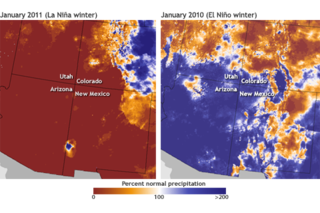
February 11, 2011
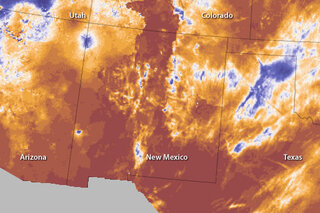
February 10, 2011
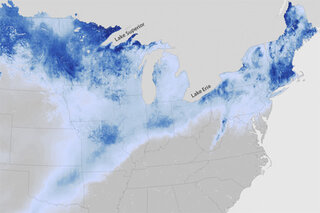
February 8, 2011

January 26, 2011