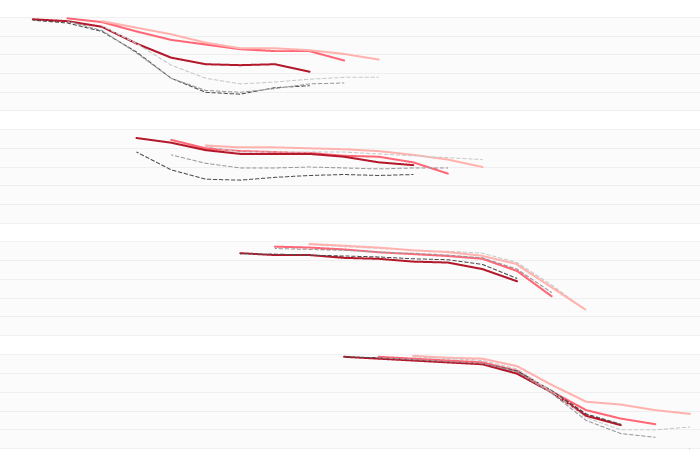
A new paper looked at 20 years work of real-time ENSO Model forecasts and found some interesting patterns. Did you know models found it pretty freaking hard to predict the onset of La Nina events?
A new paper looked at 20 years work of real-time ENSO Model forecasts and found some interesting patterns. Did you know models found it pretty freaking hard to predict the onset of La Nina events?
The troposphere, not the stratosphere, can be thanked for the cold weather this week.
Weak La Niña conditions continued in January, but a transition to ENSO-neutral in the near future is likely.
January 2025 was the coldest January since 1988 and sixth driest on record for the nation.
La Niña's fingerprints are on the February climate outlook for the United States, but what other factors are at play?
There is a lot more to the polar vortex than disrupted winds and increased odds for cold weather.
Why no one should expect a perfect match between what happens during a La Niña winter and the expected La Niña pattern. But knowing whether it may be a El Niño or La Niña winter is still useful!
Earth had its warmest year on record, while upper-ocean heat content also experienced a record high.
Is the polar vortex to blame for this recent cold air outbreak? We don’t think so. This seems like a case of the polar vortex getting blamed for being a trouble maker, when it was actually minding its own business.
Models and other forecasting tools favor a warm West/cool East temperature split in January along with a wet Northwest/dry Southwest precipitation split.