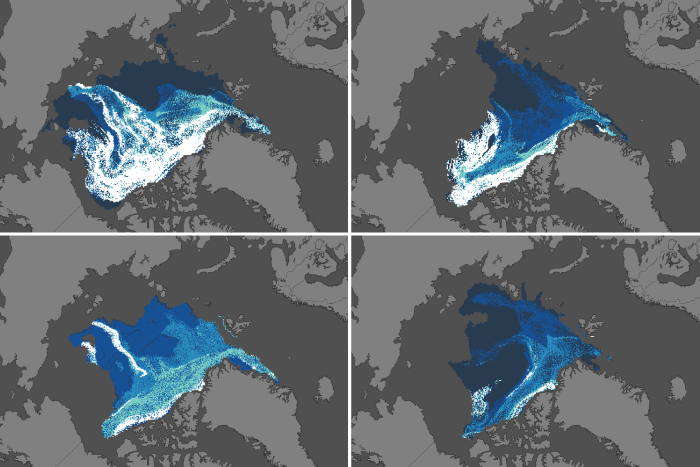
The precise year of the first "ice-free" Arctic summer will likely come down to weather events. For people and other life in the Arctic, the exact timing matters less than the long-term trend.
The precise year of the first "ice-free" Arctic summer will likely come down to weather events. For people and other life in the Arctic, the exact timing matters less than the long-term trend.
Severe storms devastated the nation’s heartland in late April; spring snowstorm pummeled New England.

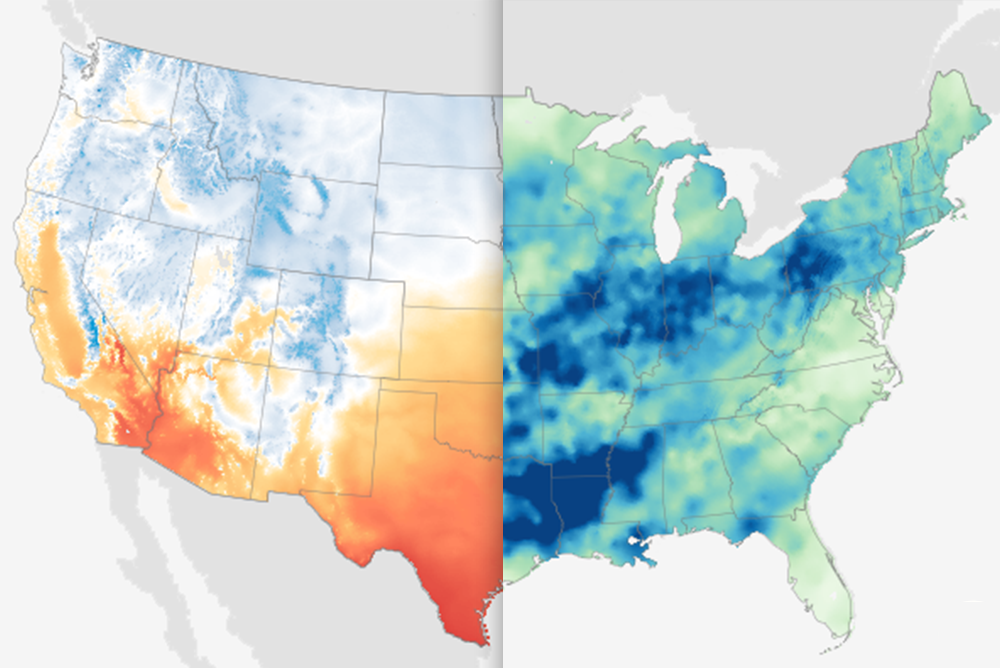
For much of the United States, the climate isn't tipping its hand as to whether May temperature and precipitation will be above, below, or near average.

The forecast for April leans mostly warm and wet, with good news for drought in the Central Plains.

A record-warm February capped the Northern Hemisphere's warmest winter on record.
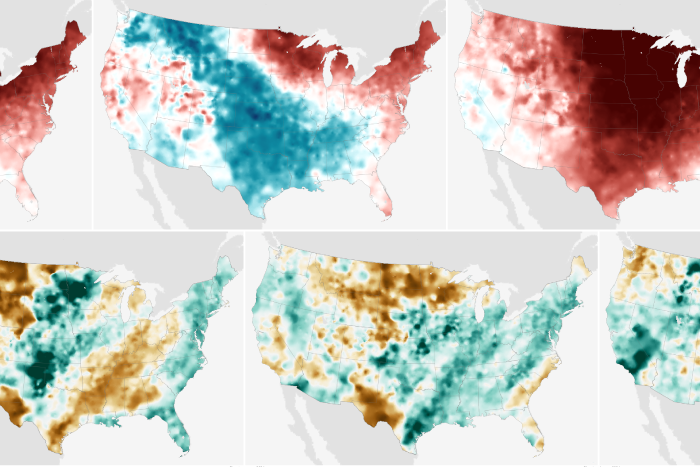
It was the warmest winter on record for the contiguous U.S.
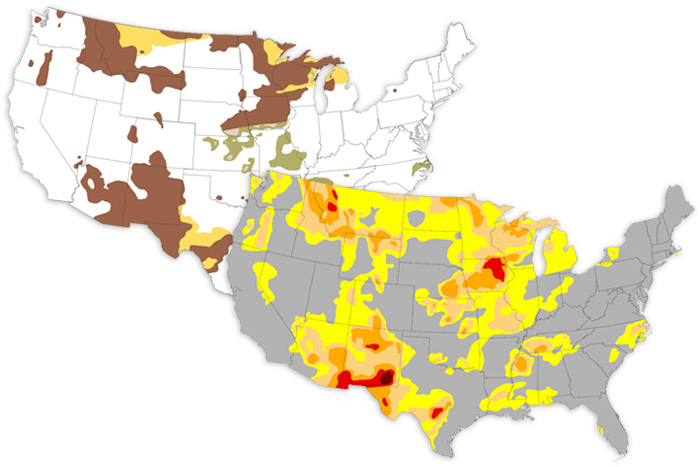
Warm and dry or cold and wet? NOAA's monthly climate outlook lays out the odds.
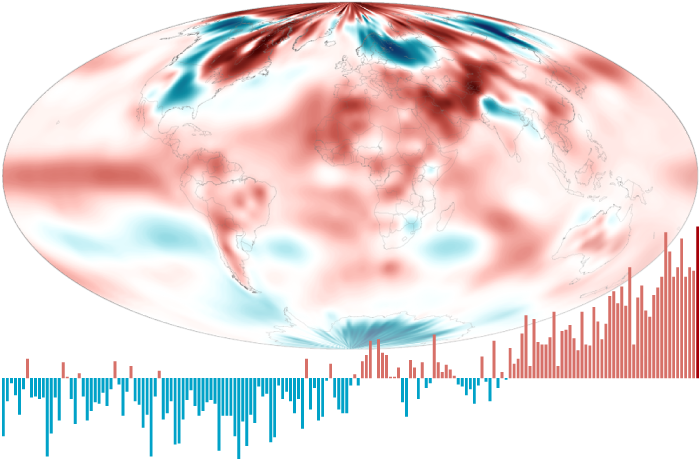
Earth had another record-warm month. It was also the second-wettest January on record.
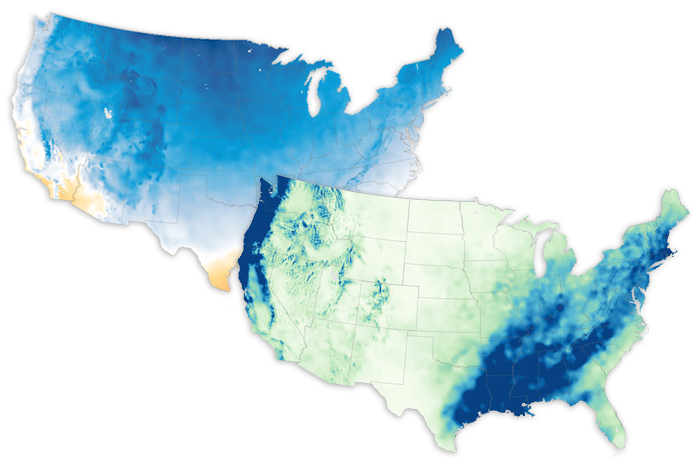
An arctic air mass brought bitter cold and snow to much of the nation in mid-January; powerful storms brought heavy rainfall and flooding to parts of the Southern Plains.

January brought the country both warm and cold extremes; which is likely to dominate in February?