
Using a new powerful NOAA global climate model, NOAA and partner researchers show that big spikes in daily coastal sea levels will increase in the future from the Gulf Coast to the Atlantic coast as…
Using a new powerful NOAA global climate model, NOAA and partner researchers show that big spikes in daily coastal sea levels will increase in the future from the Gulf Coast to the Atlantic coast as…
New research supported by the Climate Program Office's Atmospheric Chemistry, Carbon Cycle, & Climate (AC4) program was published online in the Proceedings of the National Academy of Science on Dec…
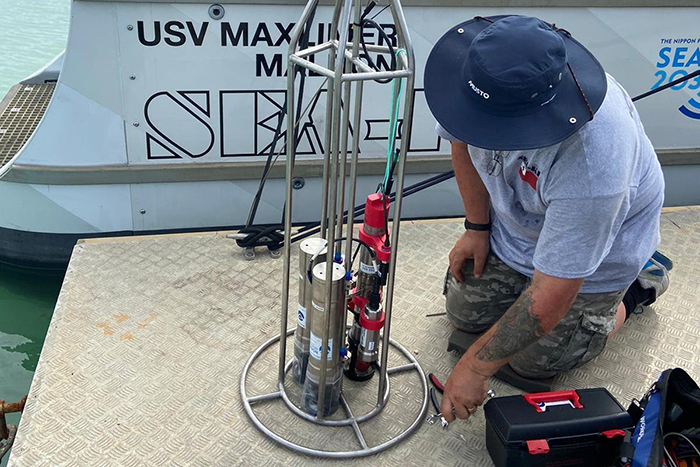
An international team has collected a high-resolution bathymetric and hydrothermal plume survey of the post-eruption caldera. Employing an uncrewed surface vessel, the survey was conducted by scientists and engineers across the globe.
Dry air plays a surprisingly important role in these heatwaves by suppressing upward movement of warm, moist air, a process that usually cools the surface.
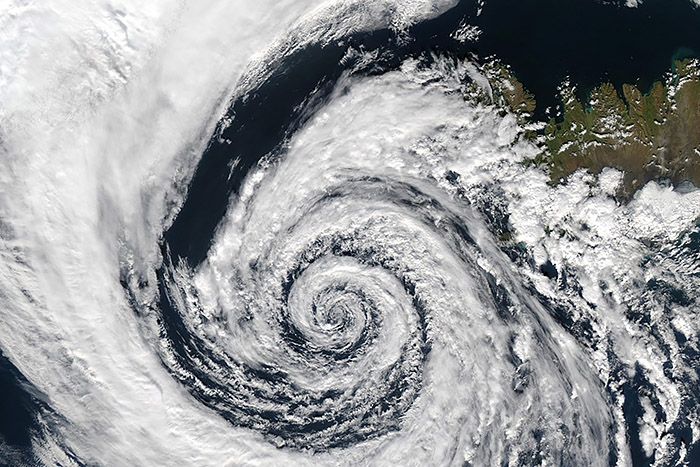
A new study finds that the location of the Madden–Julian Oscillation affects where precipitation-rich warm conveyor belts occur over the Pacific Ocean.
NOAA is expanding ocean measurements of carbon dioxide to under-observed, climate-critical regions by installing a new generation of sensors on the NOAA Ship Ronald H. Brown and several other U.S. government and academic research vessels.
Clouds have both cooling and warming effects on climate, so a climate model's ability to parse cloud effects can reduce uncertainty in future climate projections. A new study distinguishes between climate models with low and high climate sensitivity related to clouds and aerosols.
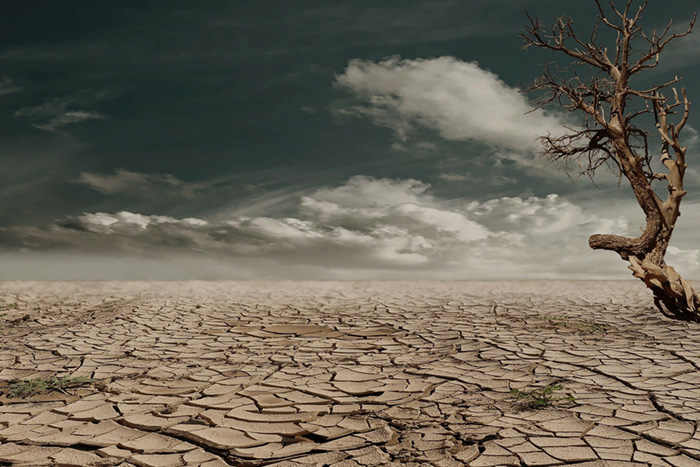
New research finds that, although megadroughts in the southwestern United States may be unavoidable, reducing greenhouse gas emissions can mitigate conditions.
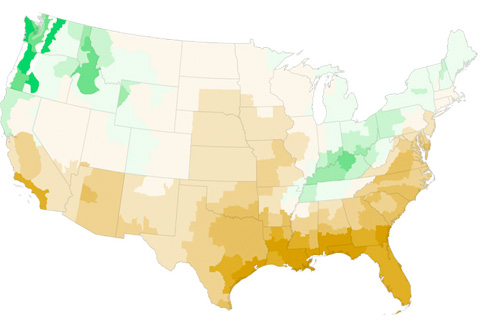
Weather in the Southeast this fall and winter is keeping up with the dry part of the typical La Niña pattern. Precipitation across most of the Southeast was "below" or "much below" normal for October-December.